fbpx

How Much Does an Indoor Playground Cost in 2026?

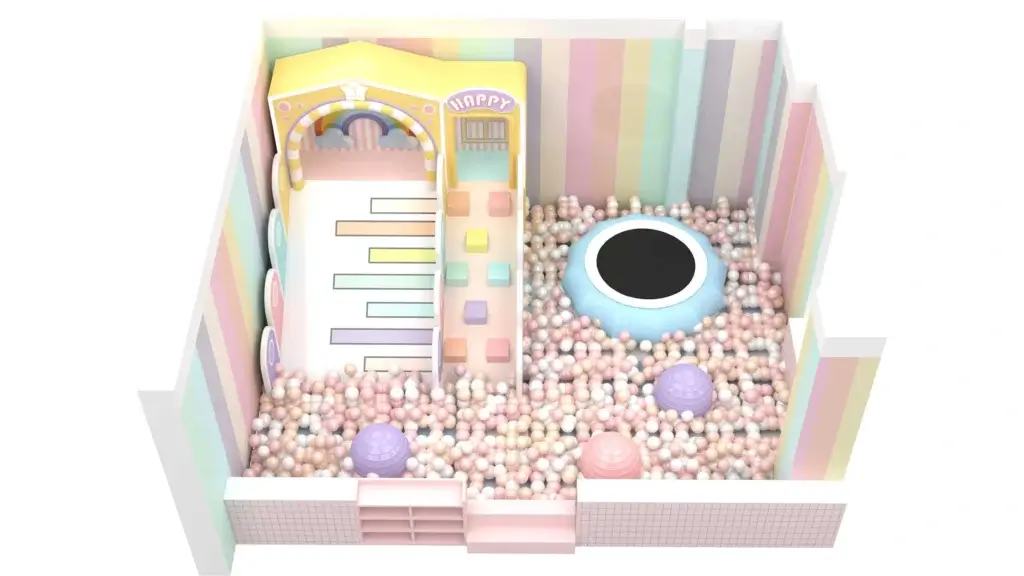
ball pit slide

This article will help you navigate both of those considerations. We will also explore the classification of indoor play spaces, the various types of play equipment available, and the other aspects of building a commercial indoor playground that will influence the final project cost. Because indoor play spaces can vary so widely in scale and complexity, it helps to understand that they broadly fall into one of the following four categories:

The 4 Types of Commercial Indoor Play Spaces

  • Micro-Scale Play Zones / Toddler Corners – compact early childhood play areas common in malls, cafes, and hotels, featuring soft-play modular shapes and sensory elements.

  • Mid-Size Play Cafes / Standalone Neighborhood Playgrounds – multi-tier play structures with tube slides, interactive ball pits, and role-play villages, typically found in strip malls and boutique facilities.

  • Large-Scale Family Entertainment Centers (FEC) – diversified multi-zone entertainment hubs with wave slides, trampolines, inflatables, climbing structures, and dedicated party rooms, often serving as anchor tenants in regional shopping malls.

  • Flagship Destination Adventure Parks – large-format venues engineered for all age groups, featuring high-thrill attractions such as indoor zip lines, elevated ropes courses, climbing walls, and integrated AR/VR gaming zones.

In this article, we will detail the cost breakdown for each of these four types, highlighting the specific equipment supply costs and turn-key landed budget ranges, to provide a clear and practical comparison across all categories.

The main elements of an indoor playground and what they cost

A commercial indoor playground generally consists of several main cost components:

  • The play equipment and interactive play elements (galvanized steel structures, slides, ball pits, role-play villages, etc.)

  • Turn-key installation, including specialized assembly and safety surfacing/padding

  • International logistics, freight, customs clearance, and local drayage

  • Fit-out, civil works, HVAC, and regulatory compliance requirements

Influencing factors on the cost of indoor playgrounds and play equipment

There are several key contributing factors to the cost of building a commercial indoor playground that you also need to consider:

  • Complexity of design – open, low-density layouts with fewer play elements appear more affordable, while intense, multi-tier configurations with interactive technology and themed role-play zones command a higher investment.

  • Material of manufacture – commercial-grade galvanized steel framework, high-density rotomolded plastics, and specialized soft-play foam are standard for durability and safety compliance, with stainless steel or aluminium upgrades adding cost.

  • Fixtures and fasteners – industry-specific, engineered connection systems and safety-certified fasteners designed for high-traffic commercial use are more expensive than generic fixing methods.

  • Coatings and finishes – highly durable powder coatings, UV-stabilized surfaces, and antimicrobial finishes that ensure a long service life and hygienic operation carry a premium over basic finishes.

  • Compliance and certification – adherence to international safety standards (ASTM, EN 1176, CSA) requires third-party engineering sign-offs, load-bearing certifications, and safety audits, all of which influence the final landed project cost.

Commercial Indoor Playground Classification & Budget Framework

When analyzing indoor play spaces, categorization relies primarily on Gross Floor Area (GFA), Clear Ceiling Height, and Functional Complexity. Unlike outdoor public parks, indoor Family Entertainment Centers (FECs) require substantial upfront alignment between equipment procurement, specialized turn-key installation, and compliance with local engineering standards (e.g., ASTM for North America, EN 1176 for Europe, or CAS for Canada).

As an industry benchmark, the estimated procurement cost for commercial-grade indoor play equipment ranges from $80 to $200 USD per square meter (㎡). When factoring in ocean freight, customs clearance, and certified installation, the Turn-key Landed Cost typically ranges from $180 to $450 USD per ㎡.
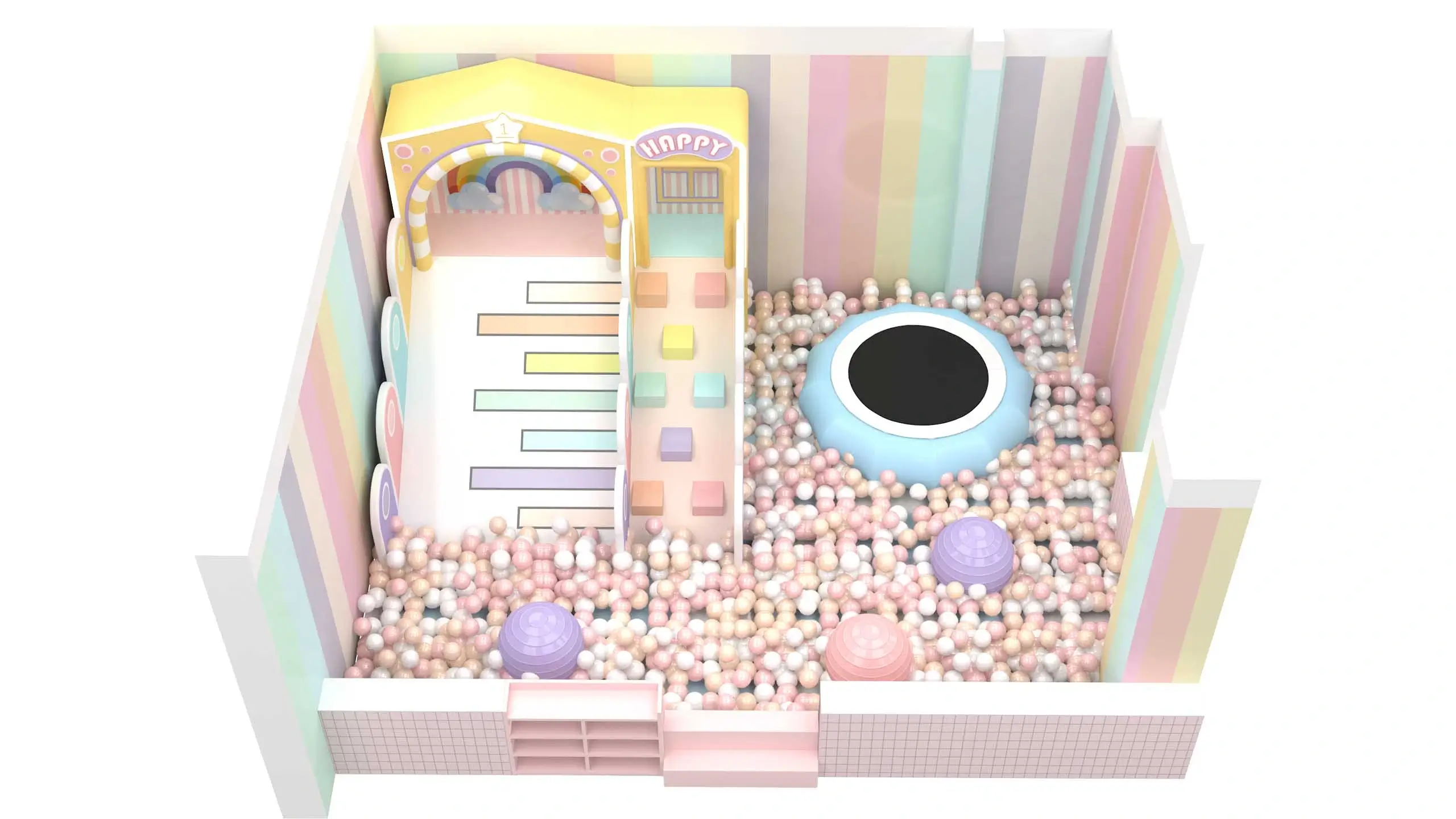
Ball Pit Slide - Guangdong Dream Catch Recreation Equipment Co., Ltd.

1. Micro-Scale Play Zones / Toddler Corners

  • Footprint / GFA: 30 – 100 ㎡ (approx. 300 – 1,000 sq ft)

  • Target Environments: Shopping mall common areas, family-friendly restaurants/cafes, hotel kids’ clubs, and daycare centers.

  • Functional Specifications: Exclusively focused on early childhood development. Features include soft-play modular shapes, low-level sensory foam blocks, mini ball pits, and toddler-safe micro-slides.

  • Spatial Requirement: Minimum clear height of 2.8 meters.

  • Equipment Supply Cost: $5,000 – $15,000 USD

  • Turn-key Landed Budget: $10,000 – $30,000 USD (Inclusive of safety flooring/padding, logistics, and assembly).
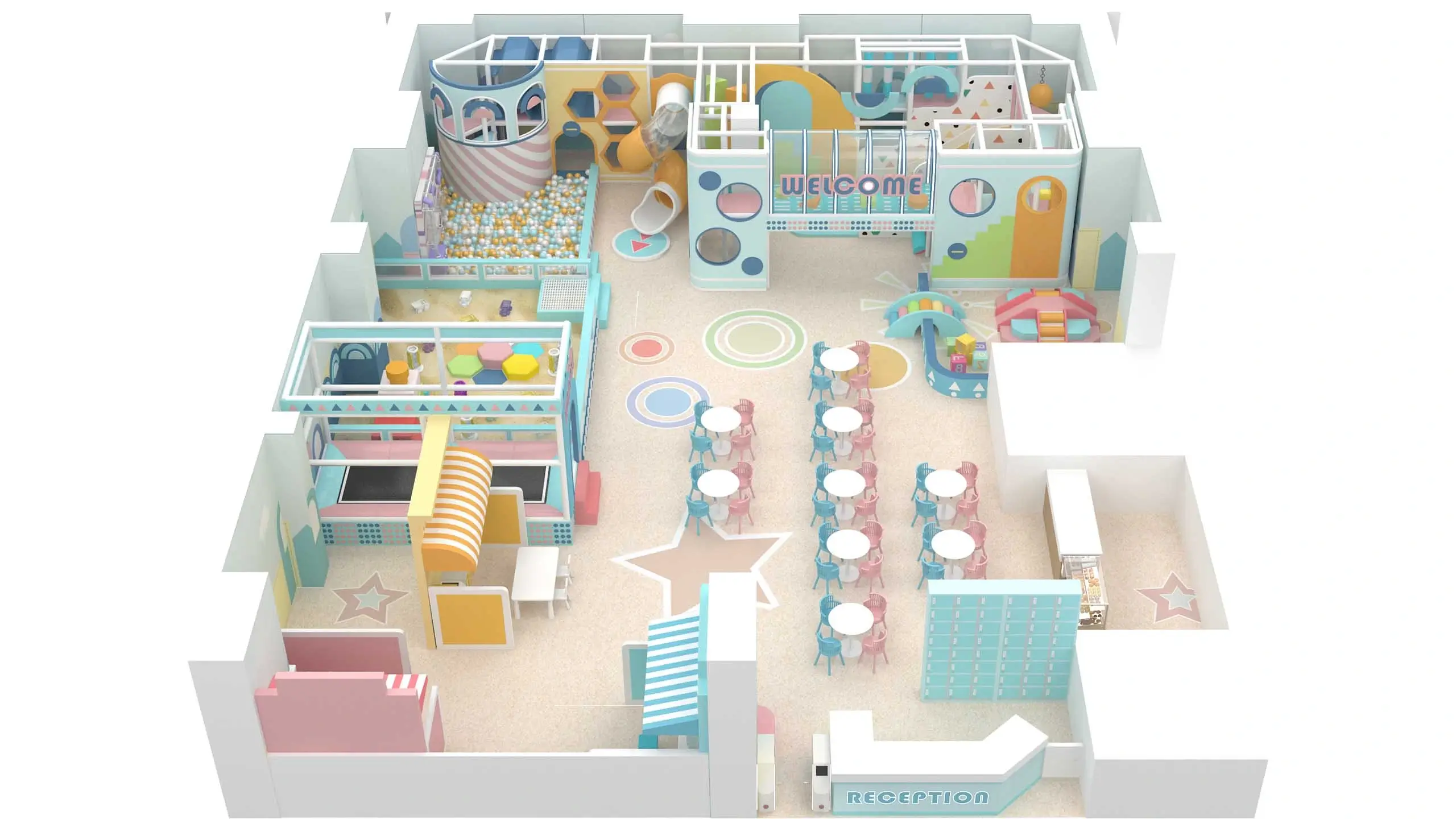
Mid-Size Indoor Playground - Guangdong Dream Catch Recreation Equipment Co., Ltd.

2. Mid-Size Play Cafes / Standalone Neighborhood Playgrounds

  • Footprint / GFA: 100 – 400 ㎡ (approx. 1,000 – 4,300 sq ft)

  • Target Environments: Strip malls, neighborhood commercial centers, and boutique multi-tier indoor play facilities.

  • Functional Specifications: Features a 2-to-3-tier galvanized steel indoor play structure (Play Cube), spiral tube slides, interactive digital projection ball pits, and dedicated role-play/pretend-play villages (e.g., mini-supermarkets, kitchens, and clinics).

  • Spatial Requirement: Required clear height of 3.5 – 4.5 meters.

  • Equipment Supply Cost: $25,000 – $75,000 USD

  • Turn-key Landed Budget: $50,000 – $120,000 USD
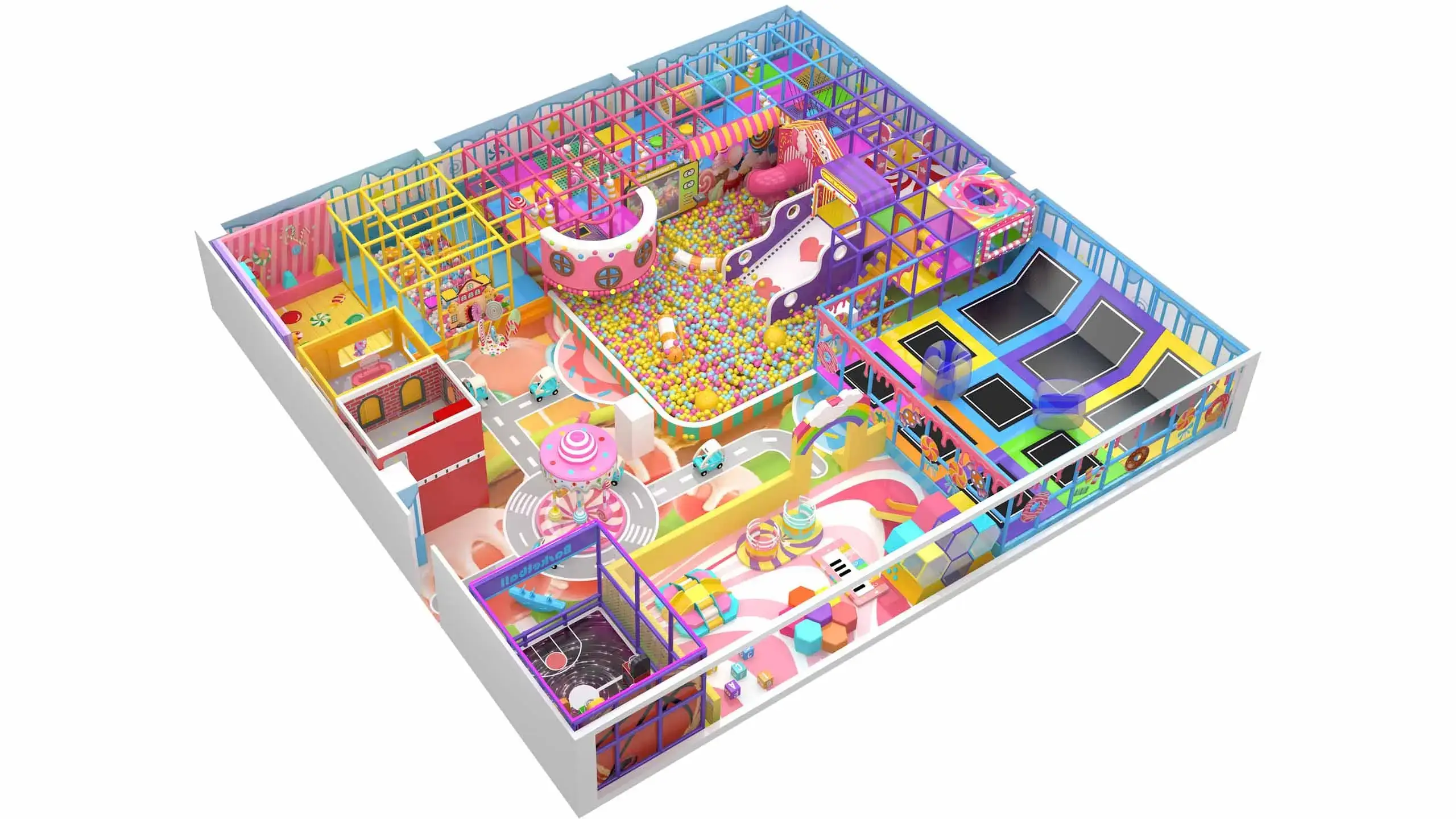
Candyland Theme Playground Design - Guangdong Dream Catch Recreation Equipment Co., Ltd.

3. Large-Scale Family Entertainment Centers (FEC)

  • Footprint / GFA: 400 – 1,000 ㎡ (approx. 4,300 – 10,700 sq ft)

  • Target Environments: Regional shopping malls (anchor tenants) and major sports/leisure complexes.

  • Functional Specifications: A highly diversified multi-zone entertainment hub. Includes multi-lane wave slides, steep drop slides (donut slides), free-jump trampoline zones, institutional-grade inflatables, foam pits, and volcano climbing structures. Features dedicated private birthday party rooms and a localized F&B/parent lounge.

  • Spatial Requirement: Minimum clear height of 4.5 meters.

  • Equipment Supply Cost: $60,000 – $200,000 USD

  • Turn-key Landed Budget: $150,000 – $350,000 USD

5000 Sqm Indoor Adventure Parks - Guangdong Dream Catch Recreation Equipment Co., Ltd.

4. Flagship Destination Adventure Parks

  • Footprint / GFA: 1,000 ㎡ to 5,000+ ㎡ (10,700+ sq ft)

  • Target Environments: Major urban entertainment destinations, eco-resorts, and mega commercial complexes.

  • Functional Specifications: Engineered for all demographics, including teenagers and young adults. Features high-thrill attractions: indoor zip lines, elevated ropes courses, professional clip-and-climb walls, performance trampoline courts, Ninja Warrior obstacle courses, giant spiral tube slides, and integrated AR/VR multiplayer interactive gaming zones.

  • Spatial Requirement: Exceptional clear height required (5.0 – 8.0+ meters).

  • Equipment Supply Cost: $200,000 – $500,000+ USD

  • Turn-key Landed Budget: $450,000 – $1,500,000+ USD (Excluding structural building modifications and leasehold deposits).


📊 Budget Breakdown & Cost Matrix (USD)

CategoryGFA Range (m2)Clear Height Req.Equipment Only (USD)Turn-key Landed Budget (USD)
1. Toddler Corner30 – 100 ≥ 2.8m$5k – $15k$10k – $30k
2. Play Cafe100 – 400 3.5m – 4.5m$25k – $75k$50k – $120k
3. Large FEC400 – 1,000 ≥ 4.5m$60k – $200k$150k – $350k
4. Adventure Park1,000+ 5.0m – 8.0m+$200k – $500k+$450k – $1.5M+

⚠️ Capital Expenditure (CapEx) Hidden Cost Drivers

When drafting a comprehensive business plan, equipment procurement represents roughly 40% to 60% of the total initial investment. Developers must allocate capital for the following critical cost drivers:

  • Fit-out, Civil Works & HVAC: Due to high occupancy and high-exertion physical activity, municipal codes mandate strict requirements for Air Handling Units (AHU), specialized ventilation/air conditioning, dedicated fire suppression (sprinkler realignments), emergency egress routing, and ADA-compliant amenities. These build-out costs easily account for 20% to 30% of the overall budget.

  • Logistics, Tariffs & Drayage: Large steel frameworks, foam pits, and rotomolded plastics require significant volume, translating to multiple 40ft HC (High Cube) containers. Ocean freight volatility, import tariffs, customs brokerage fees, and local port-to-site drayage must be factored into the landed cost.

  • Regulatory Compliance & Liability Insurance: Commercial operations require strict third-party engineering sign-offs, load-bearing certifications, and safety audits before opening. Furthermore, Public Liability Insurance is a major, ongoing operational expense required to mitigate risk associated with physical play environments.

What else should be included in the cost of a new Indoor Playground?

If you’re wondering how much an indoor playground costs, it’s important to consider various factors unique to indoor commercial spaces.

  • Tenant Improvements & Fit-out 

  • Delivery, Customs and Certified Installation

  • Indoor Safety Surfacing & Padding

  • Ancillary Items – HVAC, Lighting, Fire Safety, Café and Party Rooms

Tenant Improvements & Fit-out (Site Preparation)

Unlike outdoor sites that require excavation, indoor site preparation focuses on commercial fit-out. If you are taking over a bare shell with concrete floors and exposed ceilings, you must allow for leveling the subfloor, painting, and installing secure anchor points for the steel play grids. If it is a refurbished site, you will need to allow for the cost of demolition and removal of old shop fittings, walls, or flooring. Height restrictions and structural pillars must also be mapped during this stage. These costs can vary considerably, so speak to our Project Design Team for an indication of these costs.

Delivery, Customs and Certified Installation

Indoor playgrounds are highly customized, multi-tier steel and foam structures. The location of the site will govern the cost of delivery and installation. Because components are high-volume, often requiring multiple 40ft High Cube containers, shipping costs can be volatile. You must budget for ocean freight, import duties/tariffs, port drayage, and local delivery. Furthermore, indoor structures have thousands of interlocking parts. For budget estimating, you should allow approximately 25% to 35% of the equipment price for professional, certified installation, as improper assembly will fail safety audits and void your insurance. Delivery is also variable and you should check with the Project Design Team for accurate costs.

Indoor Safety Surfacing & Padding (Soft-Fall)

All commercial indoor playgrounds must comply with local indoor soft-fall regulations (such as ASTM in the USA or CSA in Canada). Unlike outdoor parks, organic materials like bark chips, mulch, or sand are never used indoors due to hygiene, dust, and track-out issues. Indoor soft-fall options include:

  • Interlocking EVA/EPE Foam Mats: The most cost-effective option, usually finished with a heavy-duty PVC vinyl wrap. Easy to replace if damaged.

  • Indoor Wetpour Rubber / Seamless Polyurethane: Provides a premium, seamless look with high durability, allowing for customized colors and themed designs.

  • Synthetic Turf with Foam Underlay: Often used in sports, Ninja courses, or adventure zones for a high-end aesthetic.

Indoor soft-fall areas normally require padded safety borders or perimeter foam hurdles to retain ball pits and define younger toddler zones. When choosing indoor soft-fall, you need to think about:

  • Critical Fall Height Compliance Does the foam thickness match the height of your play platforms?

  • Hygiene & Sanitization Is the surface non-porous and easy to wipe down, sanitize, or deep clean?

  • Fire Retardancy Indoor flooring must meet strict commercial building fire-rating standards (low smoke/flame spread).

  • Design Opportunities Do you want to include shapes, colors, or themed designs in the surface to enhance the play area?

  • Ease of Maintenance Do you have a maintenance and cleaning plan?

Ancillary Items – HVAC, Fire Safety, and Hospitality Amenities

To turn an indoor playground into a viable and comfortable business, you cannot just install equipment. The “indoor environment” requires substantial investment in building services and customer comfort:

  • HVAC & Ventilation: Children running around create massive heat loads. You must budget for upgraded air conditioning and commercial air filtration/fresh air systems.

  • Fire Suppression & Emergency Egress: You will likely need to modify or drop existing fire sprinkler heads so they protect the inside of multi-tier play cages, alongside adding illuminated exit signage.

  • Hospitality & Comfort: A successful indoor venue requires a reception/check-in desk (POS system), shoe storage/lockers, a parent café/lounge, dedicated private birthday party rooms, and parent/child-friendly restrooms.

An appropriate guide to costs of Indoor Surfacing & Borders (2026 Industry Estimates):

TypeCost (Approx.)Notes
High-Density EVA Foam Matting (PVC Covered)$60/m² – $120/m²Standard indoor solution, modular and cost-effective.
Indoor Seamless Polyurethane/Wetpour$180/m² – $320/m²Premium, high durability, seamless design opportunities.
Padded Safety Borders / Perimeter Foam Hurdles$80/m – $150/mUsed to retain ball pits and define younger toddler zones.

These are generic industry rates as a rough guide in 2026. Contact us for a specific quotation.

How Your Total Indoor Budget Splits (Rule of Thumb)

The financial split indoors is heavily influenced by the cost of building compliance and internal fit-out. As a rule of thumb, you can get a good idea of how far your budget will go based on the following table:

If your project includes:Your budget will split approx. as:
Equipment & Basic Interlocking Foam Mats70% Equipment & Mats, 30% Delivery & Basic Assembly
Equipment, Premium Surfacing & Custom Fencing/Seating50% Equipment, 25% Premium Surfacing, 25% Fencing, Counter & Seating
Full Turn-key Venue (Equipment, Surfacing, HVAC, Café, Party Rooms & Fire Upgrades)35% Play Equipment, 15% Surfacing & Mats, 50% HVAC, Fire, Café & Building Fit-out

Summary

Building an indoor playground is less about landscaping and more about commercial space optimization and regulatory compliance. By now you should have a good idea of the cost of building an indoor playground—you are aware of the four broad categories of indoor play spaces, what needs to be included in a realistic budget, and how the investment splits across equipment, surfacing, and building infrastructure. Our Project Design Team is ready to help you bring your ideas to life, making sure every aspect of the indoor playground and its costs has been considered during the buying journey.

Table of Contents

Leave Your Message

UPDATES

DREAM CATCH NEWS

Guangdong Dream Catch at RAAPA Expo 2026: Connecting, Innovating, and Shaping the Future of Family Entertainment
Dream Catch at DEAL 2026: Showcasing the Future of Indoor Play in Dubai
Dream Catch Reflects on Successful Showcase at IAAPA Expo 2025 in Orlando!
Guangdong Dream Catch Recreation Equipment Co., Ltd.

Thank you for your interest in our commercial playground equipment. Please fill out the information as accurately as possible so that a playground specialist can best assist you. Your information is kept for contact purposes only and is never shared with any third party.

How can we help you?