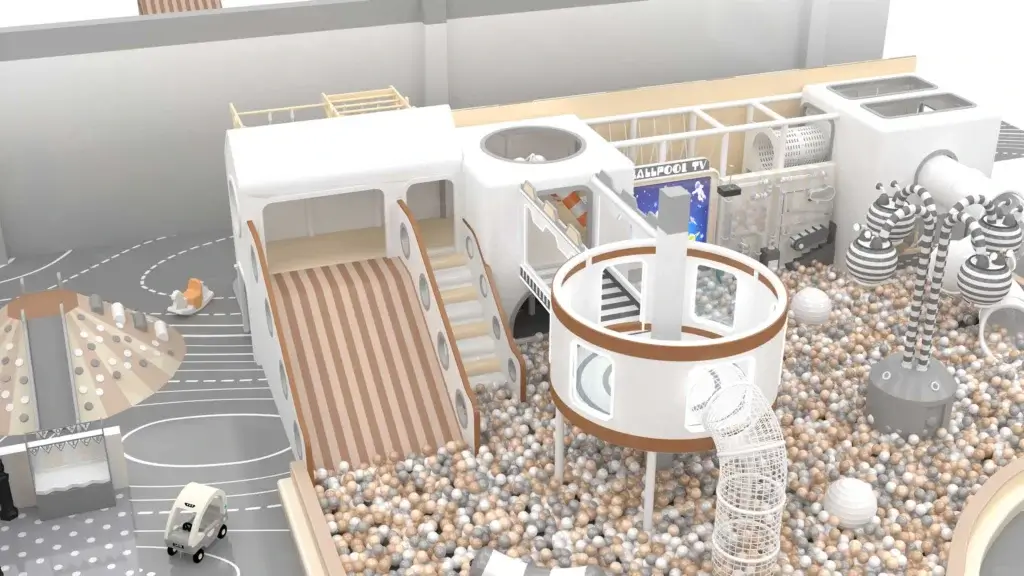
“I’ve seen beautiful indoor playgrounds close within eighteen months—and I’ve seen modest facilities become thriving businesses for more than twenty years. The difference rarely comes down to the equipment itself.”
After more than three decades working with indoor playground operators, developers, shopping centre owners, architects, and investors across North America, one lesson has remained remarkably consistent:
Successful indoor playground businesses are built on strategic planning—not simply attractive play equipment.
Many first-time investors begin their journey by comparing playground suppliers, requesting quotations, or searching online for “How much does an indoor playground cost in Canada?” While these are reasonable starting points, they are rarely the questions that determine long-term success.
The more important questions are:
Is the location zoned for indoor recreation?
Will the building support the required ceiling height and HVAC capacity?
Can the project obtain affordable liability insurance?
Does the lease protect your investment over the next ten years?
Which business model best matches your local demographics?
These questions often have a far greater impact on profitability than the choice between one playground structure and another.
Canada remains one of the world’s most attractive markets for indoor family entertainment. Long winters, growing urban populations, increasing immigration, and parents’ willingness to invest in children’s development continue to support demand for safe, high-quality indoor recreation.
However, Canada is also one of the most highly regulated markets in the world. Building codes, fire regulations, accessibility requirements, insurance underwriting, and safety standards all influence whether a project succeeds or struggles.
This guide has been written for entrepreneurs, investors, family entertainment operators, and commercial developers who are considering entering the Canadian indoor playground industry. Rather than promoting a specific product or business, it aims to provide practical insights drawn from decades of industry experience.
Whether you are planning a boutique Play Café, a large Family Entertainment Center (FEC), or a community-based indoor play centre, the principles outlined in this guide will help you make more informed investment decisions while avoiding many of the costly mistakes that affect new operators.
Because in this industry, the most expensive mistakes are rarely visible on opening day—they reveal themselves years later.
Why Canada Is One of the World's Best Markets for Indoor Play
At first glance, Canada’s population of approximately 41 million appears modest compared with larger markets such as the United States. Yet population size alone does not determine the attractiveness of an indoor playground market.
Instead, successful operators focus on four long-term demand drivers:
- Climate
- Demographics
- Urban development
- Family spending behaviour
Together, these factors create one of the most stable environments for indoor family entertainment businesses anywhere in North America.
Canada’s Climate Creates Year-Round Demand
Unlike many warmer countries where outdoor playgrounds remain accessible throughout the year, much of Canada experiences long winters, frequent snowfall, and extended periods of cold weather.
In cities such as Calgary, Edmonton, Ottawa, Winnipeg, and many parts of Ontario, outdoor playgrounds may remain underused for nearly half the year.
For families with young children, this creates a recurring challenge:
Where can children play safely, stay active, and socialize regardless of the weather?
Indoor playgrounds solve exactly this problem.
Even during rainy spring weekends or hot summer afternoons, climate-controlled indoor facilities provide predictable experiences for families.
This makes customer demand less dependent on seasonal weather than many other recreation businesses.
For investors, this translates into a more consistent annual revenue cycle—particularly when supported by memberships, birthday parties, and community programs.
Urban Population Growth Continues to Expand the Customer Base
Canada’s population growth has accelerated significantly in recent years, driven largely by immigration and continued urbanization.
Most newcomers settle in major metropolitan areas such as:
- Toronto
- Mississauga
- Vaughan
- Markham
- Vancouver
- Surrey
- Burnaby
- Calgary
- Edmonton
- Ottawa
These cities also happen to be the strongest markets for indoor playground businesses.
Young families living in high-density communities often have limited private outdoor space, making indoor recreation an important part of weekly family life.
Mixed-use developments, suburban shopping centres, and rapidly growing residential communities continue to create opportunities for professionally operated indoor play facilities.
Parents Are Spending More on Experiences Than Ever Before
Perhaps the most important shift over the past decade has not been population growth—but changing consumer behaviour.
Today’s parents increasingly prioritise experiences over physical products.
Instead of purchasing more toys, many families prefer spending money on activities that encourage learning, movement, creativity, and social interaction.
Indoor playgrounds now compete not only with other play centres, but also with:
- Children’s museums
- Trampoline parks
- Climbing gyms
- Indoor adventure parks
- Educational activity centres
- Community recreation programs
The most successful operators understand that they are no longer selling admission tickets.
They are creating memorable family experiences.
That distinction influences everything—from facility design and customer service to food offerings and birthday party packages.
Birthday Parties Have Become a Core Revenue Driver
Many new investors assume admission fees represent the primary source of income.
In reality, admission revenue often provides only a foundation.
Across Canada, birthday parties have become one of the industry’s most profitable business segments.
A well-designed party program offers several advantages:
- Higher average transaction values
- Advance bookings that improve cash-flow forecasting
- Food and beverage sales
- Decoration upgrades
- Character appearances
- Repeat family visits through guest exposure
An operator hosting multiple birthday parties every weekend can generate a substantial portion of monthly revenue from this single activity alone.
For this reason, experienced facility designers often begin by asking a question that surprises many investors:
“How many party rooms does this building allow?”
Not:
“How big should the playground be?”
That single design decision can significantly influence long-term profitability.
Veteran’s Notebook
One of the biggest misconceptions I encounter is that larger playgrounds automatically generate higher profits. In reality, I’ve seen 2,000-square-foot Play Cafés consistently outperform 8,000-square-foot facilities because they understood their local community, controlled operating costs, and built loyal customer relationships.
Successful indoor playground businesses are not built on size alone. They are built on repeat visits, operational efficiency, and thoughtful planning.
Key Takeaways
Before investing in an indoor playground business, remember these four realities about the Canadian market:
- Canada’s climate creates reliable year-round demand for indoor recreation.
- Urban population growth continues to support family entertainment businesses.
- Parents increasingly value shared experiences over material purchases.
- Long-term profitability depends more on recurring revenue than on admission fees alone.
These market fundamentals explain why well-planned indoor playgrounds continue to attract entrepreneurs across Canada. However, market demand alone does not guarantee success.
The next step is choosing a business model that aligns with your investment goals, target customers, and operational capabilities.
Choosing the Right Indoor Playground Business Model
“The biggest mistake first-time investors make is assuming every indoor playground operates the same way. In reality, two facilities with similar equipment can have completely different revenue models, operating costs, and profit margins.”
After advising indoor playground projects across North America for more than three decades, I’ve learned that selecting the right business model is often more important than choosing the right equipment.
Many investors begin with a simple goal:
“I want to open an indoor playground.”
But that statement raises a much bigger question:
What kind of indoor playground?
The answer determines nearly every major business decision that follows—from your startup budget and facility size to staffing, marketing strategy, insurance costs, and long-term profitability.
In today’s Canadian market, successful indoor play businesses generally fall into four categories:
- Boutique Play Cafés
- Traditional Indoor Playgrounds
- Family Entertainment Centers (FECs)
- Hybrid Indoor Play Concepts
Each model serves a different customer demographic, requires a different level of investment, and generates revenue in different ways.
Choosing the wrong model can result in higher operating costs, slower customer growth, and lower returns—even if the facility itself is beautifully designed.
Model 1: Boutique Play Café
Small Footprint, High Community Engagement
The Play Café concept has become one of the fastest-growing segments of Canada’s indoor recreation industry.
Unlike traditional playgrounds that focus primarily on children’s activities, a Play Café is designed equally for parents and children.
Typical characteristics include:
- Facility Size: 1,200–2,500 sq. ft.
- Target Age: Infants to approximately 6 years old
- Investment Range: CAD $200,000–$350,000
- Typical Locations: Urban neighbourhoods, mixed-use developments, community retail centres
Rather than attracting hundreds of visitors each day, Play Cafés focus on creating loyal, repeat customers within a relatively small geographic area.
Parents visit not only because their children enjoy playing, but because the environment allows them to relax, socialize, work remotely, or enjoy quality coffee while remaining close to their children.
The atmosphere often resembles a boutique café more than a traditional amusement venue.
Revenue Structure
One of the strengths of the Play Café model is its diversified revenue base.
Successful operators typically combine several income streams:
- Daily admission
- Monthly memberships
- Premium coffee and beverages
- Healthy snacks and light meals
- Birthday parties
- Parent-and-child classes
- Seasonal workshops
- Community events
This diversity helps reduce dependence on admission revenue alone.
Many experienced operators discover that food and beverage sales, memberships, and birthday parties together generate more stable cash flow than walk-in admissions.
Advantages
- Lower startup investment
- Smaller staffing requirements
- Strong customer loyalty
- Easier day-to-day management
- Faster path to profitability in community markets
Challenges
However, this model also has limitations.
The most significant is capacity.
With limited floor space, revenue growth eventually reaches a ceiling.
Weekend demand often exceeds available space, while weekdays require creative programming to maintain visitor numbers.
Without structured weekday activities, many Play Cafés experience inconsistent cash flow.
Veteran’s Insight
The most successful Play Cafés don’t compete on the size of their playground. They compete on customer experience. Parents remember exceptional service, outstanding coffee, spotless facilities, and staff who know their children’s names. Those details create loyalty that no discount promotion can match.
Model 2: Traditional Indoor Playground
The Balanced Business Model
Traditional indoor playgrounds represent the classic family entertainment concept found in many Canadian communities.
Compared with boutique Play Cafés, these facilities accommodate a wider age range and focus more heavily on active physical play.
Typical characteristics include:
- Facility Size: 3,000–6,000 sq. ft.
- Target Age: 2–12 years
- Investment Range: CAD $350,000–$800,000
Equipment often includes:
- Multi-level soft play structures
- Spiral slides
- Ball pits
- Climbing obstacles
- Interactive play panels
- Toddler play zones
- Party rooms
This model appeals to suburban families seeking a safe destination for weekend outings and birthday celebrations.
Revenue Sources
Typical revenue streams include:
- Admission fees
- Birthday parties
- Group bookings
- School field trips
- Memberships
- Café sales
- Merchandise
- Seasonal events
Because these facilities attract broader age groups, they generally experience stronger weekend traffic than Play Cafés.
However, maintaining weekday occupancy remains an operational priority.
Many operators partner with local schools, daycare centres, and community organizations to generate weekday business.
Advantages
- Larger customer base
- Higher revenue potential
- More flexible programming
- Better scalability
Challenges
Operating costs also increase significantly.
Larger facilities require:
- Higher rent
- Additional employees
- Greater insurance coverage
- Increased maintenance
- Higher utility costs
Profitability depends on maintaining consistent visitor volume throughout the week.
Model 3: Family Entertainment Center (FEC)
High Investment, High Revenue Potential
The Family Entertainment Center represents the largest and most sophisticated business model within the indoor recreation industry.
These destinations are designed to keep families engaged for several hours rather than a single play session.
Typical characteristics include:
- Facility Size: 8,000–30,000+ sq. ft.
- Investment Range: CAD $800,000–$2 million+
- Target Audience: Children, teenagers, parents, schools, corporate groups
Rather than relying on one attraction, FECs combine multiple entertainment experiences under one roof.
Common attractions include:
- Multi-level playgrounds
- Ninja courses
- Interactive climbing walls
- Trampoline areas
- Rope courses
- Toddler zones
- Arcade games
- Redemption counters
- Birthday party suites
- Food and beverage operations
Many successful Canadian FECs operate more like hospitality businesses than playgrounds.
Their objective is not simply to sell admission tickets—but to maximize the average spending per family visit.
Revenue Diversification
A mature FEC typically generates income from multiple sources simultaneously.
These include:
- Admission
- Memberships
- Birthday parties
- Corporate events
- School programs
- Summer camps
- Holiday camps
- Food and beverages
- Arcade games
- Merchandise
- Special events
Because revenue is diversified, successful FECs are generally more resilient during economic fluctuations than businesses relying on a single income stream.
Advantages
- Highest long-term revenue potential
- Strong brand recognition
- Multiple profit centres
- Greater market differentiation
- Opportunities for expansion
Challenges
This model also carries the highest financial risk.
Investors must carefully evaluate:
- Population density
- Household income
- Competition
- Commercial rent
- Parking availability
- Ceiling height
- Building infrastructure
- Insurance availability
Without sufficient customer volume, fixed operating costs can quickly erode profitability.
Veteran’s Insight
I’ve seen investors spend millions creating spectacular entertainment centers—only to struggle because they underestimated staffing costs and overestimated weekday traffic. Bigger facilities require bigger markets. Size should always follow demand, not ambition.
Model 4: Hybrid Indoor Play Concepts
The Future of Canada’s Indoor Recreation Industry
Over the past decade, many successful operators have moved beyond traditional business models.
Instead of focusing on a single attraction, they combine multiple complementary experiences designed to increase customer retention and spending.
Examples include:
- Indoor playground + café
- Indoor playground + STEM learning
- Indoor playground + climbing activities
- Indoor playground + preschool programs
- Indoor playground + fitness classes
- Indoor playground + coworking space for parents
These hybrid concepts reflect changing consumer expectations.
Today’s parents increasingly value convenience.
Rather than visiting multiple destinations in a single day, they prefer facilities that combine recreation, education, dining, and social interaction.
When designed thoughtfully, hybrid models can improve customer satisfaction while increasing average visit duration and per-capita spending.
Comparing the Four Business Models
| Business Model | Typical Size | Estimated Investment | Primary Customers | Main Revenue Drivers | Best Suited For |
|---|---|---|---|---|---|
| Play Café | 1,200–2,500 sq. ft. | CAD $200K–350K | Families with young children | Memberships, café, birthday parties | First-time entrepreneurs, community-focused operators |
| Traditional Indoor Playground | 3,000–6,000 sq. ft. | CAD $350K–800K | Families with children aged 2–12 | Admission, parties, group bookings | Regional markets and suburban communities |
| Family Entertainment Center (FEC) | 8,000–30,000+ sq. ft. | CAD $800K–2M+ | Families, schools, corporate groups | Multiple attractions, food & beverage, events | Experienced investors with larger capital resources |
| Hybrid Indoor Play Concept | Flexible | Varies | Community-based family market | Diversified services and recurring programs | Operators seeking differentiation and long-term customer loyalty |
How to Choose the Right Business Model
Selecting the right concept should never begin with the playground equipment.
Instead, start by evaluating five fundamental questions:
What is your investment capacity?
Your available capital will influence not only the size of the facility but also your ability to sustain operations during the first 12 to 24 months.
Who is your primary customer?
A neighbourhood with predominantly preschool-aged children may favour a Play Café, while a rapidly growing suburb with larger families may support a full-scale Family Entertainment Center.
What type of building is available?
An ideal business concept should match the property’s physical characteristics, including ceiling height, parking, accessibility, and mechanical systems.
What lifestyle do you want as an owner?
Some investors seek a hands-on, community-oriented business with manageable staffing requirements. Others prefer building a destination entertainment venue with multiple revenue streams and larger operational complexity.
What is your long-term exit strategy?
If you intend to expand into multiple locations or build an enterprise with franchise potential, your business model should be designed with scalability in mind from the very beginning.
Veteran’s Notebook
One lesson I’ve learned after decades in this industry is that successful operators rarely ask, “How big should my playground be?” Instead, they ask, “What does my community actually need?” The projects that thrive are those built around local demand—not personal preference. A carefully planned 2,000-square-foot facility can outperform a 10,000-square-foot entertainment center if it delivers the right experience, in the right location, for the right audience.
Key Takeaways
Before deciding on a business model, remember these principles:
- There is no universally “best” indoor playground concept—only the one that best fits your market and investment goals.
- Play Cafés prioritize community engagement and recurring visits over scale.
- Traditional indoor playgrounds offer a balanced mix of investment and earning potential.
- Family Entertainment Centers require significantly more capital but create multiple revenue streams and stronger long-term growth opportunities.
- Hybrid concepts are increasingly shaping the future of Canada’s indoor recreation industry by combining play with food, education, and lifestyle experiences.
Choosing the right business model is the foundation of every successful indoor playground project. Once that decision is made, the next challenge is understanding how much capital you’ll actually need—not just to open your doors, but to build a financially sustainable business.
How Much Does It Cost to Open an Indoor Playground in Canada?
“One of the first questions every investor asks is, ‘How much will it cost?’ The better question is, ‘What am I actually paying for?'”
After more than thirty years working on indoor playground projects across North America, I’ve found that many first-time investors significantly underestimate the true cost of opening a facility.
They often request a quotation for playground equipment and assume that number represents the total investment.
In reality, the playground itself is only one component of a much larger project.
An indoor playground is not simply a collection of slides and climbing structures. It is a commercial business that requires suitable real estate, professional design, regulatory approvals, construction, mechanical systems, insurance, staffing, and sufficient working capital to support operations during its early stages.
Understanding the complete investment picture is one of the most important steps in reducing financial risk.
Understanding Total Project Cost
When planning an indoor playground, it helps to think of the investment as three separate categories:
Pre-Opening Costs
These include everything required before construction begins, such as:
- Business registration
- Market research
- Site selection
- Legal fees
- Lease negotiations
- Architectural drawings
- Engineering plans
- Municipal permit applications
- Professional consulting
Although these expenses may seem relatively small compared with construction costs, overlooking them can delay approvals and increase project timelines.
Capital Expenditures (CapEx)
Capital expenditures represent the largest portion of the investment.
Typical items include:
- Indoor playground equipment
- Shipping and logistics
- Installation
- Flooring
- Interior construction
- Washrooms
- Party rooms
- Café fit-out
- HVAC upgrades
- Fire protection systems
- Electrical work
- Lighting
- Signage
- Furniture
- Point-of-sale systems
These are one-time investments that create the physical facility.
Working Capital
Perhaps the most underestimated category is working capital.
Every new business requires cash reserves to cover expenses before revenue becomes stable.
This typically includes:
- Employee wages
- Rent
- Utilities
- Insurance
- Marketing
- Inventory
- Maintenance
- Professional services
Many operators recommend budgeting at least three to six months of operating expenses before opening. A strong cash reserve provides flexibility during the early stages of customer acquisition and helps prevent short-term cash flow issues from becoming long-term financial problems.
Typical Startup Investment by Business Model
While every project is unique, the following ranges reflect typical investment levels for professionally developed facilities in Canada.
| Business Model | Estimated Investment (CAD) |
|---|---|
| Boutique Play Café | $200,000–$350,000 |
| Traditional Indoor Playground | $350,000–$800,000 |
| Family Entertainment Center (FEC) | $800,000–$2,000,000+ |
| Premium Destination Entertainment Center | $2,000,000+ |
These estimates generally include construction, playground equipment, professional services, and basic pre-opening costs, but actual investments vary depending on location, building condition, and project scope.
Where Does the Money Go?
One of the biggest surprises for new investors is that playground equipment often represents only 25% to 40% of the total project cost.
Below is an illustrative budget for a 5,000-square-foot indoor playground in a suburban Canadian market.
| Budget Category | Estimated Cost (CAD) |
|---|---|
| Lease Deposit & Initial Rent | $25,000 |
| Architectural & Engineering Design | $25,000 |
| Municipal Permits & Professional Fees | $15,000 |
| Playground Equipment | $220,000 |
| Shipping & Customs | $35,000 |
| Installation | $45,000 |
| Safety Flooring | $35,000 |
| Interior Renovation | $90,000 |
| Washrooms & Plumbing | $40,000 |
| Café Equipment | $50,000 |
| Furniture & Décor | $30,000 |
| HVAC Upgrades | $100,000 |
| Fire Protection & Sprinkler Modifications | $70,000 |
| Electrical & Lighting | $50,000 |
| POS System & Technology | $12,000 |
| Insurance (First Year) | $20,000 |
| Marketing Before Opening | $25,000 |
| Working Capital | $150,000 |
Estimated Total Investment
Approximately CAD $1.0–1.1 million
This example demonstrates why relying solely on equipment quotations can create unrealistic financial expectations.
The Hidden Costs That Surprise Most Investors
The most expensive parts of an indoor playground project are often the ones that receive the least attention during the planning stage.
HVAC Upgrades
Children generate significant heat while playing, and indoor playgrounds often accommodate dozens—or even hundreds—of visitors at the same time.
If the existing building’s HVAC system cannot maintain comfortable temperatures or provide adequate fresh air, upgrades may be required.
Depending on the building, HVAC improvements can easily exceed CAD $100,000.
Fire Protection
Occupancy limits, sprinkler systems, emergency exits, and fire alarm requirements all influence project costs.
A facility that was previously used as a warehouse or retail space may require substantial modifications before it can legally operate as an indoor recreation facility.
Ignoring these requirements early in the planning process often results in expensive redesigns later.
Commercial Insurance
Insurance premiums have become one of the fastest-growing operating expenses in Canada’s indoor recreation industry.
Premiums vary based on factors such as:
- Facility size
- Attractions offered
- Claims history
- Safety procedures
- Equipment documentation
- Annual visitor volume
Obtaining insurance quotations during the planning phase—not after construction—is essential.
Building Condition
No two commercial buildings are identical.
An older property may require significant investments in:
- Electrical capacity
- Washroom accessibility
- Structural reinforcement
- Roof repairs
- Plumbing
- Accessibility improvements
A lower lease rate does not necessarily translate into lower overall project costs.
Financing Your Indoor Playground
One advantage of investing in a new facility is access to financing opportunities.
Depending on the business structure, financial history, and lender requirements, entrepreneurs may qualify for commercial financing programs or government-backed small business lending initiatives.
Lenders typically evaluate:
- Business plan
- Market demand
- Personal financial position
- Lease agreement
- Equipment value
- Projected cash flow
Preparing a comprehensive feasibility study before applying for financing significantly improves credibility with financial institutions.
When Does an Indoor Playground Become Profitable?
This is perhaps the most frequently asked question—and also one of the most difficult to answer.
Profitability depends on many variables, including:
- Local competition
- Customer demographics
- Rent
- Staffing
- Operating efficiency
- Marketing effectiveness
- Revenue diversification
Rather than focusing on a single “break-even timeline,” experienced investors monitor several key performance indicators (KPIs):
- Average daily attendance
- Membership growth
- Birthday party bookings
- Revenue per visitor
- Food and beverage sales
- Customer retention
- Online review ratings
Facilities that successfully build recurring revenue through memberships, birthday parties, school partnerships, and seasonal programs generally achieve greater financial stability than those relying primarily on walk-in admissions.
Veteran’s Notebook
One of the most common mistakes I see is investors spending weeks negotiating playground equipment pricing while overlooking building infrastructure. Saving CAD $20,000 on equipment may feel like a victory—but discovering after signing the lease that the HVAC system requires a CAD $120,000 upgrade quickly changes the economics of the entire project. Smart investors evaluate the building first and the equipment second.
Investment Planning Checklist
Before committing to any indoor playground project, make sure you can confidently answer the following questions:
- Have you prepared a complete startup budget rather than focusing only on equipment costs?
- Have you budgeted for at least three to six months of working capital?
- Have you obtained preliminary quotations for HVAC, fire protection, and insurance?
- Have you confirmed that the property’s infrastructure supports your intended occupancy?
- Have you included a contingency allowance for unexpected construction costs?
If any of these questions remain unanswered, the project may not yet be financially ready to proceed.
Key Takeaways
Opening an indoor playground in Canada requires much more than purchasing playground equipment.
A successful investment begins with understanding the total cost of ownership, including construction, compliance, infrastructure, operating reserves, and long-term maintenance.
The investors who achieve sustainable success are not necessarily those with the largest budgets, but those who plan realistically, anticipate hidden costs, and maintain sufficient financial flexibility throughout the development process.
In the next chapter, we’ll explore one of the most important strategic decisions every entrepreneur faces:
Should you buy an existing indoor playground business, relocate used equipment, or build an entirely new facility from the ground up?
Buying an Existing Business vs. Building a New Facility
“The cheapest project is not always the least expensive project.”
Over the years, I’ve worked with investors who successfully acquired existing indoor playground businesses—and others who inherited expensive problems disguised as opportunities.
When entering the Canadian market, entrepreneurs generally have three options:
Buy an operating indoor playground business.
Purchase used playground equipment and relocate it to a new site.
Build a completely new facility.
Each path can succeed. Each path can also become costly if due diligence is ignored.
The goal is not to find the cheapest option. The goal is to identify the option that creates the best long-term return with the lowest hidden risk.
Option 1: Buying an Existing Indoor Playground Business
At first glance, acquisition appears attractive.
You may inherit:
An existing customer base
Established birthday party bookings
Trained staff
Operating systems
Social media accounts
Revenue history
In some cases, acquisition can shorten the time required to reach stable cash flow.
However, experienced investors know that an indoor playground business is not simply equipment and customers. It is also a collection of legal, operational, and infrastructure obligations.
The Lease Matters More Than the Revenue
One of the first documents I review in any acquisition is the lease agreement.
Why? Because indoor playgrounds are heavily customized businesses.
Once hundreds of thousands of dollars have been invested in flooring, party rooms, plumbing, HVAC modifications, and play structures, relocation becomes extremely expensive.
If the lease has only two or three years remaining and does not provide strong renewal rights, the landlord effectively controls the future of the business.
I’ve seen profitable facilities lose enormous value simply because the lease term was too short.
Before discussing purchase price, confirm:
Remaining lease term
Renewal options
Rent escalation clauses
Assignment rights
Landlord approval requirements
Restrictions on recreation use
Reputation Is an Asset—Or a Liability
Google reviews have become one of the industry’s most important marketing channels.
A business with hundreds of positive reviews may possess significant goodwill.
Conversely, a facility with a poor safety reputation, cleanliness complaints, or negative customer experiences can require years of rebuilding—even after rebranding.
When evaluating an acquisition, study:
Google review trends over time
Response quality from management
Social media engagement
Community perception
Customer retention patterns
Sometimes a cheaper acquisition becomes more expensive than a new build because trust must be rebuilt from scratch.
Option 2: Relocating Used Playground Equipment
This is often the option that appears most economical on paper.
Investors find a used playground selling for half the price of a new system and assume the savings are substantial.
In Canada, the reality is often very different.
CSA Compliance Changes Everything
A play structure that was acceptable in its original location does not automatically remain compliant after relocation.
Once equipment is dismantled and reinstalled, inspectors may require new documentation, updated safety features, or additional modifications to satisfy current standards.
If the equipment is older, replacement parts may be unavailable, and upgrading can become surprisingly expensive.
The Hidden Relocation Costs
Many investors budget for the purchase price but underestimate:
Professional dismantling
Freight transportation
Storage
Reinstallation
Missing component replacement
Safety inspection fees
Structural modifications
By the time these costs are added together, total spending can approach the cost of a new installation while still leaving the owner with older equipment and limited warranty protection.
Veteran’s Insight
I have seen investors save CAD $80,000 on used equipment and then spend CAD $120,000 solving relocation, compliance, and repair issues. The equipment looked inexpensive. The project was not.
Option 3: Building a New Facility
Building from scratch usually requires the highest upfront investment, but it also provides the greatest level of control.
With a new project, you can:
Design around the building’s actual dimensions
Meet current safety standards from the beginning
Optimize customer flow and party room placement
Plan HVAC and fire protection correctly
Create a modern visual identity
Obtain manufacturer warranties
For investors planning to operate for ten years or longer, these advantages often outweigh the additional initial cost.
Financing Advantages of New Projects
Financial institutions generally prefer projects with clearly documented assets, predictable installation costs, and modern equipment.
A professionally planned new facility is often easier to present to lenders than a collection of used equipment with uncertain remaining life.
Detailed construction budgets, engineering drawings, and equipment specifications improve financing credibility and reduce underwriting uncertainty.
A Practical Comparison
| Factor | Buy Existing Business | Relocate Used Equipment | Build New Facility |
|---|---|---|---|
| Startup Speed | Fast | Moderate | Slower |
| Upfront Cost | Medium | Low–Medium | High |
| Compliance Risk | Medium | High | Low |
| Lease Risk | High | Depends on new site | Depends on new site |
| Warranty Coverage | Limited | Usually none | Full |
| Design Flexibility | Low | Low–Medium | High |
| Long-Term Scalability | Medium | Low | High |
The Due Diligence Checklist Every Buyer Should Use
Before purchasing any existing indoor playground business, I recommend obtaining answers to the following questions:
How many years remain on the lease?
Are renewal options already secured?
Has the equipment passed recent safety inspections?
Are maintenance records available?
Has the business experienced insurance claims?
What percentage of revenue comes from birthday parties versus admissions?
Are there outstanding municipal or fire-code issues?
What major repairs are expected within the next three years?
Why is the owner selling?
Can customer retention be verified through membership or booking data?
If several of these questions cannot be answered clearly, the acquisition deserves much closer scrutiny.
Veteran’s Notebook
In this industry, investors often spend weeks negotiating the purchase price and only hours reviewing the lease, inspection records, and mechanical systems. That is backwards. The purchase price is usually the easiest problem to solve. Hidden lease obligations, outdated infrastructure, and compliance deficiencies are the problems that follow you for years.
Key Takeaways
Buying an existing business can provide immediate cash flow, but lease quality and reputation must be examined carefully.
Relocating used equipment is often less economical than it appears once compliance, transportation, and installation costs are included.
Building a new facility requires more capital but offers the greatest control, compliance certainty, and long-term scalability.
Due diligence should focus on leases, inspections, insurance history, and infrastructure—not just revenue and equipment value.
Once you’ve decided whether to acquire, relocate, or build, the next challenge is understanding the regulatory environment that governs every indoor playground project in Canada.
Canadian Regulations Every Indoor Playground Owner Must Understand
“In Canada, the most expensive mistake isn’t choosing the wrong playground equipment—it’s assuming that buying compliant equipment automatically means your project is compliant.”
During my career, I’ve seen beautifully designed facilities delayed for months because of issues that had nothing to do with the playground itself.
The equipment was excellent.
The business plan was solid.
The investment was sufficient.
Yet the project stalled because the building, permits, fire protection, or occupancy requirements had not been properly considered.
This is one of the defining characteristics of the Canadian market.
An indoor playground is not regulated as a piece of equipment alone.
It is regulated as a commercial public space where children, parents, and employees gather.
That means every successful project must satisfy multiple layers of regulatory requirements before opening its doors.
Understanding these requirements early can save months of delays and hundreds of thousands of dollars in unexpected costs.
Regulation Begins Before Construction
One of the biggest misconceptions among first-time investors is believing that compliance begins after equipment installation.
In reality, compliance begins before signing the lease.
The sequence matters.
Experienced developers typically evaluate the following before committing to a property:
- Municipal zoning
- Building classification
- Occupancy limits
- Ceiling height
- Structural capacity
- HVAC capability
- Fire protection systems
- Accessibility requirements
If any of these elements are incompatible with the intended business model, changing them later may become prohibitively expensive.
Understanding CSA Playground Standards
When discussing playground safety in Canada, CSA standards are often the first topic investors encounter.
However, many misunderstand what these standards actually cover.
CSA standards establish safety expectations for playground design, installation, maintenance, and inspection.
Their purpose is not only to reduce injury risks but also to create consistent safety practices across the industry.
For commercial indoor playgrounds, investors should ensure that equipment suppliers can provide appropriate engineering documentation, installation guidance, maintenance recommendations, and supporting compliance information where applicable.
More importantly, compliance should never be viewed as a one-time event.
Safe operation depends on:
- Proper installation
- Regular inspections
- Preventive maintenance
- Staff training
- Timely repairs
- Documentation
A compliant playground that is poorly maintained may quickly become a safety risk.
The National Building Code—and Local Variations
Canada does not operate under a single building approval system.
Instead, provinces and municipalities adopt and enforce building codes based on their own legislative frameworks.
Although many requirements are aligned with the National Building Code of Canada, implementation and approval processes vary by jurisdiction.
This means that a design accepted in one municipality may require revisions in another.
Building officials typically evaluate issues such as:
- Occupancy classification
- Structural safety
- Means of egress
- Washroom requirements
- Mechanical systems
- Accessibility
- Fire separation
- Emergency lighting
Investors should avoid assuming that approvals obtained elsewhere can simply be replicated in another city.
Early coordination with local architects and code consultants is one of the best investments a project can make.
Fire Protection Is More Than Sprinklers
Many investors think of fire protection only in terms of sprinkler systems.
In practice, fire safety encompasses a much broader range of considerations.
Authorities may review:
- Fire alarm systems
- Emergency exits
- Exit travel distances
- Occupant load calculations
- Fire-rated construction
- Smoke control measures
- Emergency lighting
- Exit signage
One of the most overlooked factors is occupant load.
The maximum number of people permitted inside the facility directly influences:
- Admission capacity
- Birthday party scheduling
- Staffing requirements
- Emergency planning
A higher occupancy limit may require additional upgrades to the building’s fire protection infrastructure.
Ignoring this relationship during the planning stage can significantly reduce future revenue potential.
Accessibility Is Not Optional
Accessibility is a fundamental principle of commercial development in Canada.
Although specific legal requirements differ between provinces, indoor playground operators should design facilities that are welcoming and usable for people of all abilities.
Accessibility planning often includes:
- Barrier-free entrances
- Accessible washrooms
- Appropriate door widths
- Accessible parking
- Reception areas
- Circulation routes
- Seating areas
Beyond regulatory compliance, accessible design expands the customer base and demonstrates a commitment to community inclusion.
Increasingly, parents expect family entertainment facilities to provide environments where children of different physical abilities can participate together whenever possible.
HVAC: The Regulation Investors Often Forget
Few first-time investors realise how important mechanical systems are to customer satisfaction.
Indoor playgrounds generate significant heat.
Children are constantly moving.
Parents gather in seating areas.
Birthday parties increase occupancy.
Food service adds additional ventilation requirements.
If fresh-air capacity is insufficient, indoor temperatures rise quickly, humidity increases, and customer comfort declines.
Mechanical engineers may recommend upgrades to:
- Air conditioning
- Heating
- Ventilation
- Fresh-air supply
- Air balancing
- Exhaust systems
These improvements frequently become one of the largest infrastructure expenses in older commercial buildings.
Municipal Approvals Require Coordination
Opening an indoor playground is rarely the responsibility of a single authority.
Depending on the municipality, approvals may involve several departments and professionals.
These commonly include:
- Building officials
- Fire prevention officers
- Public health authorities (if food service is offered)
- Planning departments
- Accessibility reviewers
- Electrical inspectors
- Mechanical inspectors
Projects move more efficiently when consultants, architects, contractors, and equipment suppliers coordinate their work from the beginning rather than operating independently.
Insurance: The Final Layer of Compliance
Many entrepreneurs assume insurance is something arranged shortly before opening.
Experienced operators know otherwise.
Insurance companies evaluate risk throughout the project.
Typical considerations include:
- Facility design
- Equipment documentation
- Maintenance procedures
- Staff training
- Emergency planning
- Inspection records
- Safety policies
- Previous claims history
Some insurers may request additional information before providing coverage.
Others may recommend operational changes to reduce risk.
Obtaining preliminary insurance quotations early in the planning process helps identify potential issues before major investments are made.
Documentation Is Your Best Protection
One lesson I’ve learned over three decades is that documentation protects businesses almost as much as equipment does.
Every operator should maintain organised records for:
- Equipment manuals
- Inspection reports
- Maintenance logs
- Staff training
- Incident reports
- Repair history
- Warranty documentation
- Cleaning schedules
These records not only support safer operations but also demonstrate responsible management during inspections or insurance reviews.
Veteran’s Notebook
Some investors ask me, “What certificate should I request from my playground supplier?” My answer is always the same: the certificate is important—but it is only one piece of the puzzle. A successful indoor playground is the result of compliant equipment, a suitable building, qualified professionals, proper maintenance, trained staff, and disciplined documentation working together. Compliance is a process, not a product.
Compliance Checklist Before Signing a Lease
Before committing to any commercial property, ask yourself:
- Has municipal zoning been verified for indoor recreation?
- Has a building professional reviewed the property’s suitability?
- Can the existing HVAC system support the expected occupancy?
- Are fire protection systems adequate for the proposed use?
- Have accessibility requirements been considered?
- Have preliminary insurance discussions taken place?
- Does your equipment supplier provide engineering documentation and installation support?
- Have you budgeted for inspections, approvals, and compliance-related upgrades?
If several of these questions remain unanswered, pause before signing the lease. Addressing regulatory issues early is almost always less expensive than correcting them after construction has begun.
Key Takeaways
Canadian regulations are not obstacles—they are safeguards that protect business owners, employees, and families.
Investors who understand the regulatory process early typically experience smoother approvals, more predictable budgets, and fewer costly surprises during construction.
The most successful indoor playground projects are not those that simply purchase compliant equipment.
They are the projects that integrate compliance into every stage of planning, design, construction, and daily operations.
Choosing the Right Location: The Decision That Will Define Your Business
“You can replace equipment. You can redesign your branding. You can even change your business model. But once you’ve signed a commercial lease, changing your location is one of the most expensive decisions you’ll ever make.”
Over the past three decades, I’ve visited hundreds of indoor playgrounds across North America.
Some featured outstanding equipment but struggled to attract enough visitors.
Others operated in relatively modest spaces yet maintained waiting lists for birthday parties months in advance.
What separated these businesses was rarely the playground itself.
It was the location.
Choosing a location for an indoor playground isn’t simply about finding available commercial space.
It is about identifying a property that supports your business operationally, financially, and strategically for years to come.
A lower rent does not necessarily create a better investment.
Likewise, the busiest shopping centre does not automatically guarantee success.
The best locations are those that align with your business model, customer demographics, operational requirements, and long-term growth strategy.
Start with Your Customer, Not the Building
Many first-time investors begin by browsing commercial real estate listings.
Experienced operators start somewhere else.
They begin by asking:
Who is my ideal customer?
The answer should influence every location decision that follows.
For example:
A boutique Play Café targeting families with children under five benefits from being located close to residential neighbourhoods, childcare centres, preschools, and family-oriented retail.
By contrast, a Family Entertainment Center serving older children, schools, and corporate groups requires a much larger regional catchment area and convenient access from multiple communities.
In other words:
The building should fit your customers—not the other way around.
Understanding Trade Areas
One lesson I’ve learned repeatedly is that distance matters differently depending on the business model.
Families may drive:
- 5–10 minutes for a neighbourhood Play Café.
- 15–20 minutes for a traditional indoor playground.
- 30–45 minutes for a destination Family Entertainment Center.
This difference dramatically affects site selection.
A Play Café succeeds by becoming part of a family’s weekly routine.
An FEC succeeds by becoming a destination worth travelling to.
Understanding your expected trade area helps determine:
- Marketing strategy
- Population requirements
- Parking demand
- Facility size
- Revenue projections
Demographics Matter More Than Population
A common mistake is choosing a city simply because it has a large population.
Population alone tells very little.
Instead, evaluate:
- Number of children within your target age group
- Household income
- Population growth
- Housing development
- Immigration trends
- Family-oriented neighbourhoods
Rapidly growing suburban communities often provide stronger long-term opportunities than fully developed urban cores.
Young families moving into new residential developments create continuous demand for children’s recreation.
These neighbourhoods also tend to have higher birthday party participation and stronger membership potential.
Visibility Is Helpful—Accessibility Is Essential
Many investors pay premium rents for highly visible retail locations.
Visibility certainly contributes to brand awareness.
However, accessibility usually has a greater impact on repeat business.
Parents value convenience.
Ask yourself:
- Can vehicles enter and exit safely?
- Is parking free?
- Is parking available during weekends?
- Can grandparents easily access the building?
- Is stroller access convenient?
- Is public transportation nearby?
A location that is easy to visit repeatedly often outperforms one that is merely easy to see.
Ceiling Height Can Determine Your Business Model
One of the first measurements I request when evaluating a property is ceiling height.
Many investors overlook this until after signing the lease.
Indoor playground equipment relies on vertical space.
A building with insufficient clear height limits:
- Playground size
- Slide selection
- Climbing structures
- Visual impact
Family Entertainment Centers typically require significantly higher ceilings than boutique Play Cafés.
Even if a property appears spacious, mechanical equipment, sprinkler piping, lighting, and structural beams may reduce usable height.
Always verify clear operating height—not simply the advertised ceiling height.
HVAC and Building Infrastructure
Some buildings appear inexpensive because they require major infrastructure upgrades.
Before committing to a lease, evaluate:
- Electrical capacity
- Heating and cooling systems
- Fresh-air ventilation
- Washroom capacity
- Plumbing
- Structural loading
- Fire protection
Retrofitting these systems after lease signing often becomes one of the largest unexpected project expenses.
An inexpensive lease can quickly become the most expensive option.
Parking Is Part of the Customer Experience
Indoor playgrounds generate concentrated traffic.
Birthday parties may bring dozens of guests within a short period.
Weekend attendance often peaks between late morning and mid-afternoon.
Insufficient parking creates customer frustration before families even enter the building.
When evaluating a property, consider:
- Number of available spaces
- Shared parking arrangements
- Weekend parking demand
- Accessibility parking
- School bus access
- Ride-share drop-off areas
A well-designed parking layout contributes directly to customer satisfaction.
Shopping Centres vs. Stand-Alone Buildings
There is no universally superior property type.
Each offers different advantages.
Shopping Centres
Advantages:
- Existing customer traffic
- Shared parking
- Family-oriented retail neighbours
- Higher visibility
Challenges:
- Higher rent
- Operating restrictions
- Limited expansion opportunities
- Shared landlord policies
Stand-Alone Buildings
Advantages:
- Greater operational flexibility
- Larger signage opportunities
- Easier event management
- Potential outdoor programming
Challenges:
- Higher marketing responsibility
- Independent property maintenance
- Lower incidental foot traffic
The right choice depends on your target market and operating strategy—not simply rental rates.
Don’t Ignore Future Community Growth
Successful investors evaluate not only today’s neighbourhood—but tomorrow’s.
Consider:
- New housing developments
- Planned schools
- Infrastructure improvements
- Population forecasts
- Commercial expansion
- Municipal development plans
Opening in an emerging community often requires patience during the first few years.
However, businesses that establish themselves before rapid population growth frequently enjoy strong long-term market positions.
Lease Terms Matter as Much as Location
Even an excellent location becomes a poor investment if the lease does not protect your business.
Before signing, review:
- Initial lease term
- Renewal options
- Rent escalation schedule
- Exclusive use clauses
- Assignment rights
- Landlord responsibilities
- Tenant improvement allowances
Because indoor playgrounds involve significant fit-out costs, securing adequate lease protection is essential for recovering your investment over time.
Veteran’s Insight
One of the most successful projects I worked on wasn’t located in the busiest shopping centre in the city. It was located in a rapidly growing suburban community surrounded by new schools, young families, and affordable housing. The rent was lower, competition was limited, and the customer base expanded every year. Sometimes the best location isn’t where today’s traffic is—it’s where tomorrow’s families will be.
Site Evaluation Checklist
Before signing any commercial lease, ask the following questions:
Customer & Market
- Does the surrounding community match your target age group?
- Is the local population growing?
- Are household incomes aligned with your pricing strategy?
- Are there complementary family businesses nearby?
Building
- Is the ceiling height sufficient?
- Can the HVAC system support expected occupancy?
- Are washrooms adequate?
- Does the building meet accessibility requirements?
- Is fire protection suitable?
Operations
- Is parking sufficient for weekends and birthday parties?
- Are delivery access and waste management practical?
- Is public transportation available?
Financial
- Is the lease long enough to justify your investment?
- Are future rent increases predictable?
- Does the landlord permit indoor recreation?
- Have tenant improvement responsibilities been clearly defined?
Veteran’s Notebook
I’ve seen investors spend months comparing playground suppliers while selecting a location in a single afternoon. In my experience, the opposite approach produces better businesses. Equipment can be upgraded over time. A poor location continues to affect every marketing campaign, every birthday party booking, every staffing decision, and every customer visit for as long as the business operates.
Key Takeaways
Selecting the right location is about much more than finding available commercial space.
The most successful indoor playground operators evaluate:
- Customer demographics
- Community growth
- Building infrastructure
- Accessibility
- Parking
- Lease quality
- Long-term expansion potential
A well-chosen location creates operational advantages that continue for years.
A poor location creates recurring challenges that no amount of marketing can completely overcome.
7 Biggest Mistakes New Indoor Playground Investors Make
“In three decades of this industry, I’ve learned that failed projects rarely collapse because of one catastrophic decision. More often, they fail because of a series of small mistakes made long before the grand opening.”
Every indoor playground owner begins with optimism.
They imagine children laughing, birthday parties filling the calendar, and families returning week after week.
Many of those dreams become reality.
Others struggle within the first few years—not because there was no market, but because avoidable decisions gradually weakened the business.
The encouraging news is that most of these mistakes can be prevented.
By recognizing them early, investors can reduce risk, protect their capital, and build businesses that remain competitive for years to come.
Mistake 1: Choosing a Property Before Understanding the Business
One of the most common mistakes is falling in love with a building before defining the business model.
An attractive lease, a visible storefront, or a discounted rental rate can be tempting.
However, every location should be evaluated against the operational needs of the business—not the other way around.
I’ve seen investors lease spaces with:
- Low ceiling heights
- Insufficient parking
- Inadequate HVAC systems
- Limited party room potential
- Poor zoning compatibility
By the time these problems were discovered, significant lease obligations had already been signed.
The better approach is simple:
Define your business model first.
Choose the building second.
Mistake 2: Underestimating Total Startup Costs
Many entrepreneurs prepare budgets based primarily on equipment quotations.
Then reality arrives.
Construction.
Mechanical upgrades.
Fire protection.
Professional fees.
Insurance.
Marketing.
Working capital.
Unexpected renovation costs.
The result?
Projects that appeared financially comfortable suddenly require additional financing before opening.
Successful investors prepare budgets for the entire project, not just the playground equipment.
They also include contingency funds for unforeseen expenses.
Mistake 3: Ignoring the Lease
A profitable indoor playground can become an unprofitable investment if the lease is poorly structured.
Too often, investors focus on monthly rent while overlooking equally important provisions, including:
- Lease term
- Renewal rights
- Rent escalation
- Exclusive use clauses
- Assignment conditions
- Responsibility for building upgrades
Remember:
You are not investing in removable furniture.
You are investing in a highly customized commercial environment.
Your lease should protect that investment.
Mistake 4: Building for Yourself Instead of Your Market
Some owners design facilities based on personal preferences.
Others attempt to copy successful venues from different cities without considering local demographics.
Neither approach is ideal.
Every market is different.
A premium Family Entertainment Center may thrive in one metropolitan area while a boutique Play Café becomes the better choice in another.
Successful operators ask:
- Who lives here?
- How old are their children?
- What experiences already exist?
- What is missing?
Great businesses solve local problems—not theoretical ones.
Mistake 5: Treating Birthday Parties as a Side Business
Many first-time operators believe admission tickets will generate most of their revenue.
In reality, birthday parties often represent one of the most profitable and predictable revenue streams.
Yet some facilities make surprisingly little investment in:
- Dedicated party rooms
- Efficient booking systems
- Party packages
- Catering partnerships
- Staff training
- Guest experience
A well-organized birthday program not only generates revenue but also introduces new families to the facility.
Each party becomes both a celebration and a marketing opportunity.
Mistake 6: Opening Without a Long-Term Marketing Strategy
A successful grand opening does not guarantee long-term success.
Initial curiosity brings visitors through the door.
Sustained growth requires continuous marketing.
Many operators underestimate the importance of:
- Local partnerships
- Schools
- Daycare centres
- Community organizations
- Social media
- Online reviews
- Membership programs
- Seasonal events
- Email marketing
Customer acquisition is only half the challenge.
Customer retention is what builds a profitable business.
Mistake 7: Believing the Project Ends on Opening Day
Perhaps the most important lesson I’ve learned is this:
Opening day is not the finish line.
It is the beginning.
Successful indoor playgrounds continue evolving after launch.
They monitor:
- Customer feedback
- Equipment wear
- Staffing performance
- Revenue trends
- Membership growth
- Safety procedures
- Maintenance schedules
The strongest operators treat continuous improvement as part of everyday business—not as a response to problems.
Why Some Smaller Businesses Outperform Larger Competitors
One observation has remained remarkably consistent throughout my career.
Larger facilities do not automatically generate larger profits.
I’ve seen carefully managed community Play Cafés achieve stronger financial performance than entertainment centers several times their size.
Why?
Because successful businesses focus on fundamentals:
- Understanding customers
- Managing costs
- Delivering excellent service
- Building community relationships
- Encouraging repeat visits
Growth should always be supported by operational excellence—not simply by adding more attractions.
Veteran’s Notebook
Whenever someone asks me why a particular indoor playground failed, my answer is rarely about the equipment. More often, it comes down to planning. The owners signed the wrong lease. They underestimated infrastructure costs. They built for a market that didn’t exist. Or they assumed customers would keep coming without ongoing investment in service and marketing. In this industry, success is usually the result of hundreds of good decisions—not one brilliant idea.
A Pre-Opening Reality Check
Before investing further, ask yourself these questions:
Business Strategy
- Have I selected the right business model for my market?
- Do I understand my target customer?
- Have I identified multiple revenue streams?
Financial Planning
- Is my startup budget realistic?
- Have I included contingency funding?
- Do I have sufficient working capital?
Property
- Is the lease strong enough to protect my investment?
- Does the building support long-term growth?
- Have infrastructure costs been verified?
Operations
- Is there a marketing plan beyond the grand opening?
- Have staff training procedures been developed?
- Is preventive maintenance already planned?
If several answers are “no,” it may be worth delaying the project until those issues are resolved.
Time spent planning is almost always less expensive than correcting avoidable mistakes later.
Lessons from Three Decades in the Industry
Looking back over thirty years, one pattern stands out.
The businesses that survive are not necessarily those with the largest budgets, the newest equipment, or the most elaborate facilities.
They are the businesses led by owners who make disciplined decisions consistently.
They understand that every choice—from selecting a lease to scheduling maintenance—affects customer experience and long-term profitability.
Success is rarely dramatic.
It is built gradually, through careful planning, operational discipline, and a willingness to keep improving long after the ribbon-cutting ceremony.
Key Takeaways
Most indoor playground failures are not caused by a lack of demand.
They are caused by avoidable planning and operational mistakes.
By choosing the right location, preparing realistic budgets, protecting your investment through strong lease agreements, developing diversified revenue streams, and committing to continuous improvement, you dramatically increase your chances of building a business that remains successful for years to come.
Building a Profitable Indoor Playground Business for the Long Term
“A successful indoor playground is not defined by a busy opening weekend. It is defined by whether families are still coming back five years later.”
When people talk about profitable indoor playgrounds, they often focus on attendance.
How many visitors came this weekend?
How many birthday parties were booked this month?
How much revenue was generated?
These numbers certainly matter.
But after decades in the industry, I’ve learned that the businesses with the strongest long-term performance measure success differently.
They focus less on individual transactions and more on building a business that consistently earns repeat visits, positive word of mouth, and operational efficiency.
Profitability is not created by one great month.
It is created by thousands of small decisions made every day.
Diversify Your Revenue Streams
One of the clearest differences between struggling operators and successful ones is revenue diversification.
Businesses that depend almost entirely on daily admissions are often more vulnerable to seasonal fluctuations, weather changes, school schedules, and economic uncertainty.
By contrast, high-performing facilities typically generate income from several complementary sources.
Common revenue streams include:
- General admission
- Membership programs
- Birthday parties
- School field trips
- Daycare partnerships
- Seasonal camps
- Holiday events
- Corporate family days
- Food and beverage sales
- Retail merchandise
- Private facility rentals
Each additional revenue stream reduces dependence on any single source of income and creates greater financial resilience.
Memberships Create Predictable Cash Flow
Walk-in visitors are valuable.
Members are even more valuable.
A well-designed membership program provides benefits for both families and operators.
Families enjoy convenience, savings, and a sense of belonging.
Operators benefit from recurring revenue and stronger customer loyalty.
Successful membership programs often include:
- Unlimited weekday access
- Member-only events
- Birthday party discounts
- Café discounts
- Priority booking
- Guest passes
The objective is not simply to sell memberships.
It is to encourage families to integrate your facility into their regular routines.
Birthday Parties Should Be Treated as a Core Business
Throughout this guide, we’ve discussed birthday parties repeatedly—and for good reason.
They are one of the industry’s most reliable revenue generators.
Yet the best operators don’t rely solely on attractive party rooms.
They build complete party experiences.
That means paying attention to:
- Online booking convenience
- Clear package options
- Dedicated party hosts
- Efficient room turnover
- Catering quality
- Decorations
- Photography opportunities
- Post-event follow-up
Every successful party creates more than immediate revenue.
It introduces your business to dozens of potential future customers.
Customer Experience Is Your Strongest Marketing Tool
Marketing can attract a first visit.
Experience determines whether families return.
Parents notice details.
Is the facility clean?
Are staff friendly?
Are washrooms well maintained?
Is check-in efficient?
Are toddlers safe?
Can older children remain engaged?
Do employees solve problems professionally?
Every interaction shapes your reputation.
Exceptional customer service is difficult for competitors to copy—and often becomes your greatest competitive advantage.
Build Strong Community Relationships
Successful indoor playgrounds rarely operate in isolation.
They become active members of the communities they serve.
Partnership opportunities include:
- Schools
- Daycare centres
- Parent groups
- Local charities
- Community festivals
- Youth sports organizations
- Libraries
- Family resource centres
These partnerships strengthen brand awareness while positioning the business as more than just an entertainment venue.
Communities tend to support businesses that actively support them.
Invest in Staff, Not Just Equipment
A beautifully designed playground cannot compensate for poor customer service.
Employees influence every stage of the customer journey.
From welcoming families at reception to hosting birthday parties and maintaining a clean environment, staff members shape how visitors remember your business.
Training should cover:
- Customer service
- Safety procedures
- Emergency response
- Cleaning standards
- Conflict resolution
- Party hosting
- Equipment inspections
Retaining experienced employees also improves consistency and reduces recruitment costs over time.
Maintenance Protects More Than Equipment
Preventive maintenance is often viewed as an operational expense.
In reality, it is an investment.
Regular inspections and timely repairs help:
- Improve safety
- Extend equipment life
- Reduce unexpected downtime
- Support insurance compliance
- Protect brand reputation
Parents notice when facilities are clean, well maintained, and professionally managed.
They also notice when they are not.
Monitor the Right Performance Indicators
Revenue tells only part of the story.
Experienced operators monitor a broader set of business metrics.
Examples include:
- Repeat visit rate
- Membership retention
- Birthday party occupancy
- Average revenue per visitor
- Customer satisfaction
- Online review ratings
- Staff turnover
- Equipment downtime
- Marketing cost per customer acquisition
Reviewing these indicators regularly allows operators to identify trends early and make informed decisions before small issues become larger problems.
Technology Can Improve Efficiency
Modern indoor playgrounds increasingly rely on technology to simplify operations and improve customer convenience.
Examples include:
- Online ticketing
- Digital waivers
- Membership management
- Party booking systems
- POS integration
- CRM platforms
- Automated email campaigns
- Customer feedback surveys
Technology should support the customer experience—not complicate it.
When implemented thoughtfully, it allows staff to spend more time engaging with families and less time handling administrative tasks.
Plan for Continuous Improvement
No indoor playground remains competitive by standing still.
Customer expectations evolve.
Communities change.
Children outgrow attractions.
Competitors enter the market.
Successful operators review their businesses regularly and ask:
- Which attractions remain popular?
- Which areas require refurbishment?
- What do customers request most often?
- Which services generate the strongest returns?
- Where can operational efficiency improve?
Continuous improvement helps ensure that the facility remains relevant long after opening day.
Veteran’s Notebook
The most profitable indoor playgrounds I’ve worked with are not necessarily the newest or the largest. They are the ones where every part of the business works together. The owners understand their numbers. Their staff know their customers. Maintenance is proactive, not reactive. Birthday parties run like clockwork. Families feel welcome every time they visit. Profitability is rarely the result of one outstanding feature—it is the outcome of hundreds of well-executed details.
Building a Business That Lasts
Opening an indoor playground is a construction project.
Operating a successful indoor playground is a leadership challenge.
The businesses that remain successful over the long term share several characteristics:
- They make decisions based on data rather than assumptions.
- They invest in people as much as facilities.
- They prioritise customer loyalty over short-term promotions.
- They adapt to changing market conditions.
- They continuously improve operations rather than waiting for problems to appear.
Above all, they recognise that profitability is earned through consistency.
Families return to businesses they trust.
That trust is built one visit at a time.
Key Takeaways
Long-term profitability comes from building a resilient business—not from chasing short-term revenue.
The most successful indoor playground operators diversify income, strengthen customer relationships, invest in staff, maintain their facilities, and continually refine their operations.
By combining thoughtful planning with disciplined execution, an indoor playground can become more than a place for children to play.
It can become a valued part of the local community and a sustainable business for years to come.
Looking Ahead
At this point, you’ve explored every major stage of developing an indoor playground business in Canada—from understanding the market and selecting the right business model to budgeting, regulatory compliance, site selection, and long-term operations.
The final sections of this guide answer the questions investors ask most frequently and conclude with the practical lessons I’ve learned after more than three decades in the industry.
If there’s one message I hope you take away from this guide, it’s this:
“Successful indoor playground businesses are not built by chance. They are built through careful planning, informed decisions, and a long-term commitment to delivering exceptional experiences for families.”