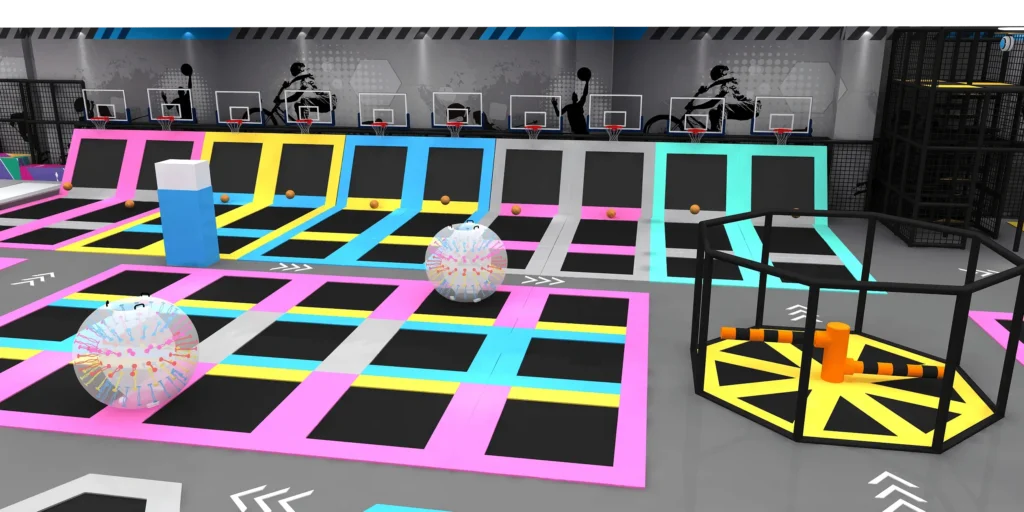
A high-quality, multi-functional indoor recreation and party venue designed primarily for children aged 5–14 and their families, with dedicated adult-oriented evening programming. Saskatoon’s long, severe winters create a captive and substantial market for indoor family entertainment. While several indoor play venues exist, the market reveals significant gaps: a lack of sophisticated, adventure-focused experiences for older children (5–14), chronic underinvestment in parent comfort and quality food & beverage, and a noisy, overcrowded “warehouse” feel that drives families away. This plan outlines a premium Family Entertainment Center (FEC) of 8,000–15,000 sq ft that directly addresses these gaps through superior design, curated adventure zones, a high-margin café/lounge, and a robust party-hosting engine. Financially, the total start-up capital requirement is conservatively estimated between 720,000 and 1,540,000+, a range substantiated by industry benchmarks, local construction costs, and comparable real-world listings.
Multi-Dimensional Revenue Model
Solving the “How Do I Pay the Rent” Problem
Our revenue strategy deliberately diversifies away from sole dependence on walk-in admission, building a resilient income mix.
1. Core Cash Cow: Party & Group Packages (40–50% of revenue)
Infrastructure: 6–8 private, soundproofed party suites in standard, deluxe, and themed configurations.
Pricing Strategy:
Weekday/off-peak groups (daycares, schools, camps): from 20–20–30 per child, including play time and a meal/snack.
Weekend/peak birthday packages: base packages from 350–350–450 for 10–12 children, including a private suite, dedicated party host, themed decorations, kids’ meals, beverages, and cake.
Upsells: Adult meal platters, professional photography, custom cakes, premium decor, and loot bags.
Saskatoon Advantage: Winter birthday parties are a deeply ingrained social necessity; pre-booked packages secure strong, predictable cash flow.
2. High-Margin Secondary Spend: Food & Beverage (25–35% of revenue)
Target: Parents accompanying children, and adult evening patrons.
Menu Design:
Café Bar: High-quality espresso-based drinks, specialty beverages (coffee margins typically 70–80%).
Quick-Service Food: Healthy salads, wraps, sandwiches, fries, and kid-friendly but nutritionally balanced options.
Adult Evening Menu: Beer, wine, signature cocktails, and shareable appetizers during “Adults-Only” nights.
Pricing Position: Premium to fast food but below full-service dining, creating strong perceived value.
3. Recurring Revenue Lock-In: Memberships & Punch Cards (15–20% of revenue)
Unlimited monthly/annual memberships with perks like café discounts and priority party booking.
Prepaid punch cards and top-up stored-value cards offering a discount over single entry.
Particularly compelling given the 5–6 month winter, driving high repeat visit frequency.
4. Ancillary Programming & Events (5–10% of revenue)
Daytime enrichment classes (coding, art, robotics workshops) utilizing idle weekday capacity.
Seasonal spectaculars (Halloween, Christmas, spring break camps).
Family and adult tournaments (ninja warrior, family obstacle relays).
Space & Time Yield Management
Solving the “Idle Space Burns Cash” Problem
Every hour and square foot must generate revenue. A layered, rolling schedule achieves this.
1. Full-Time Coverage Operating Strategy
Weekday Daytime (Mon–Fri 9am–4pm): Target preschoolers (if a dedicated toddler zone is included), home-school groups, and pre-booked school/daycare groups. Host enrichment programs and after-school care blocks. Pricing emphasizes volume via attractive group rates.
Weekday Evenings & Weekends (4pm–9pm): Core open play for 5–14 year olds and prime-time birthday parties.
Weekend Late-Nights (Fri/Sat 9pm–1am): “Adults-Only” nights for 19+ patrons. The space transforms into a social venue with music, ninja/obstacle challenges, and adult beverages. Profit is driven by F&B rather than admission.
2. Spatial Zoning & Sightline Design (for a ~10,000 sq ft footprint)
Main Adventure Zone (60–70%): Multi-level play structure, climbing walls, parkour/ninja obstacle course, trampoline zone (meeting highest CSA safety standards). Designed for 5–14 age group challenge and flow.
Junior Toddler Zone (10–15%): Physically separated, enclosed area for 0–4 years old, giving families with mixed-age children a reason to stay longer.
Party Suites (10–15%): Privately enclosed, overlooking the main floor where possible.
Café/Lounge & Seating (10%): Elevated, with clear 100% line-of-sight to play areas. Comfortable seating, ample power outlets, premium WiFi.
Support Spaces: Front desk, lockers, washrooms, administration office.
Location Strategy, Leasehold Improvements & Compliance
Solving the “Hidden Huge Expenses” – With Cost Justifications
This is where Saskatoon entrepreneurs most frequently underestimate capital requirements. All amounts are substantiated by local data and industry benchmarks as noted.
1. Real Estate & Lease Costs
Target: High-ceiling warehouse/light industrial flex space, or vacated big-box retail (e.g., Centre Mall vicinity, southeast Saskatoon), minimum 8,000–15,000 sq ft, with ceiling height ≥20–25 ft.
Base Rent: Saskatoon net rents for such spaces typically range 12–12–20 per sq ft per year. For 10,000 sq ft, this equates to ~10,000–16,700/month in base rent.
Additional Occupancy Costs (TMI/CAM): Taxes, maintenance, insurance are additional, averaging 4–4–8 per sq ft per year. This adds ~3,300–6,700/month, pushing total fixed occupancy to roughly 13,300–23,400/month before a single dollar is spent on the business itself.
2. Leasehold Improvements – The Capital “Black Hole” (All justified by Justification 2)
Fire Suppression & Sprinkler Retrofit: Installing multi-level play structures requires a complete sprinkler re-design to meet the National Fire Code and Saskatoon Fire Department mandates.
Budget: 50,000–150,000+
HVAC (Heating, Ventilation, Air Conditioning): With hundreds of active children and Saskatoon’s -30°C winters and +30°C summers, industrial-grade fresh air exchange and powerful cooling are non-negotiable to manage air quality and odor.
Budget: 80,000–200,000+Safety Flooring & Surfacing: Certified poured-in-place rubber or interlocking safety tile systems for fall zones.
Budget: 50,000–100,000Accessible Washrooms (ADA/Barrier-Free Compliance): Commercial-grade new build or renovation.
Budget: 40,000–60,000General Interior Build-Out: Partitioning party rooms, constructing café, lighting, sound system, finishes.
Combined Leasehold Improvements Total: 300,000–600,000+
3. Permits, Zoning & Professional Fees
Must confirm with the City of Saskatoon Planning Department that the site’s zoning allows “Indoor Recreation/Assembly” use. Rezoning, if needed, adds time, cost, and approval risk.
Required permits: Building Permit, Fire Department Approval, Business License, Food Service Permit, and Liquor License (if alcohol is served).
4. Commercial Insurance
Given high-risk activities (trampolines, climbing, parkour), comprehensive General Liability, Property, and Workers’ Compensation coverage is extraordinarily expensive.
Annual Budget: 20,000–50,000+. This is a substantial fixed operating cost and is included in monthly OPEX calculations.
Financial Projections & Break-Even Analysis
Calculating the “Life-or-Death Line” – With Justifications for All Major Figures
All capital and operating estimates are conservative and grounded in four verifiable justification pillars. Key numbers are annotated accordingly.
1. Start-Up Capital Requirements (CAPEX + Working Capital)
| Category | Amount (CAD) |
|---|---|
| Play Equipment (incl. installation) | 150,000–400,000 |
| Leasehold Improvements | 300,000–600,000 |
| Kitchen/Café Equipment | 30,000–60,000 |
| IT, POS & Security | 10,000–20,000 |
| Furniture, Fixtures & Décor | 20,000–40,000 |
| Total CAPEX | 510,000–1,120,000+ |
| Working Capital (6–12 months) | 210,000–420,000 |
| TOTAL START-UP CAPITAL NEEDED | 720,000–1,540,000+ |
Working Capital Detail:
6–12 months occupancy cost (rent + TMI): 120,000–240,000
6–12 months payroll reserve: 60,000–120,000
6–12 months insurance, utilities, marketing reserve: 30,000–60,000
2. Monthly Operating Expenses (OPEX) Forecast
| Expense Item | Estimated Monthly Cost |
|---|---|
| Base Rent | 10,000–16,700 |
| TMI/CAM | 3,300–6,700 |
| Commercial Insurance | 1,700–4,200 |
| Payroll (Mgrs + part-time) | 15,000–30,000 |
| Total Fixed Monthly Cost | 30,000–57,600 |
| Utilities | 2,000–6,000 |
| Maintenance & Cleaning | 1,000–3,000 |
| Food & Beverage COGS | ~30-35% of F&B revenue (variable, not in fixed cost) |
Break-even point = Total Fixed Costs ÷ (Average Revenue Per Customer – Average Variable Cost Per Customer). With fixed costs conservatively estimated at 40,000–50,000/month on a blended basis, the facility must generate sufficient party bookings, admissions, and F&B sales to cover this load. The financial model targets achieving monthly break-even within 12–24 months after opening, assuming a steady ramp in birthday party bookings and membership sales throughout the first two winter cycles.
Risk Management & Capital Buffer
Ensuring You Survive Until You Become Profitable
1. Sufficient Working Capital Buffer
A minimum of 6–12 months of full fixed operating expenses is deliberately carved out in the start-up budget (see above). This “runway” is the single most critical defense against slower-than-expected initial traffic or unforeseen cost overruns.
2. Key Risk Mitigations
Safety & Liability Risk: The largest operational threat. Mitigation: strictly adhere to CSA equipment standards, implement daily equipment inspection logs, maintain record-keeping for all incidents, and carry robust commercial liability coverage.
Seasonal Cash Flow Risk: Summer attendance naturally dips. Mitigation: launch premium summer day camps, offer weekday daytime corporate/group rentals, and perform annual deep-cleaning/maintenance during the lowest utilization weeks.
Competitive Response: Incumbents may renovate or cut prices. Mitigation: build a sticky membership base and a premium F&B/party experience that competes on quality, not price.
Regulatory & Compliance Risk: Failure to secure zoning or fire approval can kill the project. Mitigation: engage with Saskatoon Planning, Building Standards, and the Fire Department before signing any lease, and retain a local code consultant.
Competitive Landscape & Differentiation Strategy
The “White Space” in Saskatoon’s Indoor Play Market
Saskatoon’s existing indoor play options are polarized: small-scale toddler-focused setups or high-physical-exertion trampoline parks. A polished, experience-rich FEC for the 5–14 core demographic with premium parent amenities represents an unoccupied niche.
1. Competitor Vulnerability Analysis
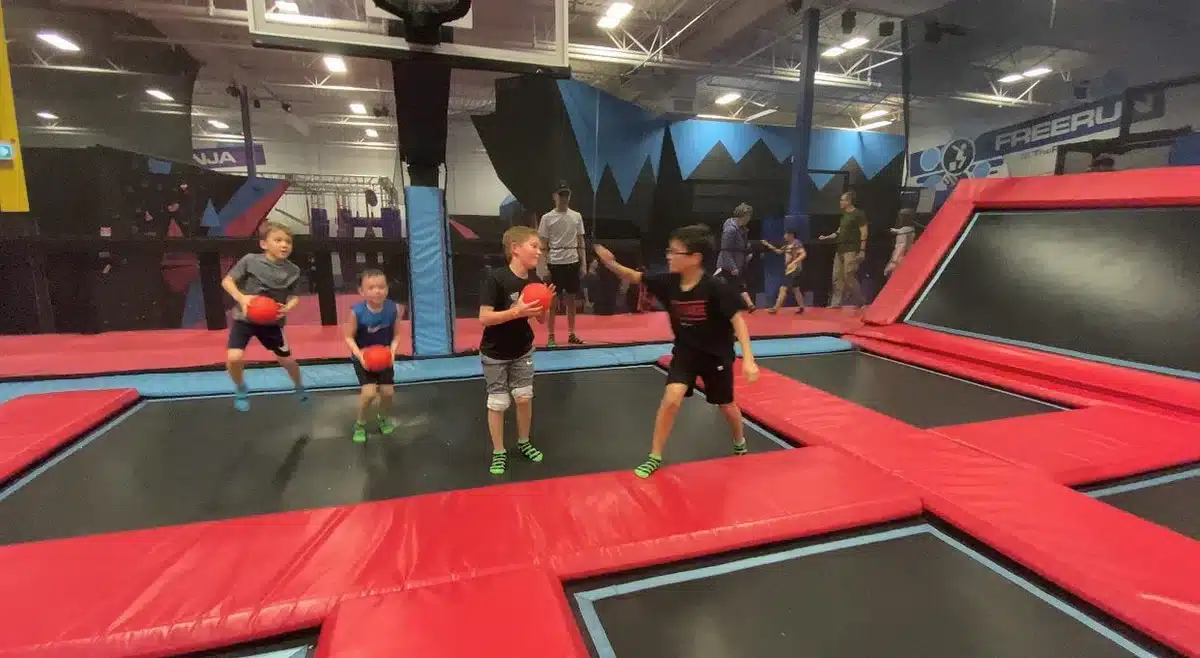

Apex Adventure Plex (~16,000 sq ft): Strengths are its size and teen-oriented ninja/trampoline features. Vulnerabilities: injury-risk perception, high insurance burden, absence of a comfortable parent lounge and quality café – the person paying the bill is largely ignored.
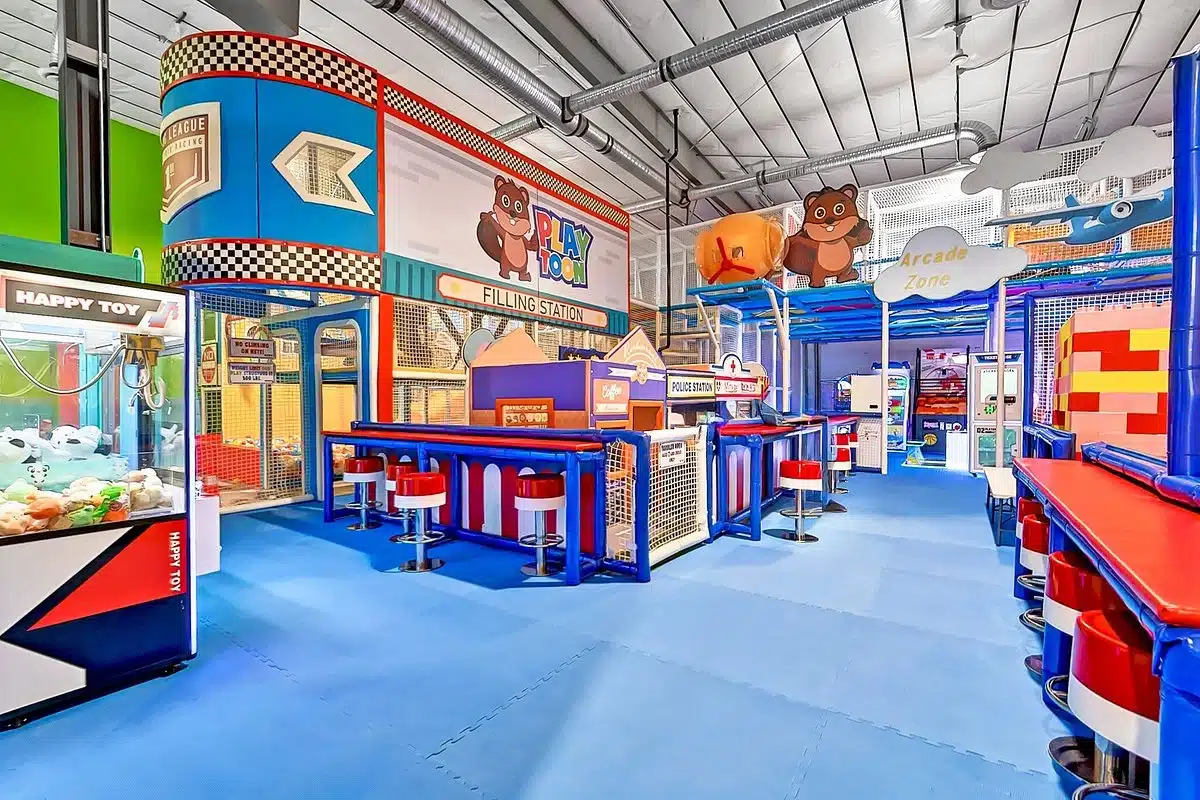

Play Toon Indoor Playground: Strengths are its new, large multi-tier structure and arcade. Critical vulnerabilities, amplified by user reviews: extreme overcrowding on PD days, no capacity controls, parent-unfriendly “prize ticket” arcade upsells causing friction, severe sensory overload and noise, and poor line-of-sight forcing parents to trail children rather than relax.
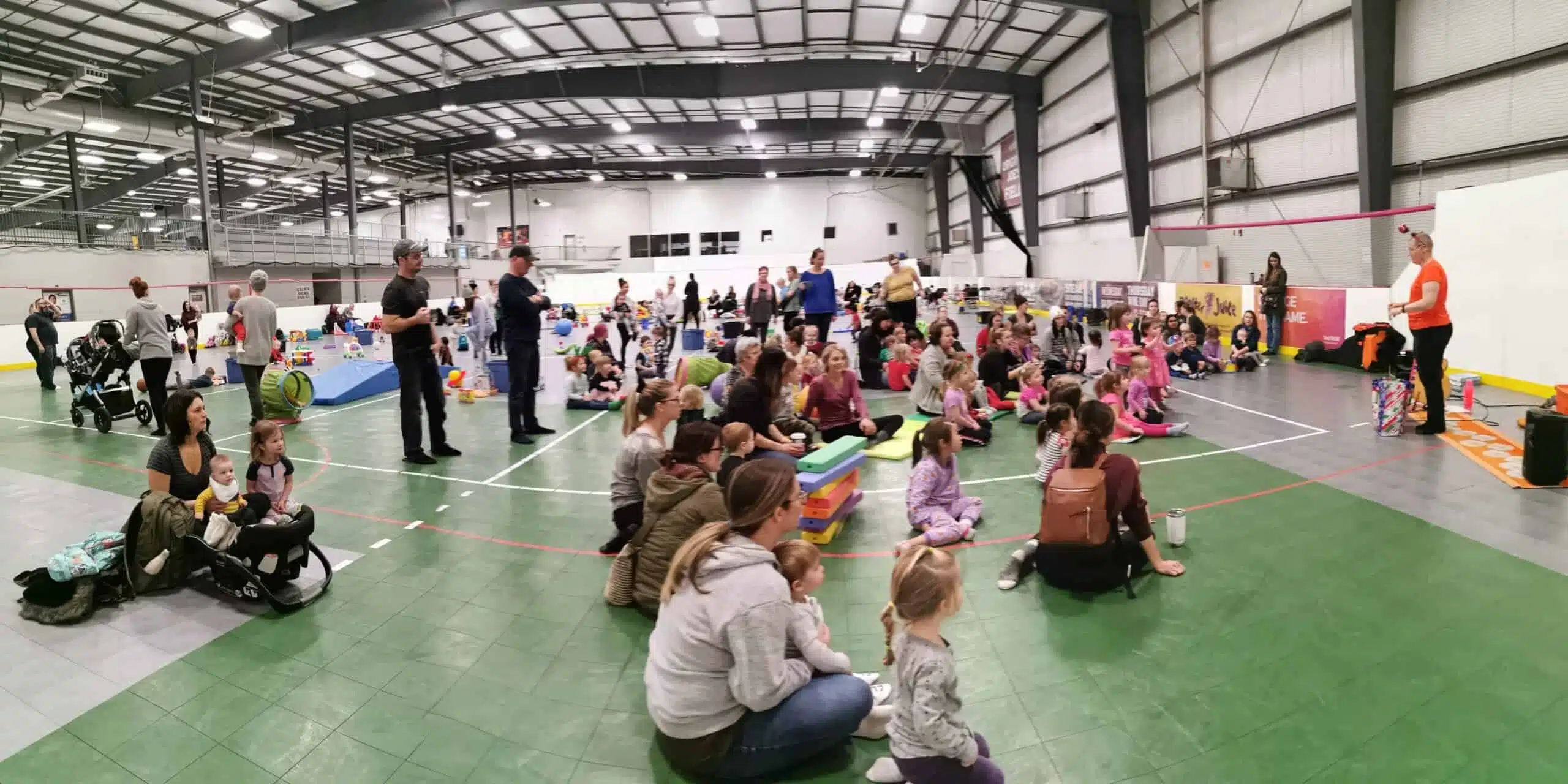

SSCI Indoor Playgroup (Soccer Centre): Seasonal weekday-morning bouncy castle setup for toddlers. Not a direct competitor for our 5–14 target, but proves demand for structured weekday programming. We will copy its logic by offering aggressive daytime group rates to schools and daycares to fill our otherwise quiet weekday hours.
2. Our Strategic Differentiation (The Decisive Advantages)
The Premium Parent Experience: Dedicate 10–15% of the footprint to a quiet, elevated café lounge with full Wi-Fi, specialty coffee, and real food. In a city with six months of winter, whoever wins the parents’ comfort wins repeat business.
All-Inclusive, “No-Nag” Pricing: Eliminate token-dispensing arcade machines and hidden costs. One admission price unlocks all play zones. This directly attacks Play Toon’s biggest customer experience pain point.
Aged-Up, Chaos-Free Adventure: Instead of a purely physical trampoline park, introduce Ontario-style hybrid entertainment (interactive climbing walls, team-based physical/mental challenge rooms). Design the space for flow, visible supervision, and controlled capacity limits – offering “premium, calm adventure” as a market antithesis to the existing noisy warehouse model.
Evening Transformation: Weekend adult nights turn fixed overhead into profit-generating social hours, achieving space utilization that none of the incumbents currently capture.
Conclusion
This plan does not merely propose another children’s playground. It presents an integrated commercial real estate and experience-based business designed to solve the specific winter-driven social needs of Saskatoon families. The financial modelling, grounded in justified local and industry data, demonstrates that a well-executed project can meet its substantial start-up and occupancy costs through a disciplined, multi-revenue-stream approach. The critical path forward is: confirm zoning, lock in a suitable high-ceiling property, engage design-build professionals to price the leasehold improvements exactly, and secure adequate working capital to carry the project through its ramp-up to profitability.