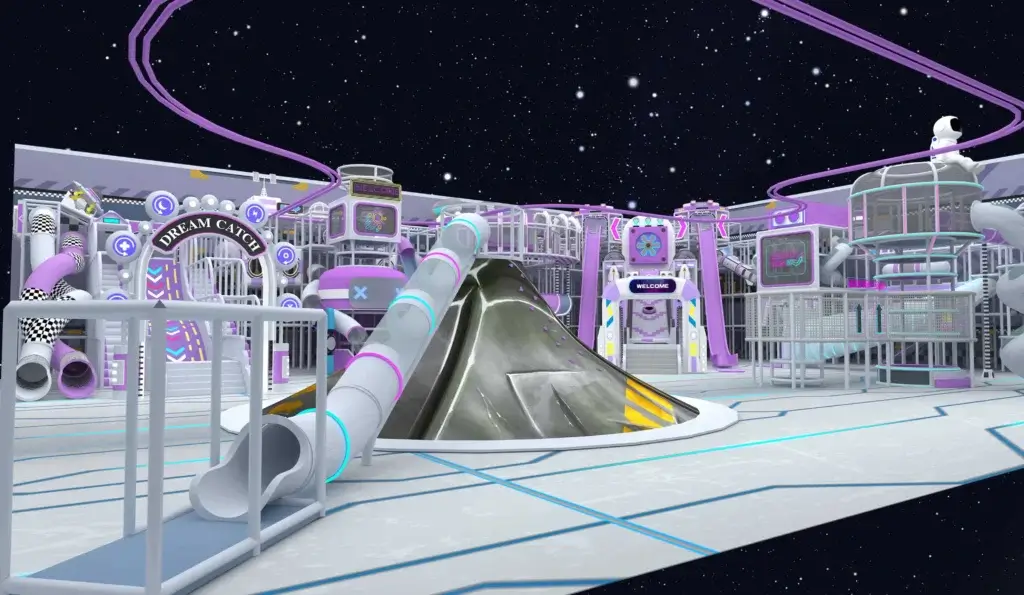
Strategic Categorization: ESG Compliance & Dwell Time Extension
Style Overview:
Biophilic Design 2.0 transcends visual greenery. It emphasizes tactile authenticity and environmental stewardship, aligning with LEED certification standards and global ESG (Environmental, Social, and Governance) investment criteria.
Core Design Elements:
Material Strategy: Adoption of FSC-certified solid wood, natural sisal ropes, and recycled cork flooring to minimize off-gassing and volatile organic compounds (VOCs).
Spatial Topography: “Indoor-Outdoor” simulation using asymmetrical landforms and undulating hills rather than flat, repetitive surfaces.
Commercial & Risk Mitigation Value:
Liability & Friction Reduction: The primary barrier to repeat visitation for parents is hygiene anxiety and indoor odor. High-grade, non-toxic materials directly mitigate negative word-of-mouth and potential liability claims.
Parental Tolerance Quotient: Research indicates natural, muted color palettes and organic textures significantly reduce cortisol levels in supervising adults. A calmer parent correlates directly to a longer dwell time and higher incidental F&B spend.
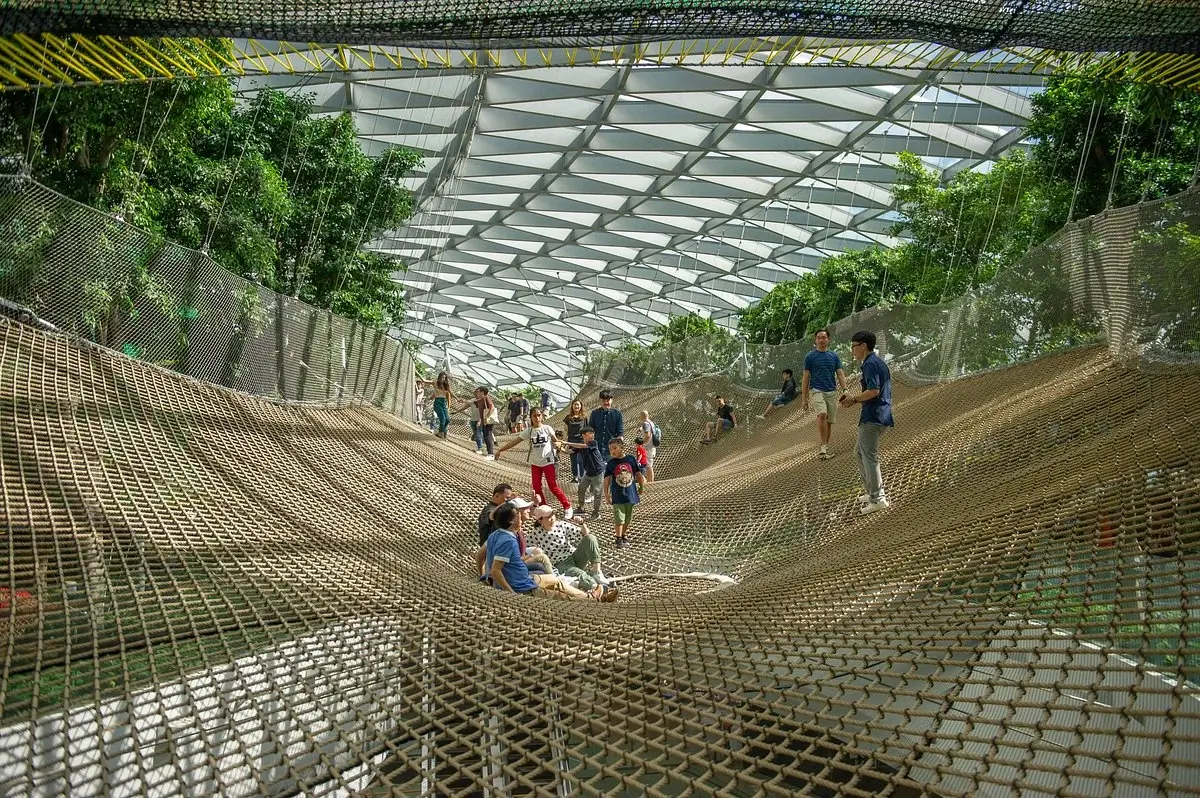
Nature Play at Jewel Changi Airport
Location: Singapore
Typology: Indoor Biophilic Play Landscape / Transit-Adjacent Recreation
Target Demographic: Toddlers and Younger Children (Ages 2–6) with Supervising Adults
Design Statement:
As an interior design strategist, Nature Play represents the pinnacle of “Invisible Architecture.” The design deliberately avoids fixed play equipment. Instead, it employs a sculpted topography of soft, undulating mounds integrated with indigenous-style planting within a climate-controlled glass dome. The inclusion of mist effects is not merely decorative; it is a sensory modulation tool that provides gentle, self-regulated stimulation for young children while naturally demarcating play zones without the need for intrusive fencing. The bench integration into the landscape contouring solves the critical issue of parental line-of-sight supervision without creating a segregated “waiting pen.” This project demonstrates that high-end retail environments (Changi Airport) are willing to allocate premium floor area to low-equipment, high-atmosphere spaces because they significantly elevate dwell time and brand perception.
Commercial Design Takeaway:
Biophilic design is a CapEx optimization strategy. By investing in terrain and horticulture rather than expensive mechanical rides, operators achieve a lower maintenance overhead while securing a “Premium ESG” positioning that justifies higher entry fees or adjacent retail spend.
Source: Project details based on publicly available information from Changi Airport Group and architectural reviews. Analysis represents professional design interpretation.
Strategic Categorization: Retention Engineering & OPEX Optimization
Style Overview:
The integration of Artificial Intelligence and Mixed Reality (MR) creates a hyper-personalized play journey. This style moves beyond static light shows to adaptive environments where the space reacts uniquely to each child’s movements and decisions.
Core Design Elements:
Data Footprint Wearables: RFID wristbands track motor skill milestones, social interaction frequency, and problem-solving paths. Post-visit, the system auto-generates a “Child Development & Kinesthetic Analysis Report.”
Non-Intrusive MR Spaces: Projection mapping that transforms physical climbing walls into digital quests without requiring heavy, unhygienic headsets.
Commercial & Risk Mitigation Value:
Secondary Conversion & LTV: The Growth Report is a powerful tool for private traffic conversion. It provides a tangible, educational value-add that justifies premium membership fees.
Operational Efficiency: Digital content updates cost a fraction of physical hardware replacement. This enables “Permanent Venue, Perpetual Freshness.”
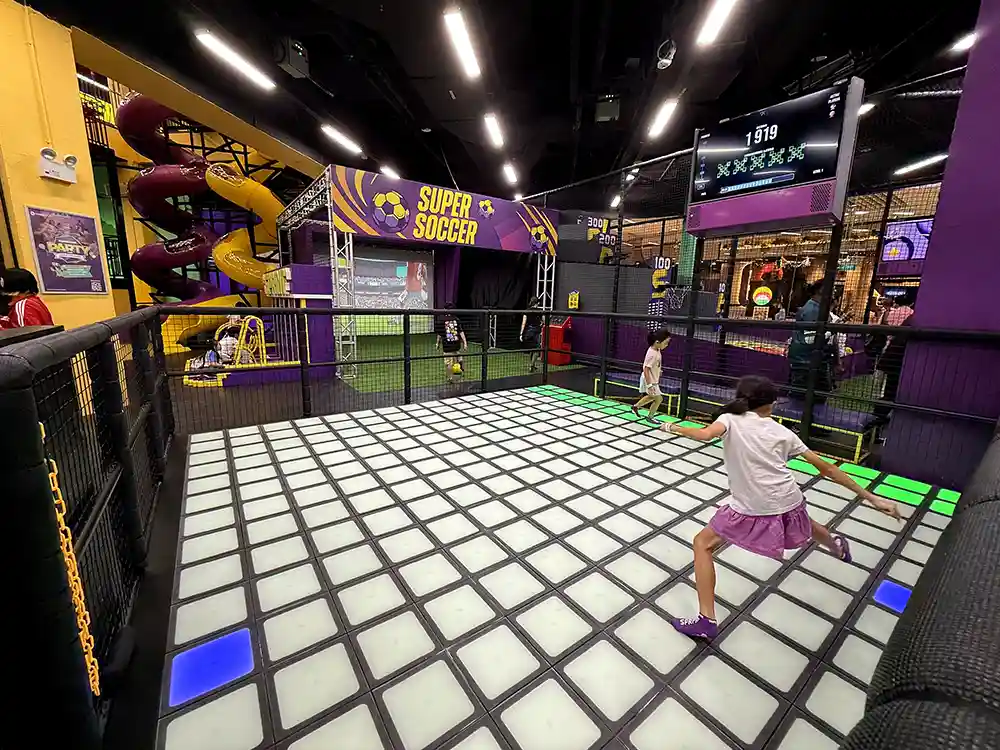
SuperPark Singapore (Operational Concept Reference)
Location: Suntec City Mall, Singapore (Former)
Typology: Multi-Zone Indoor Activity Park / Sports-Infused Edutainment
Target Demographic: All-Ages (Children, Teens, Adults, Corporate Groups)
Design Statement:
From a spatial planning perspective, SuperPark functions as a kinetic circuit board. The design zoning strategy—separating Freestyle Areas (trampolines/scoot) from Game Arenas (digital batting/hoops) and Adventure Obstacles—is a masterclass in flow management and capacity optimization. By integrating scoreboards and reaction-based game-tech elements, the design actively encourages repeat circuit usage. A child does not simply go down a slide once; they return to the basketball game to beat their high score. This is the essence of Gamified Spatial Design. Furthermore, the inclusion of adult-appropriate physical challenges (climbing walls, pedal car tracks) directly addresses the “Kidult” economy, converting a child-centric visit into a family co-participation event. This model validates the 2026 trend of transitioning from passive equipment to active, data-feedback environments.
Commercial Design Takeaway:
The layout must function as a Retention Loop. Zones should be visually connected but acoustically managed to allow for competitive energy in one area without overwhelming a quieter skill-building zone nearby.
Source: Operational and design layout details referenced from publicly available marketing materials and visitor reviews of SuperPark. Analysis provided for industry benchmarking purposes.
Strategic Categorization: Social Proof & Parental Economy Activation
Style Overview:
2026 design recognizes a dual-client model: the Child User and the Parent Payer. This style curates a “symbiotic space” that services the child’s imagination while satisfying the parent’s need for social aesthetics and functional comfort.
Core Design Elements:
The “Kidulting” Concept: Dedicated, high-design zones for adults featuring specialty coffee, co-working booths, and curated reading nooks.
Mission-Driven Circulation: Narrative-driven pathing that encourages exploration, turning the space into a living storybook.
Commercial & Risk Mitigation Value:
Capturing the Payer’s Wallet: Satisfying the adult’s aesthetic sensibilities is the most effective strategy for increasing Average Check Size (ACS) .
Zero-Cost Marketing Leverage: High “Instagrammability” outsources marketing to the visitor’s social media feed, reducing Customer Acquisition Cost (CAC) .
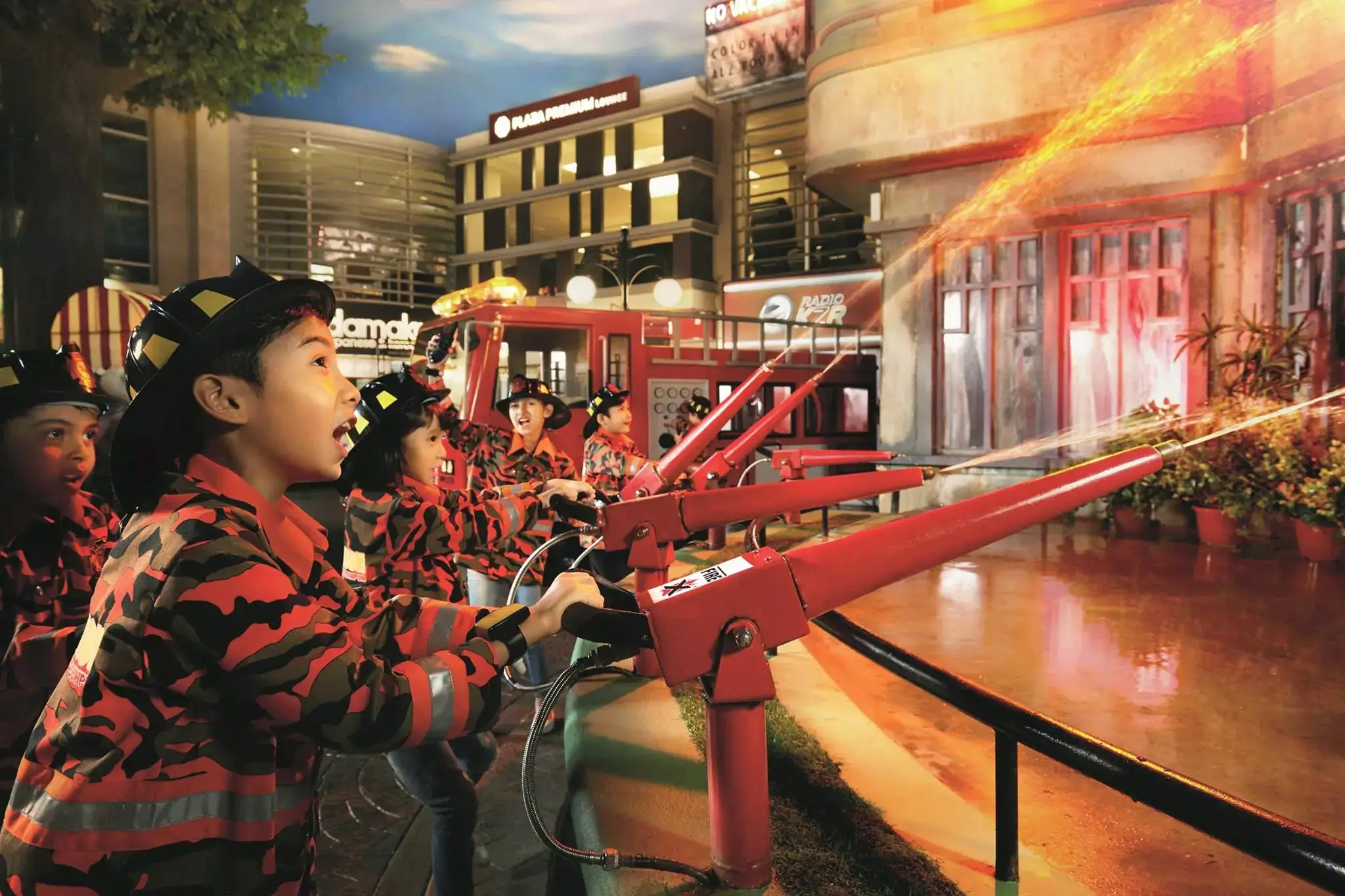
KidZania
Location: Global (Orig. Mexico City)
Typology: Edutainment City / Role-Play Metaverse (Physical)
Target Demographic: Children Aged 4–14; Parents as Observers/Participants
Design Statement:
KidZania is the ultimate execution of Immersive Theming as Revenue Architecture. The design replicates a functioning city at 70% scale, complete with paved streets, vehicles, and branded storefronts (Hospitals, Fire Departments, TV Studios). Crucially, the circulation design separates the child’s “worker” path from the parent’s “civilian” path. Children navigate the city interior to earn “kidZos,” while parents are strategically positioned in perimeter cafes or observation lounges with clear sightlines but without obstructing the narrative illusion. This spatial separation is critical for extending session length. The design also incorporates Built-In Sponsorship Infrastructure—every branded pavilion is a revenue-generating real estate asset for the operator. The internal economy design (earning and spending kidZos) is a behavioral design tool that teaches financial literacy while driving soft upsells (e.g., paying extra kidZos for premium activities).
Commercial Design Takeaway:
The story is the navigational framework. A well-designed narrative path prevents congestion, distributes foot traffic evenly across the floorplate, and justifies a 4-hour dwell time, which directly correlates to higher per-cap F&B spend.
Source: Brand and operational details sourced from KidZania corporate materials and industry white papers on Location-Based Entertainment (LBE).
Strategic Categorization: Liability Shield & Community License to Operate
Style Overview:
This design philosophy prioritizes “Invisible Engineering.” It integrates medical-grade environmental controls with Universal Design principles to cater to neurodivergent visitors and post-pandemic hygiene expectations.
Core Design Elements:
Inclusive Zoning (Quiet Zones): Low-stimulation nooks with acoustic baffling and dimmable warm lighting.
Invisible Defense Systems: Medical-grade HEPA filtration with real-time air quality displays and advanced sound absorption panels.
Commercial & Risk Mitigation Value:
The Trust Asset Premium: “Demonstrable Safety” is the sole determinant of long-term membership adoption.
Policy & Tax Incentives: Facilities offering Inclusive Community Spaces often qualify for government grants and preferential rental negotiations.
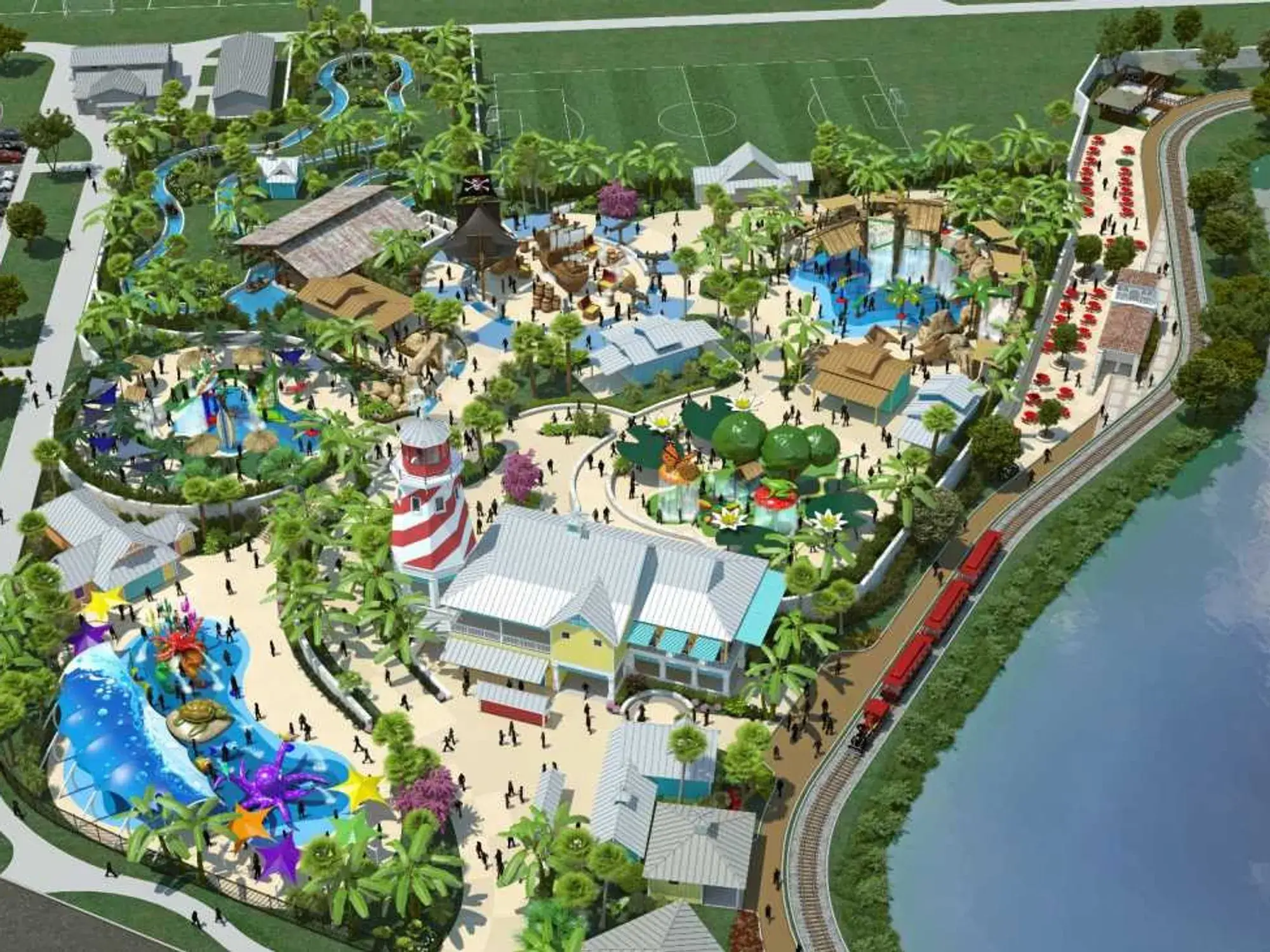
Morgan’s Wonderland
Location: San Antonio, Texas, USA
Typology: Fully Accessible Theme Park / Universal Design Benchmark
Target Demographic: Guests of All Ages and Abilities; Special Focus on Cognitive & Physical Accessibility
Design Statement:
Morgan’s Wonderland is the definitive case study in Barrier-Free Environmental Psychology. The design eschews the standard playground mulch for smooth, navigable surfaces that accommodate wheelchairs without vibration or resistance. The inclusion of Sensory Village is a critical design intervention: it provides a low-stimulation, climate-controlled respite with tactile walls and interactive displays that do not rely on loud audio triggers. From an operational design perspective, the park’s policy of free admission for guests with special needs is offset by the brand equity and donor/sponsor appeal generated by the mission. The 2017 expansion, Morgan’s Inspiration Island, further demonstrates design innovation through the use of temperature-controlled water and waterproof wheelchairs—solving a hygiene and comfort issue that typically excludes children with mobility devices from water play. This project proves that inclusive design expands the Total Addressable Market (TAM) by attracting multi-generational family groups who prioritize safety and empathy over thrill rides.
Commercial Design Takeaway:
Incorporate Quiet Zones and Air Quality Transparency Displays as standard features. These are not just amenities; they are trust signals that convert one-time visitors into annual members.
Source: Design and accessibility features based on documentation from The Gordon Hartman Family Foundation and Morgan’s Wonderland Inclusion Foundation. Industry data based on observed trends in inclusive recreation.
Strategic Categorization: CapEx Minimization & Revenue Diversification
Style Overview:
Moving away from fixed, concrete-intensive builds, this approach champions asset fluidity. The space is designed as a kit of parts that can be reconfigured based on real-time operational data.
Core Design Elements:
Hybrid Event Architecture: Spaces designed with “Dual Mode” functionality (Play Zone by day, Party Suite by night).
Standardized Components: Use of bolt-together frameworks to reduce construction time.
Commercial & Risk Mitigation Value:
Optimizing Gross Floor Area Efficiency: This design unlocks Full-Week Revenue.
Strategic Pivoting: Modularity reduces Sunk Cost Fallacy and enables low-cost refreshes.
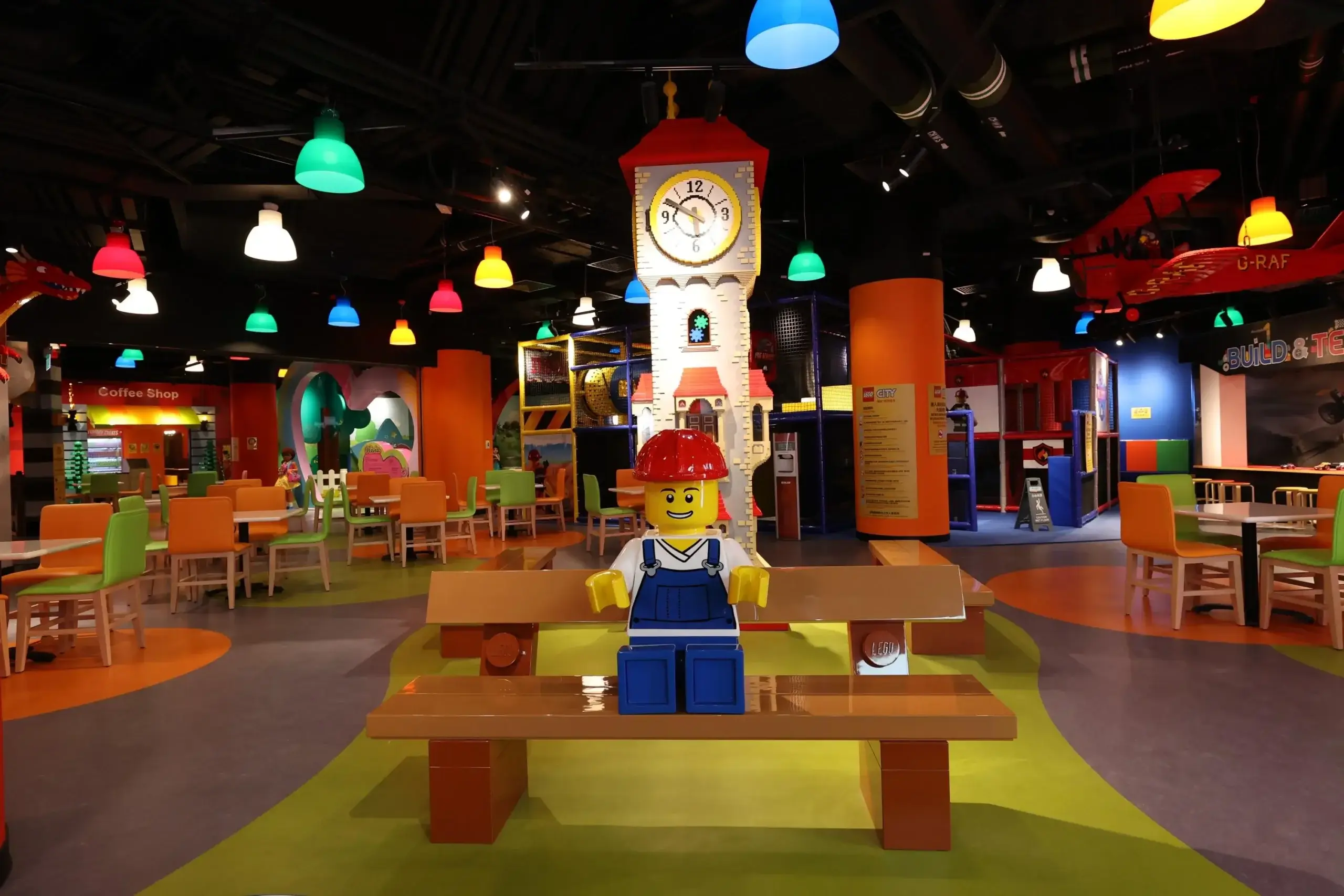
LEGOLAND Discovery Centre
Location: 25+ Global Metropolitan Locations
Typology: Indoor Modular Edutainment / Urban Infill Attraction
Target Demographic: Families with Children Aged 3–10
Design Statement:
The LEGOLAND Discovery Centre (LDC) model is a masterclass in Scalable Spatial Prototyping. As a design strategist, the LDC format is compelling because it rejects bespoke, one-off architecture in favor of a standardized operational footprint. The layout is consistently anchored by the Miniland (a local landmark display) and the Master Model Builder Workshop. This consistency allows for rapid deployment in urban retail spaces—often former department store pads—with a predictable 12–16 week fit-out period. The modularity is evident in the workshop areas: tables and brick pits can be cleared in under 15 minutes to convert the space from free-play to a structured birthday party or a STEM class. This “Dual Mode” design maximizes Revenue Per Square Foot (RPSF) by activating the space during off-peak school hours with educational programming. The design further hedges against content fatigue by allowing for soft refreshes—simply changing the theme of the 4D movie or the Miniland build challenge—without any structural downtime.
Commercial Design Takeaway:
Design for Deconstruction and Reconfiguration. Fixed, themed concrete grottos are a financial liability. Modular steel frames and re-skinable facades are the future of agile indoor entertainment real estate.
Source: Operational details based on Merlin Entertainments annual reports and public franchise disclosure documents. Performance metrics are illustrative of industry-standard modular construction benefits.