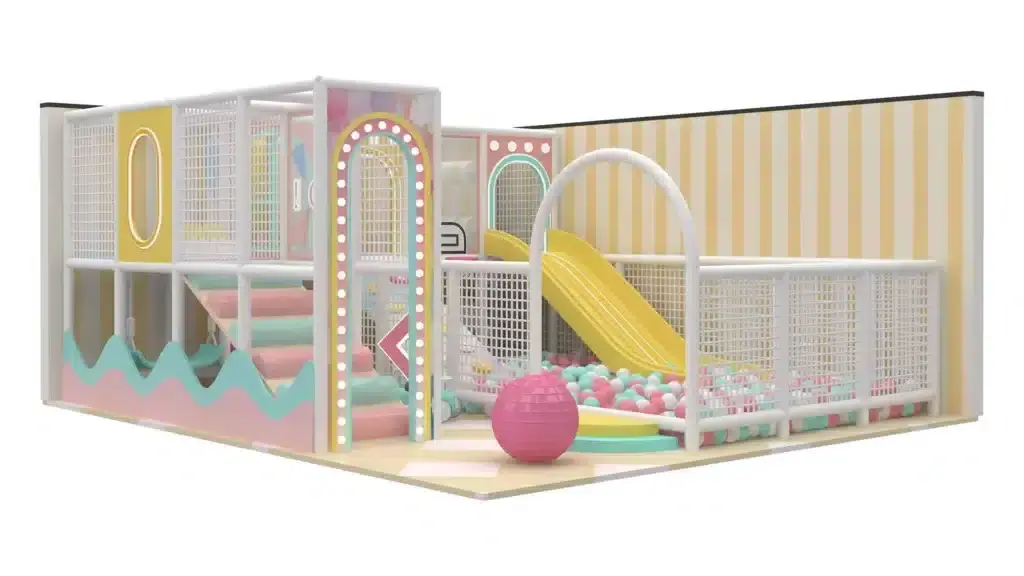
Toddlers have two settings: fearless explorer and gravity‑defying daredevil. In an indoor daycare environment, those settings don’t change – but the risks do. Limited space, hard walls, high‑touch surfaces, and the constant need for hygiene make indoor play a very different challenge from outdoor playgrounds.
At Guangdong Dream Catch, we believe that safe indoor exploration is the heart of healthy development. When you are responsible for little ones who treat every cushion as a climbing wall and every corner as a hiding spot, choosing the right indoor playground equipment isn’t just important – it is absolutely critical.
So what playground equipment truly keeps our smallest adventurers safe inside a daycare center? The surprising answer isn’t just about shorter slides or softer edges. It is about understanding developmental stages, choosing materials that survive daily disinfection, designing for limited sightlines, and creating environments that balance challenge with protection – all within four walls.
This guide explores the safest indoor playground equipment options for toddlers and why they matter for your daycare center.
Understanding Indoor‑Specific Safety Standards
The safest playground equipment for toddlers isn’t simply a miniaturized version of outdoor gear. It requires an entirely different design philosophy – one that accounts for enclosed spaces, air quality, noise, and continuous adult supervision.
Toddlers aged 6 months to 23 months have developing motor skills, limited risk assessment, and physical proportions that demand specialized dimensions. These critical guidelines are set by:
The Consumer Product Safety Commission (CPSC) – outlines safety performance standards for public playgrounds.
ASTM F2373 – specifically covers equipment intended for children ages 6 to 23 months.
ASTM F1918 – standard for soft contained play equipment (indoor soft play).
In an indoor daycare environment, four additional safety priorities emerge:
| Indoor Priority | Why It Matters |
|---|---|
| Full soft‑play construction | All impact surfaces must be padded – no exposed steel or hard plastic |
| Zero formaldehyde & low VOCs | Indoor air circulates less; chemical safety is critical for developing lungs |
| Slip resistance (even with socks) | Children often play in socks; surfaces must provide grip without shoes |
| Lower maximum height | Platforms and slides should stay under 18–24 inches, as ceilings and supervision sightlines are tighter |
The Safest Indoor Equipment Types for Toddlers
While many outdoor pieces can be brought indoors, the safest indoor toddler equipment is purpose‑built for enclosed, high‑hygiene, low‑ceiling spaces. Below are the most recommended types.
1. Modular Soft Play Systems (Climbers, Ramps, and Blocks)
These are the workhorses of indoor daycare play. Made from high‑density foam wrapped in antibacterial vinyl, they allow toddlers to climb, crawl, and stack without risk of impact injury.
Why they are safe: No hard edges; falls are cushioned; shapes can be reconfigured to keep play fresh.
Design tip: Choose systems with varied textures and gentle slopes to develop gross motor skills.
Versatility bonus: Look for lightweight, stackable modules that can be easily moved to free up floor space for mealtime, naptime, or group activities. Daycare rooms must serve multiple purposes – equipment that rolls away or nests together is a true space‑saving asset.
2. Wall‑Mounted Activity Panels
The safest option of all – because they occupy zero floor space and have no fall risk whatsoever. Mounted at toddler height, these panels feature spinning gears, sliding beads, mirrors, and textured surfaces.
Why they are safe: No moving parts that pinch; no elevation; easy to clean between uses.
Best for: Cognitive development, fine motor skills, and sensory exploration.
Zero trip hazard: Unlike floor‑standing equipment, wall panels eliminate tripping risks entirely – a critical advantage in crowded rooms.
3. Low‑Profile Indoor Slides with Tunnels
Slides remain a toddler favorite, but indoor daycare slides must be extra gentle. Look for:
Gradual slope (much less steep than outdoor slides)
Extended run‑out section at the bottom
Side barriers to prevent leaning over the edge
Tunnel covers that are translucent or perforated so teachers can see inside at all times
Why they are safe: Reduced speed, soft landing zones, and full visibility prevent hidden entrapment.
4. Soft Balance Beams and Wavy Walkways
These are placed directly on the floor – no elevation required. The challenge is balance, not height.
Why they are safe: Fall height is zero. Toddlers learn proprioception without injury risk.
Material: High‑density foam with non‑slip top surface.
5. Interactive Floor Projection (Digital Play)
For a completely touchless option, projection systems turn any flat floor into an interactive game – popping bubbles, catching fish, or following a path.
Why they are safe: No physical equipment at all. No collisions, no pinch points, no hard surfaces.
Bonus: Easily switch games to match weekly themes.
6. Themed Dramatic Play Houses
Miniature houses, market stalls, or “toddler towns” encourage imaginative play. Choose designs with open fronts or mesh windows to ensure no blind spots.
Why they are safe: Low or no elevation; open design prevents hiding; soft edges throughout.
Why Materials Matter Indoors: From Floor to Ceiling
The materials used in indoor playground equipment directly affect safety, durability, and – critically – hygiene. Daycare centers require daily, sometimes hourly, disinfection. Materials must survive repeated wiping without degrading.
| Material | Property | Indoor Benefit |
|---|---|---|
| Antibacterial vinyl (medical‑grade) | Resists microbial growth; easy to wipe | Reduces transmission of common daycare illnesses |
| High‑density fire‑retardant foam | Maintains shape under heavy use; meets fire codes (NFPA 701 or equivalent) | Prevents “bottoming out” and ensures safety in enclosed spaces |
| Powder‑coated steel (used sparingly) | Structural support where needed | Only used for frames; never exposed to toddler contact |
| Non‑toxic, low‑VOC finishes | No harmful off‑gassing | Safe for developing lungs in poorly ventilated areas |
| Seamless welding on plastic components | No crevices for dirt | Makes cleaning fast and effective |
The “Barefoot” Safety Factor: In an indoor setting, safety is also a sensory experience. Because toddlers often play without shoes, the transition between different floor textures (e.g., from a smooth vinyl mat to a textured rubber tile) must be seamless. This not only prevents tripping but also provides the correct tactile feedback necessary for developing balance and coordination in a controlled environment. We design all our floor interfaces to be flush and consistent.
Indoor Surfacing: The Foundation of Safe Exploration
Even the safest equipment cannot prevent every tumble. That is where indoor surfacing becomes the unsung hero of your daycare playground. Unlike outdoor surfacing (wood chips, poured rubber), indoor surfacing must be soft, easy to clean, and compatible with socks.
The best indoor surfacing options for daycare centers:
| Surfacing Type | Pros | Best For | Cleaning Frequency |
|---|---|---|---|
| Thick EVA foam tiles (interlocking) | Affordable, easy to install, good shock absorption | General play areas, under climbers and slides | Daily vacuum + weekly disinfectant wipe |
| Rolled rubber sheeting (seamless) | No gaps for dirt; can be sanitized with mop or UV light | High‑traffic zones, ball pit areas | Daily mopping with mild detergent |
| Poured‑in‑place rubber (indoor grade) | Seamless, durable, customizable thickness | Long‑term installations with high daily use | Deep clean monthly |
| Wall padding (skirting) | Protects toddlers from running into columns or corners | Along walls, around structural pillars | Wipe down daily |
Recommendation: For most daycare centers, a combination of EVA foam tiles under movable equipment and rolled rubber in fixed zones offers the best balance of cost, safety, and hygiene.
Designing Indoor Toddler Play Zones: Turning Limits into Strengths
Indoor spaces are rarely large or perfectly shaped. But with thoughtful design, even a modest room can become a safe, engaging toddler wonderland. Follow these five design principles:
1. Zero Blind Spots
Teachers cannot be everywhere at once. Design the play area so that every corner, tunnel, and playhouse is visible from at least one seated adult position. Use:
Open shelving instead of solid walls
Mesh panels on tunnels and playhouses
Mirrors to see around corners
2. Separate High‑Energy and Quiet Zones
Place climbing and sliding equipment on one side of the room, and sensory panels, books, and soft blocks on the other. This reduces collisions between active toddlers and those seeking calm.
Inclusivity addition – The Quiet Nook: For children who become overstimulated (common in indoor settings), include a small, semi‑enclosed “calming corner” with dim lighting, a soft mat, and a single sensory toy. This allows sensory regulation without leaving the play area. It also supports children with autism or sensory processing differences – a growing priority in inclusive daycare design.
3. Keep Equipment Away from Hazards
Do not place climbers near:
Electrical outlets or cords
Windows (risk of falls or drafts)
Doors (pinch points)
Radiators or HVAC vents (burns or temperature extremes)
4. Slip‑Resistant Pathways
Use different colored flooring to define walkways. Ensure any transition between surfacing types (e.g., foam mat to carpet) is flush to prevent tripping.
5. Acoustic Comfort
Indoor play can become overwhelmingly loud. Install soft wall panels, fabric canopies, or acoustic foam to reduce echo. Less noise means less toddler anxiety and easier adult communication.
6. Fire Safety and Emergency Egress – A Non‑Negotiable
Indoor playgrounds are subject to fire codes that outdoor parks are not. All foam and vinyl materials we supply meet NFPA 701 (or equivalent) flame retardancy standards. More importantly, your layout must never block fire extinguishers, sprinkler heads, or emergency exits. In the event of an evacuation, every piece of equipment should be quickly passable or movable. We provide clear egress guidance with every design.
The Ball Pit Dilemma: Proceed with Caution
Ball pits are irresistible to toddlers, but they present serious hygiene and safety challenges in daycare settings. If you choose to include a ball pit, you must also budget for:
A commercial ball washing machine – weekly deep cleaning is non‑negotiable.
Anti‑microbial balls – treated to resist bacterial growth.
A strict “no shoes, no food, no sick child” policy posted visibly.
A safer alternative: Replace the ball pit with a sensory foam pit (filled with soft, washable foam blocks) or a soft play corral with textured mats and gentle ramps. These are easier to clean, pose no choking risk, and provide similar tactile joy without the hidden dangers.
At Guangdong Dream Catch, we offer both options and can help you decide based on your cleaning capacity and budget.
Maintenance and Lifecycle: When to Repair, When to Replace
Soft play equipment ages differently from outdoor steel structures – and failure is often invisible. To keep your daycare safe, follow these simple field checks:
| Component | What to Check | When | Action if Failed |
|---|---|---|---|
| Foam padding | Press thumb into foam; does it spring back? | Monthly | If it stays compressed (“bottomed out”), replace immediately – impact protection is gone |
| Vinyl covering | Look for cracks, peeling, or sticky surfaces | Weekly | Small tears can be patched; large cracks or delamination = replace panel |
| Velcro / fasteners | Do components stay firmly attached? | Quarterly | Replace worn Velcro strips before a child pulls a block loose |
| Netting / mesh | Any holes, fraying, or stretched openings? | Monthly | Replace entire net panel – knots and patches create entanglement hazards |
Proactive replacement schedule: Even without visible damage, replace high‑use soft foam elements every 3–5 years. Budget for this as part of your annual operating plan.
Conclusion: Indoor Space, Infinite Possibilities
A small indoor room should never limit a toddler’s drive to explore. With the right equipment – modular soft play, wall panels, low slides, balance beams, digital floors, and sensory nooks – you can create a safe, hygienic, and endlessly engaging environment. By choosing versatile, movable designs, planning for maintenance, including quiet zones, and respecting fire safety, you turn a daycare room into a professional, compliant, and beloved play space.
At Guangdong Dream Catch, we specialize in designing indoor playgrounds for daycare centers of all sizes. Our equipment meets ASTM F2373, uses antibacterial, low‑VOC materials, and is built for the unique demands of indoor, high‑sanitation settings. We also provide clear maintenance guidelines, replacement part availability, and fire safety documentation.
When safety, hygiene, and fun are non‑negotiable, trust the experts who have built their reputation on all three.
Contact us today to discuss your space. Whether you have 20 square meters or 200, we will help you design a toddler play zone where every tumble ends in a smile – not a trip to the nurse’s office.