So, you’re dreaming of building an indoor playground. We get it. The vision is compelling: a vibrant space filled with the sound of children’s laughter, parents enjoying a rare moment of calm, and a business that brings joy to your community while generating revenue. The magic of the jungle gym, the triumph of conquering a slide — you want to recreate that for a new generation.
But between the dream and the grand opening lies a landscape of spreadsheets, lease negotiations, insurance policies, and some very real financial decisions. This guide won’t just tell you what equipment costs. We’re going to walk through the full picture — the visible price tags and the hidden ones — so you can plan with your eyes wide open.
Indoor Playground Equipment Costs by Scale
Let’s start with the most tangible question: how much does the actual playground equipment cost? As you might expect, there’s no single answer. The price depends primarily on your available square footage, your target age group, and the complexity of the structures you choose.
For planning purposes, the industry generally clusters into three tiers.
The Compact Starter: Small Indoor Playgrounds
Ideal for:
First-time entrepreneurs or businesses testing the market
Play corners within restaurants, cafés, or daycare centers
Venues focused exclusively on toddlers and preschoolers
Equipment Price Range: $20,000—$50,000
At this scale, you’re looking at soft play modules, small slides, a contained ball pit, and sensory panels. The footprint is modest, but with smart design, a compact space can still delight its youngest visitors.
Recommended Room Size: Minimum 800 sq. ft. (approximately 20 ft × 40 ft). This allows safe circulation around all equipment.
The Balanced Performer: Medium Indoor Playgrounds
Ideal for:
Established businesses with room to grow
Operators wanting to serve both toddlers and older children simultaneously
Striking a deliberate balance between investment and feature breadth
Equipment Price Range: 50,000—100,000
This is the sweet spot for many independent operators. You can incorporate multi-level climbing structures, tube slides, tunnels, and perhaps a modest zip line or interactive element. Zoning for two age groups becomes possible.
Recommended Room Size: Minimum 1,500 sq. ft. (approximately 30 ft × 50 ft).
The Destination Playground: Large-Scale Facilities
Ideal for:
Full-scale family entertainment centers (FECs)
Creating a regional destination that draws families from a wide radius
Comprehensive, all-day play experiences with dedicated party rooms
Equipment Price Range: $100,000 and Up
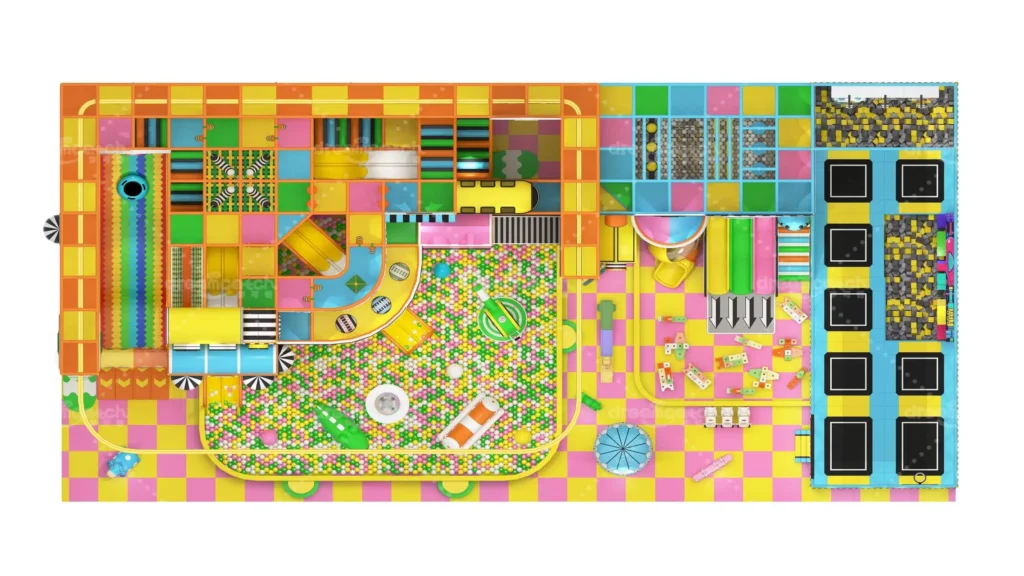
This is where ambition meets architecture. Multi-level mega-structures, themed zones, designated toddler areas, interactive floors, ninja courses, and epic slides become possible. Custom theming can transform the space into a castle, a jungle, a spaceship — whatever your imagination can fund.
Recommended Room Size: Minimum 3,000 sq. ft. (approximately 50 ft × 60 ft), though successful large-scale venues often operate in 5,000 to 15,000 sq. ft. or more.
Equipment Variables — What Moves the Price Tag Within Each Tier
Even within the same size category, quotes can vary dramatically. Here’s what drives those differences:
Materials: Commercial-grade, rotationally-molded plastic and powder-coated steel cost more upfront than lighter alternatives, but they withstand years of heavy use. Cheaper materials degrade faster and can become a safety liability.
Customization & Theming: Off-the-shelf designs are more affordable. If you want a custom pirate ship, a branded color scheme, or immersive theming, expect to pay a significant premium — sometimes 30–50% above standard pricing.
Flooring: Safety surfacing is non-negotiable. Poured rubber offers the best durability and accessibility but commands the highest price. Interlocking foam tiles are more budget-friendly but require more frequent replacement. Synthetic grass sits in the middle.
Installation & Freight: Many equipment manufacturers are based overseas, particularly in China. Sea freight, customs duties, and professional installation can add 15–25% to your equipment budget. Always ask whether quotes include delivery and setup.
What the Indoor Play Equipment Catalogue Won't Show You
Here’s where we need to have an honest conversation. The price of slides and climbing frames is only part of the story. Too many first-time operators budget for equipment, celebrate when it’s installed, and then discover a series of costs they never planned for. Let’s shine a light on them now.
Liability Insurance: The Line Item That Can Break Your Business
Indoor playgrounds are, by their nature, places where children run, jump, climb, and occasionally fall. Insurance providers know this. Your liability premiums will be substantial — potentially among your top three monthly expenses alongside rent and payroll.
Critically, your indoor play equipment choices directly influence your premiums. Adding trampolines, high-ropes courses, or zip lines can cause your insurance costs to spike exponentially — sometimes to the point where the revenue those attractions generate doesn’t justify the added premium. Before finalizing any equipment order, obtain a firm insurance quote. A playground you can’t afford to insure is a playground you can’t afford to open.
Sanitation, Maintenance, and the Aging Curve
A playground that looks tired after 18 months will hemorrhage customers. Parents are acutely hygiene-aware, and they judge harshly. Budget for the ongoing costs of:
Daily cleaning: Professional-grade ball pit cleaning machines, sanitizing solutions for high-touch surfaces, and staff hours dedicated to cleanliness
Soft component replacement: Foam padding, netting, and vinyl covers wear down. Plan for partial refurbishment every 3–5 years
Preventative maintenance inspections: Qualified professionals should inspect structures regularly, documenting findings and addressing loose bolts, worn bearings, or cracked components before they become hazards
Treat maintenance not as an expense to minimize, but as a visible investment in your brand promise.
The Ancillary Revenue Infrastructure
Successful large and medium playgrounds don’t rely solely on admission fees. Food and beverage, birthday parties, arcade games, and retail often constitute 40–60% of total revenue. But each of these streams requires its own upfront investment:
A café or snack bar means commercial kitchen equipment, health permits, food safety training, and potentially a grease trap or ventilation system. This can easily add 30,000–30,000–80,000+ in build-out costs.
Arcade and skill games require purchasing or leasing machines, plus ongoing maintenance and prize inventory.
Birthday party rooms need separate, bookable spaces with dedicated seating, AV equipment, refrigeration, and staffing.
Build these into your initial capital plan, not as afterthoughts.
Lease Negotiation: The Art of the Build-Out Period
Indoor playgrounds need high ceilings, open floor plates, and often significant HVAC or sprinkler modifications. Finding the right space takes time. Fitting it out takes longer.
From the moment you sign a lease, the clock starts ticking on rent — but you won’t have paying customers for months. Custom equipment manufacturing, shipping, and installation typically take 3–6 months, sometimes longer. Your single most important lease negotiation point is the rent-free period or heavily reduced rent during build-out. Every month of free or discounted rent you can secure during construction is cash preserved for your opening marketing push.
Franchise vs. Independent: Two Radically Different Financial Paths
The original article assumes you’re building an independent brand from scratch. But there’s an alternative: purchasing a franchise from an established indoor playground chain.
| Factor | Independent | Franchise |
|---|---|---|
| Initial Franchise Fee | $0 | 30,000–30,000–80,000+ |
| Royalty Fees | None | 5–8% of gross revenue, ongoing |
| Equipment Procurement | You source; more flexibility | Must buy from approved suppliers |
| Brand Recognition | Build from zero; heavy marketing investment needed | Immediate brand trust; national marketing support |
| Systems & Training | You develop everything yourself | Provided; operational playbook included |
| Creative Control | Complete freedom | Limited by brand standards |
Neither path is inherently better. Franchises offer a faster, less risky start for first-time operators with sufficient capital. Independence preserves more long-term upside and creative freedom, but requires resilience and marketing savvy.
The Uncomfortable Truth About Revenue Patterns
Even a well-funded, beautifully designed playground faces an operational reality: the tidal flow of customers. Weekends and school holidays may be packed, generating 70% or more of your weekly revenue in just two or three days. Weekdays — especially weekday mornings during the school term — can be ghost towns.
This isn’t a failure of your concept. It’s the nature of the business. Successful operators plan for it by:
Building weekday revenue streams: mom-and-baby groups, home-school meetups, senior-toddler sessions
Structuring membership tiers that encourage off-peak visits
Keeping fixed costs (especially rent) at a level that weekday lulls don’t trigger panic
Using quiet periods for deep cleaning, maintenance, and staff training

Safety Is Not a Feature — It's the Foundation
We’ll end this section with a point that can’t be overstated. Safety isn’t a marketing bullet point. It’s the non-negotiable bedrock of your entire business.
Your non-negotiables:
ASTM certification: All equipment must meet or exceed ASTM International standards for public play equipment. Ask suppliers for documentation. Verify it.
Independent inspections: Schedule certified inspections upon installation, then annually at minimum. Keep records. Parents who ask about safety should receive confident, evidence-backed answers.
Impact attenuation: Flooring must be rated for the maximum fall height in each zone. This is a calculation, not a guess.
Staffing: Well-trained, attentive staff don’t just supervise — they embody your culture of care. Invest in hiring people who genuinely enjoy children. Train them rigorously on safety protocols and gentle, consistent rule enforcement.
Financing Your Vision
With the full cost picture now in view, how do you fund it? Common paths include:
SBA (Small Business Administration) Loans: Government-backed programs offering favorable terms for qualified entrepreneurs. Prepare a thorough business plan.
Traditional bank loans: May require significant collateral and a proven track record.
Private investors or partners: Equity investment can provide substantial capital, but dilutes your ownership and control.
Self-funding / bootstrapping: Viable for smaller playgrounds, though it concentrates personal financial risk.
Equipment leasing or vendor financing: Some manufacturers offer payment plans. Explore these, but read the terms carefully.
Conclusion
This guide has taken you through equipment tiers and insurance shock, through lease negotiation tactics and the weekday revenue challenge. It may feel like we’ve tempered the initial excitement with a long list of concerns.
That’s intentional — not to discourage you, but to prepare you. The indoor playgrounds that thrive for a decade are not necessarily the ones with the tallest slides or the most elaborate theming. They are the ones where the founder understood the full financial picture from the start, built a resilient business model, and never compromised on safety or cleanliness.
Equipment is what you buy. Experience is what you sell. Profitability comes from managing everything in between.
If you’re ready to take the next step: get multiple equipment quotes from indoor playground suppliers, request a firm insurance estimate before ordering a single slide, negotiate your lease with the build-out timeline front of mind, and walk through every line item in this guide with your accountant or business partner.
The dream is achievable. It just deserves a plan as sturdy as the playground you want to build.