
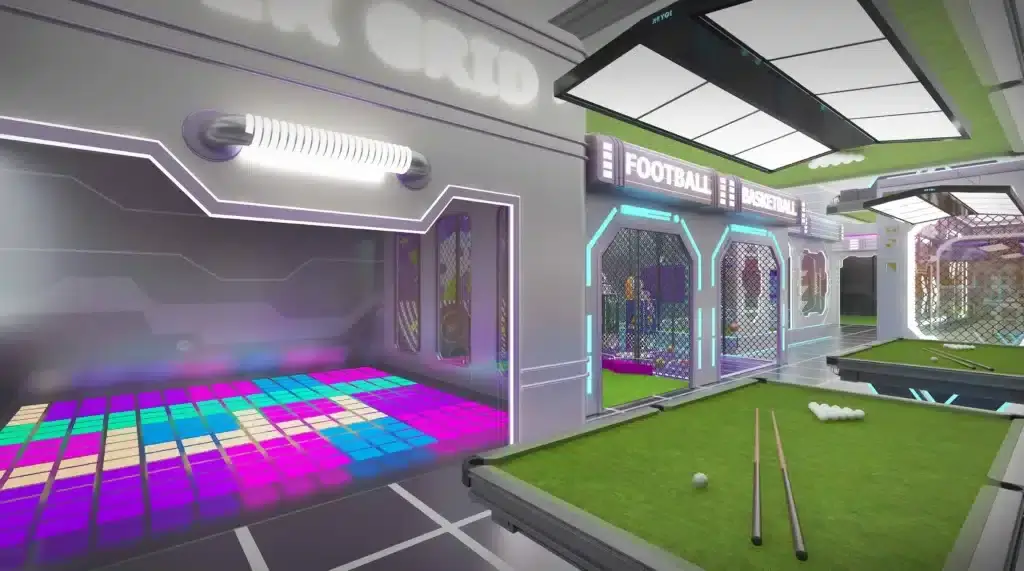
Playgrounds are a powerful addition to any environment—whether a backyard, a public park, or a commercial indoor facility. They create joy, encourage physical activity, and enhance the visual appeal of a space. However, the path to building one is rarely simple. One of the first and most critical decisions you’ll face is whether to choose a prebuilt (modular) playground or invest in a fully custom design.
The answer isn’t just about price tags. It’s about understanding how cost drivers shift dramatically depending on whether your playground lives outdoors or indoors. Below, we break down the cost differences and selection logic for both environments, helping you make a decision that balances upfront investment, long-term value, and safety.
Part 1: Outdoor Playgrounds – Custom vs. Prebuilt
Outdoor playgrounds must battle the elements: sun, rain, temperature swings, and ground settlement. Here, durability and material choice reign supreme.
The Core Cost Difference (Outdoor)
Prebuilt Outdoor Playgrounds: Typically range from $3,500 to $10,000. These are standard kits, mass-produced for residential or light commercial use. They are the most budget-friendly, easy to install, and come with predictable specifications.
Custom Outdoor Playgrounds: Start at $7,500–$15,000 for residential and exceed $40,000 for commercial projects. Costs rise with size, themed elements, and commercial-grade materials.
Key Factors That Drive Outdoor Costs
| Factor | Prebuilt Impact | Custom Impact |
|---|---|---|
| Materials | Standard treated wood or coated steel. Cost-effective but may show wear faster. | Commercial-grade, fire-coated steel or rot-resistant timber. Higher upfront cost, longer lifespan. |
| Site Preparation | Requires only a flat, level surface (grass or concrete pad). Minimal extra cost. | May require concrete footings, drainage solutions, and professional grading. Adds significant expense. |
| Safety Surfacing | Often omitted or DIY (rubber tiles or wood chips). | Engineered for compliance (ASTM F1292-22). A 6-foot fall zone around every feature is mandatory. |
| Installation | DIY with video instructions (often free) or local handyman. | Professional crew installation recommended for large projects. Includes travel and labor costs. |
| Long-Term Maintenance | Resurface every 3–5 years with spar urethane. Standard parts are easy to replace. | Same maintenance schedule, but custom components may require specialized repairs. |
Selection Logic: Outdoor
Choose Prebuilt Outdoor When:
You have a tight budget.
Your space is a standard backyard or small daycare.
You want a quick, DIY-friendly solution.
You don’t need unique theming or complex layouts.
Choose Custom Outdoor When:
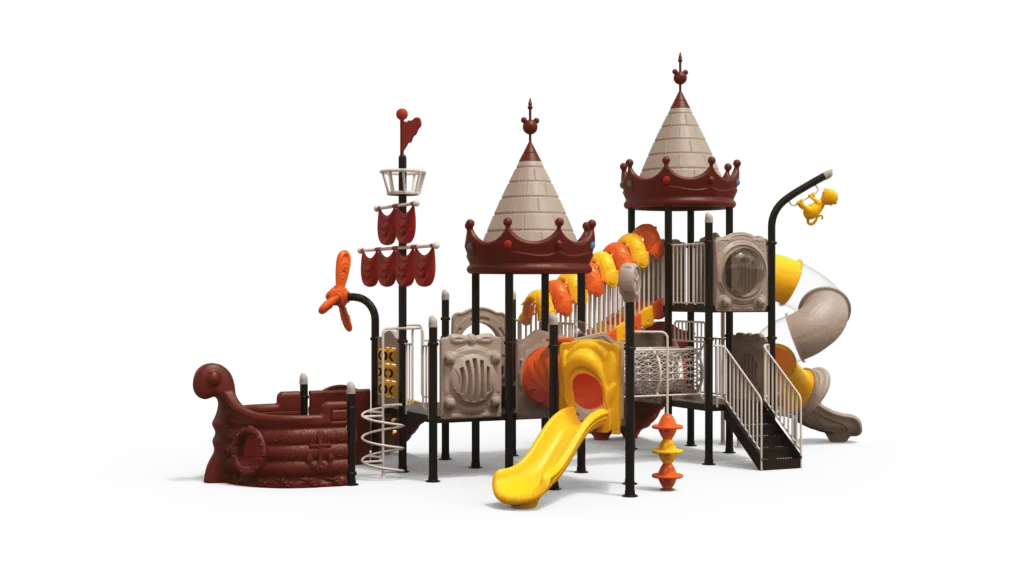
You need a specific aesthetic (e.g., a castle or pirate ship).
The site has challenging terrain (slopes, poor drainage).
You are a school, HOA, or public park requiring commercial-grade durability and ASTM/ADA compliance.
You want to phase the installation over multiple years.
Pro Tip for Outdoor: Don’t underestimate site preparation and safety surfacing. These hidden costs often double the project budget, regardless of whether you choose prebuilt or custom.

Part 2: Indoor Playgrounds – A Different Game Entirely
Indoor playgrounds live in a completely different cost universe. The enemy is no longer weather—it’s space efficiency, fire codes, and commercial foot traffic. Here, prebuilt options are rare, and custom solutions dominate.
The Core Cost Difference (Indoor)
Prebuilt Indoor Playgrounds: Limited to small, standalone units (e.g., soft play modules for a restaurant corner). Cost is low, but they waste space and lack visual differentiation.
Custom Indoor Playgrounds: Virtually the industry standard for commercial venues. Costs typically start at $40,000 and can exceed $200,000+ for large, themed structures. You are paying for cubic footage, not just square footage.
Key Factors That Drive Indoor Costs
| Factor | Prebuilt Impact | Custom Impact |
|---|---|---|
| Space Utilization | Fixed shapes that may leave dead space around columns or walls. | Designed to wrap around pillars, use high ceilings (vertical climbing), and maximize playable area per square foot of rent. |
| Fire Safety & Compliance | Basic flame retardants. May not integrate with building sprinkler systems. | Mandatory fire coating for structures over 150 sq ft. Integration with HVAC, smoke detectors, and emergency lighting. Requires certified inspectors. |
| Theming & Aesthetics | Generic colors and designs. Hard to create a unique brand identity. | Fully immersive themes (jungle, space, ocean). High visual appeal drives ticket sales and member retention. |
| HVAC & Lighting | Not considered. Can block air vents or create dark spots. | Custom design includes ventilation pathways and integrated LED lighting for safety and ambiance. |
| Floor Loading & Noise | Standard weight distribution. | Engineered for second-story or mall locations. Includes acoustic underlayment to prevent noise complaints from downstairs tenants. |
| Hygiene & Cleanability | Seams and crevices can trap dirt. | Designed with antimicrobial PVC, smooth surfaces, and easy-access cleaning points—critical for infection control. |
Selection Logic: Indoor
Choose Prebuilt Indoor Only When:
The playground is an ancillary amenity (e.g., a fast-food restaurant playland).
Your space is small, perfectly rectangular, and under 150 sq ft.
You have no need for theming or brand differentiation.
Choose Custom Indoor (Almost Always) When:
You are opening a dedicated indoor play center, trampoline park, or family entertainment center (FEC).
Your space has columns, irregular walls, or low ceilings that need to be optimized.
You require compliance with local fire marshals and building codes (which is nearly always the case).
You want to maximize capacity (more children per square foot = higher revenue).
Pro Tip for Indoor: Never compromise on fire coating and ADA accessibility. A custom design that fails a fire inspection or lacks wheelchair-accessible platforms can delay your opening by months and cost tens of thousands in retrofits.
Critical Cost Factors Often Overlooked (Both Environments)
Regardless of indoor or outdoor, these additional expenses surprise most buyers:
1. Shipping & Delivery
Small/Prebuilt: LTL freight. Driver unloads with liftgate.
Large/Custom: Partial or dedicated freight. Client must offload with 2–6 people. No forklift required, but plan accordingly.
2. Permits & Inspections
Outdoor: Varies by city. Usually requires a building permit for structures over a certain size.
Indoor: Always requires multiple permits (building, fire, electrical, ADA). The client is responsible for obtaining these—factor in 4–12 weeks.
3. Maintenance & Repairs
Outdoor: Resurface wood every 3–5 years. Commercial-grade hardware lasts longer but costs more to replace.
Indoor: Daily cleaning and sanitization. Wear parts (slides, netting, foam padding) need replacement every 2–4 years depending on foot traffic.
4. Long-Term Cost Planning (Lifecycle Cost)
Prebuilt may seem cheaper today, but if custom design allows you to serve 30% more children indoors, that extra revenue pays back the custom premium in months. Conversely, a custom outdoor structure that rots due to poor drainage is a total loss.
Decision Matrix: Which Path Is Right for You?
| Your Scenario | Recommended Choice | Why |
|---|---|---|
| Backyard for your kids, budget under $10k | Prebuilt Outdoor | Cost-effective, DIY installation, easy maintenance. |
| School or public park, needs to last 15+ years | Custom Outdoor | Commercial-grade materials, ADA compliance, fall zone engineering. |
| Restaurant corner, under 100 sq ft | Prebuilt Indoor | Simple soft play modules, no complex permitting. |
| Full indoor play center, 1,000+ sq ft | Custom Indoor | Maximizes rent per square foot, passes fire code, creates unique brand experience. |
| Irregular outdoor terrain or sloped yard | Custom Outdoor | Requires site-specific footings and drainage design. |
| Mall or second-floor location | Custom Indoor | Floor loading, noise reduction, and fire integration are non-negotiable. |
Final Verdict
The most budget-friendly option is not always the cheapest upfront.
For outdoor projects, prebuilt kits are excellent for residential use, but commercial or themed applications demand custom solutions for safety and longevity.
For indoor projects, custom is nearly always the right answer. The cost of wasted space, failed inspections, or a generic appearance is far higher than the premium you pay for a tailored design.
Before you buy, answer three questions:
Will this playground be inspected by a local authority?
How many children will use it daily?
Can the space be reconfigured, or are you stuck with its current shape?
Your answers will tell you whether to grab a prebuilt kit or call a custom designer. Either way, invest in safety surfacing, know your local codes, and plan for maintenance from day one.