1. The Shift Toward Indoor Play Environments
In recent years, indoor playgrounds and Family Entertainment Centers (FECs) have become one of the fastest-growing segments in the global leisure industry. Unlike traditional outdoor parks, indoor playgrounds offer:
weather-independent operation
controlled safety environments
higher revenue potential per square meter
year-round customer engagement
For investors and operators, the challenge is no longer whether to build a community-oriented commercial space—such as shopping malls, community centers, or family entertainment centers – but how to design one that is sustainable, attractive, and commercially viable.
A successful indoor playground must balance three core dimensions:
| Core Dimension | Strategic Goal |
|---|---|
| Functional Diversity | Serve multiple age groups |
| Operational Efficiency | Maximize ROI and space utilization |
| Experience Quality | Drive repeat visits and engagement |
2. Essential Indoor Play Equipment for Engaging Diverse Age Groups
A successful commercial indoor playground provides varied play opportunities that cater to children at different developmental stages. With considerations such as limited floor space, budget planning, and rigorous safety requirements, what are the essential types of indoor play equipment to consider? Here are some popular and reliable options that resonate well with families.
2.1 Multi-Age Design Strategy
Indoor playgrounds must serve a wide demographic range, including:
| User Group | Key Needs |
|---|---|
| Toddlers (2–5) | Safety, sensory play |
| Children (5–10) | Physical challenge, exploration |
| Pre-teens (10–14) | Competition, social interaction |
| Parents | Comfort, visibility, participation |
2.2 Core Equipment Categories
1. Slides (Core Traffic Driver)
Slides remain a perennial favorite, available in various configurations—straight, spiral, wave, and even tube designs. Beyond the fun factor, slides help children develop gross motor skills, spatial awareness, and a sense of cause and effect. In indoor settings, slides can be integrated into multi-level play structures, maximizing vertical space while providing safe, contained excitement. When combined with soft landing zones and proper exit areas, slides offer high play value with relatively low supervision demands.
| Type | Application |
|---|---|
| Spiral slides | Space-efficient vertical play |
| Wave slides | Multi-user engagement |
| Tube slides | Immersive experience |
2. Swing Elements (Indoor Adaptation)
Indoor swing sets—typically designed with flexible belt seats or full-bucket toddler seats—offer a familiar, soothing activity that appeals to a wide age range. Swings encourage coordination as children learn to pump their legs and maintain rhythm. For commercial indoor applications, consider incorporating inclusive swing options such as supportive bucket seats or swings with harnesses, ensuring that children of all abilities can participate.
| Type | Target User |
|---|---|
| Bucket swings | Toddlers |
| Flat swings | General users |
| Inclusive swings | Special needs |
3. Climbing Structures (High-Value Activity Zone)
Indoor climbing elements—ranging from gentle cargo nets and geometric climbers to more challenging rock walls and vertical obstacles—provide excellent opportunities for strength development, coordination, and problem-solving. These structures naturally appeal to school-aged children seeking physical challenges, while lower-height climbers with larger handholds can serve preschoolers. The key is offering graduated levels of difficulty within a single footprint.
| Type | Benefit |
|---|---|
| Rope nets | Full-body coordination |
| Soft climbing walls | Safe challenge |
| Multi-level frames | Exploration |
4. Interactive Activity Panels
Mounted at accessible heights, activity panels add a cognitive and sensory dimension to the play environment. Panels may include gear mazes, tactile puzzles, musical elements (such as chimes or drums), and memory games. These features are particularly valuable for younger children and those who may benefit from quieter, ground-level engagement. When placed strategically along pathways or near seating areas, activity panels also invite parent-child interaction.
| Type | Function |
|---|---|
| Puzzle panels | Problem-solving |
| Music panels | Sensory stimulation |
| Light interaction | Visual engagement |
3. Durability and Operational Efficiency in Indoor Facilities
Indoor play equipment in commercial settings experiences consistent, heavy use—often seven days a week. To ensure safety, longevity, and manageable operational costs, careful attention to materials and construction is essential.
3.1 Material Selection Strategy
Indoor playground equipment must balance aesthetic appeal and durability.
| Material | Advantage |
|---|---|
| Galvanized steel | Structural strength |
| Powder-coated metal | Corrosion resistance |
| LLDPE plastic | Impact resistance |
| Soft padding (EVA/PVC) | Safety compliance |
3.2 Lifecycle Cost Consideration
| Equipment Type | Average Lifespan | Maintenance Frequency |
|---|---|---|
| Steel structure | 8–10 years | Low |
| Plastic panels | 5–7 years | Medium |
| Soft play components | 3–5 years | High |
3.3 Safety Compliance
Indoor playgrounds must comply with:
ASTM standards
EN standards
Key safety features include:
anti-slip surfaces
rounded edges
secure fastenings
fire-retardant materials
4. Innovative Indoor Play Features to Boost Community Engagement
To turn your indoor play space into a true community hub, consider incorporating elements that go beyond traditional equipment. Today’s families seek experiences that are memorable, shareable, and socially engaging.
4.1 Themed Environments
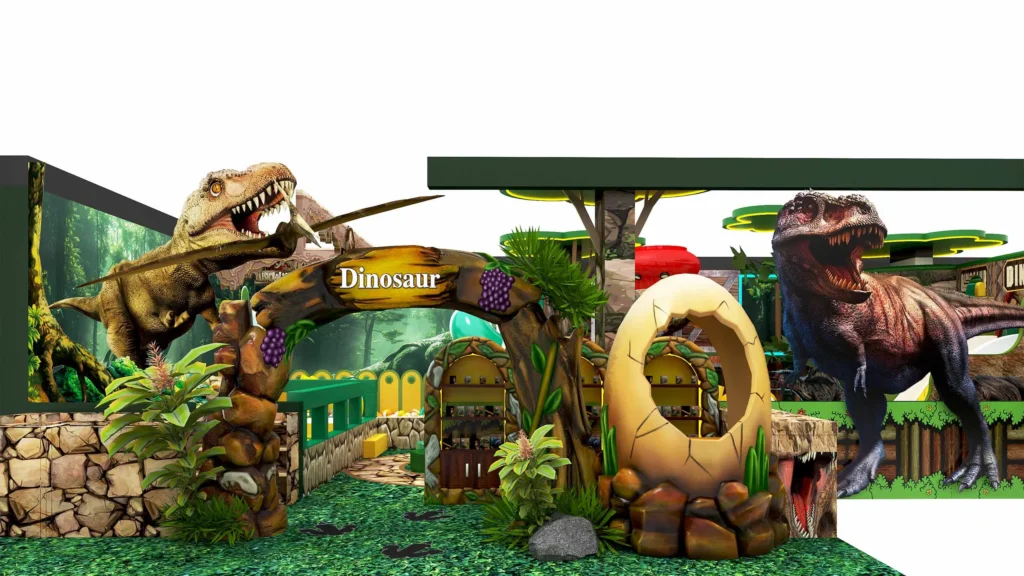
A cohesive theme—whether a jungle adventure, a space station, or a dinosaur excavation site—adds narrative depth to the play experience. Theming helps differentiate your venue, encourages imaginative play, and creates a strong visual identity that resonates with children and parents alike.
| Theme Type | Market Appeal |
|---|---|
| Dinosaur | High for children 4–10 |
| Space | Educational + immersive |
| Jungle | Natural exploration |
4.2 Soft Play Areas (Indoor Adaptation)
Dedicated soft play zones with padded shapes, small slides, and ball pits provide a safe environment for toddlers and preschoolers to explore at their own pace. These areas are also a comfort to parents, who appreciate the age-appropriate design and reduced risk of injury.
Even in indoor environments, natural concepts can be integrated:
- artificial rock structures
- soft sand zones
- water simulation play
4.3 Technology Integration
Interactive digital elements—such as motion-activated floor games, augmented reality climbing challenges, or touch-screen activity panels—can elevate the play experience while appealing to tech-savvy children. These features also offer flexibility: they can be updated with new content over time, keeping the attraction fresh without major equipment changes.
| Technology | Application |
|---|---|
| Interactive screens | Educational games |
| Projection mapping | Immersive environments |
| AR/VR | Hybrid play experience |
4.4 Inclusive and Multi-Generational Design
Designing for inclusivity benefits everyone. Incorporate ground-level activities, transfer stations for elevated components, and quiet zones where children who experience sensory overload can retreat. Consider adding comfortable seating areas nearby where parents, grandparents, or caregivers can rest while maintaining clear sightlines to the play areas. A welcoming environment for the whole family encourages longer visits and repeat business.
| Feature | Benefit |
|---|---|
| Wheelchair-access ramps | Accessibility |
| Sensory panels | Inclusive engagement |
| Ground-level play | Equal participation |
5.1 Project Overview
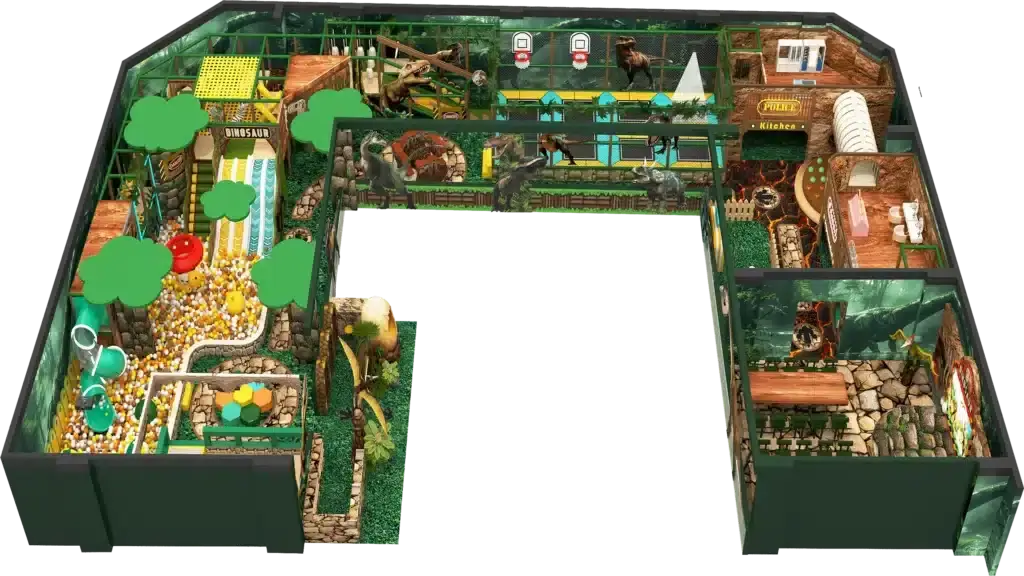
This project, delivered by Guangdong Dream Catch Recreation Equipment Co., Ltd., demonstrates how thematic design and functional planning can create a high-performing indoor playground.
5.2 Project Key Data
| Parameter | Value |
|---|---|
| Location | Romania |
| Total Area | 400 sqm (≈4,300 sqft) |
| Theme | Dinosaur |
| Target Audience | Families with children (3–12 years) |
| Project Type | Indoor soft playground |
5.3 Equipment Configuration
| Zone | Equipment |
|---|---|
| Main structure | Multi-level soft play |
| Slide zone | Spiral + tube slides |
| Activity zone | Interactive panels |
| Adventure zone | Rope obstacles |
| Toddler area | Soft play elements |
5.4 Design Highlights
1. Thematic Immersion
Dinosaur sculptures and visual storytelling
Strong visual identity for branding
2. Space Optimization
Vertical design increased play capacity
Efficient zoning for traffic flow
3. Multi-Age Engagement
Separate toddler and active zones
Shared family interaction areas
5.5 Performance Indicators (Estimated)
| Metric | Result |
|---|---|
| Capacity | 80–120 users simultaneously |
| Average dwell time | 1.5–2.5 hours |
| Repeat visit rate | High |
| Operational flexibility | Strong |
6. Supplier Selection: Beyond Equipment Procurement
For indoor playground investors, choosing a supplier is not just about equipment—it is about solution capability.
6.1 Key Evaluation Criteria
| Criteria | Importance |
|---|---|
| Design capability | Critical |
| Customization | High |
| Safety compliance | Mandatory |
| Project execution | Critical |
| After-sales support | High |
6.2 Role of a Modern Playground Supplier
A qualified supplier should provide:
concept planning
layout design
equipment manufacturing
installation support
operational consulting
6.3 Strategic Partner Advantage
Working with an experienced company such as Guangdong Dream Catch Recreation Equipment Co., Ltd. offers:
integrated project delivery
international project experience
theme-based design expertise
compliance with global safety standards
7. Conclusion: From Equipment to Experience
Designing an indoor playground for a community-focused commercial space requires a thoughtful balance of fun, safety, durability, and inclusivity. Indoor playgrounds are no longer defined by individual attractions, but by the overall experience ecosystem they create.
A successful project must integrate:
Diverse equipment mix
Strong thematic identity
Durable and safe materials
Inclusive design principles
Operational efficiency
Final Insight
For investors and operators, the real value of an indoor playground lies in its ability to:
Attract consistent foot traffic
Deliver memorable experiences
Sustain long-term profitability
In this context, the playground becomes more than a facility—it becomes a destination and a business platform. If you are ready to explore how an indoor playground can enhance your commercial space, contact us today. Our team of experts is happy to discuss your vision, budget, and space requirements—and help bring your project to life.