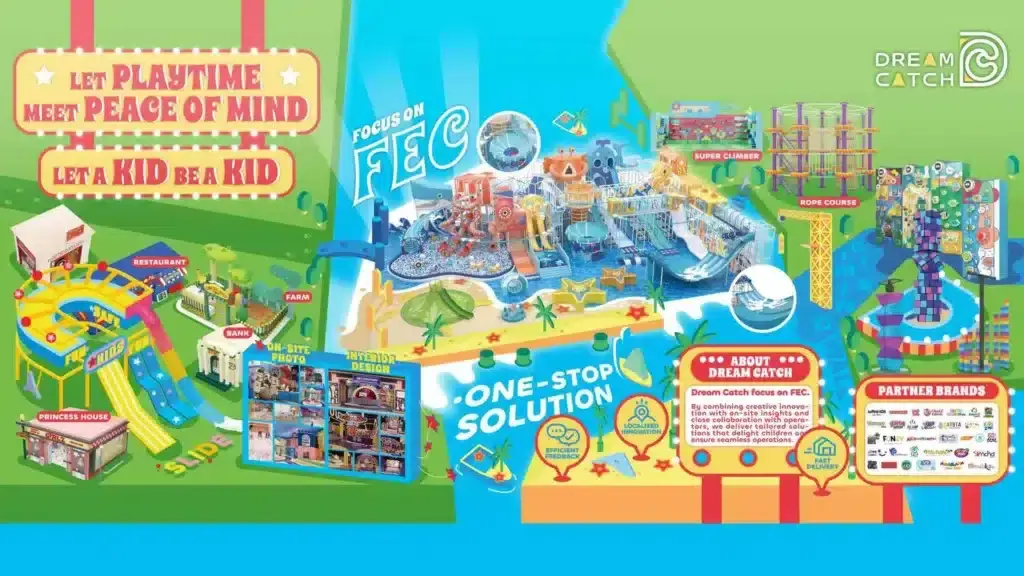
The global Family Entertainment Center (FEC) industry is entering a new era driven by technological innovation, evolving consumer expectations, and structural changes in commercial real estate. What once consisted of simple arcade venues or children’s play zones has rapidly evolved into multi-attraction indoor entertainment ecosystems designed for families, social groups, and corporate customers.
In 2024, the global FEC market was estimated at approximately $29–30 billion, with projections suggesting the market could exceed $60 billion by 2032, growing at a compound annual growth rate (CAGR) of roughly 11–12%.
Several macroeconomic and technological forces are driving this transformation:
The rise of the experience economy
The transformation of shopping malls
Rapid adoption of AI, VR, and AR technologies
Growing demand for social and immersive entertainment
Increased emphasis on multi-generational play environments
Understanding these trends is essential for developers, investors, operators, and equipment suppliers seeking to build successful indoor entertainment venues.
This article explores ten major trends shaping the future of the FEC industry.
1. Experience Economy is Driving Entertainment Growth
Modern consumers increasingly prioritize experiences over material goods.
According to multiple consumer behavior studies, younger generations—especially Millennials and Generation Z—prefer spending on experiences such as travel, events, and entertainment rather than traditional retail purchases.
This shift has significant implications for indoor entertainment venues.
Family Entertainment Centers now compete not only with other amusement venues but also with:
cinemas
live events
restaurants
esports venues
immersive exhibitions
Successful venues therefore focus on creating memorable experiences, not simply offering attractions.
Key experience elements include:
immersive environments
social interaction
shareable moments
unique themed space
2. Shopping Malls Are Transforming into Entertainment Destinations
The growth of e-commerce and online shopping has dramatically reduced foot traffic in traditional retail spaces.
As a result, shopping malls are actively transforming into mixed-use lifestyle destinations that combine retail, dining, and entertainment.
Industry data suggests:
| Category | Average Mall Space Allocation (Future Projection) |
|---|---|
| Retail | 40–50% |
| Dining | 20–25% |
| Entertainment | 20–30% |
Indoor entertainment venues are now considered critical anchors for driving foot traffic.
Developers increasingly allocate large spaces—often 3,000 to 10,000 square meters—for FEC projects.
3. Multi-Attraction Entertainment Centers Are Replacing Single-Concept Venues
Traditional entertainment facilities often focused on one primary attraction, such as:
arcades
trampoline parks
bowling centers
However, modern venues combine multiple entertainment formats.
Typical modern FEC attractions include:
multi-level indoor playgrounds
ropes courses
climbing walls
VR gaming arenas
kart racing tracks
sports simulators
interactive darts
laser tag
These multi-attraction environments significantly increase visitor dwell time.
Average dwell time comparison:
| Venue Type | Average Visit Duration |
|---|---|
| Traditional arcade | 45–60 minutes |
| Trampoline park | 60–90 minutes |
| Modern FEC | 2–3 hours |
4. Food and Beverage Has Become a Core Revenue Driver
Food and beverage services are no longer secondary amenities—they are now central to entertainment venue profitability.
In many modern entertainment centers, F&B contributes 25–35% of total revenue.
Restaurants and cafés serve several strategic functions:
increasing dwell time
attracting adult visitors
supporting social gatherings
hosting events and parties
In Asia especially, food culture plays a major role in entertainment consumption.
Visitors often combine dining and entertainment in a single outing.
5. Social Gaming and Competitive Play Are Growing Rapidly
One of the fastest-growing trends in the industry is competitive social gaming.
These experiences combine gameplay with social interaction.
Popular formats include:
interactive darts
digital bowling
sports simulators
esports lounges
augmented reality games
Competitive social gaming venues often target young adults and corporate groups, expanding the audience beyond families with children.
6. Immersive Technologies Are Transforming Entertainment
Technologies such as Virtual Reality (VR), Augmented Reality (AR), and Mixed Reality (MR) are transforming indoor entertainment experiences.
Immersive attractions enable visitors to enter interactive virtual environments, enhancing storytelling and gameplay.
Examples include:
VR racing simulators
immersive escape rooms
AR treasure hunts
mixed-reality sports games
These technologies allow operators to refresh content digitally, extending the lifespan of attractions.
7. Artificial Intelligence Is Changing How Entertainment Venues Operate
Artificial intelligence is becoming increasingly important in entertainment venue management.
AI systems can analyze large amounts of operational data, including:
visitor behavior
attraction usage
queue times
spending patterns
These insights allow operators to optimize:
attraction placement
pricing strategies
marketing campaigns
staffing schedules
AI-driven analytics help improve operational efficiency and profitability.
8. Cross-Generational Entertainment Is Becoming the Standard
Historically, indoor playgrounds were designed primarily for children.
Today, venues increasingly target all age groups simultaneously.
Modern entertainment centers often include:
adult-friendly gaming zones
family challenge courses
team-based activities
social lounges and bars
The goal is to create shared experiences where parents and children play together.
9. Data-Driven Design Is Improving Venue Performance
Advanced analytics tools allow developers to design entertainment venues more effectively.
Key performance indicators include:
revenue per square meter
attraction utilization rates
customer dwell time
repeat visitation rates
Example performance benchmark:
| Metric | Typical High-Performing FEC |
|---|---|
| Annual visitors | 300,000–600,000 |
| Average spend per visitor | $18–$35 |
| Average dwell time | 2–3 hours |
These metrics help investors evaluate project feasibility.
10. Continuous Innovation Is Required for Long-Term Success
Entertainment trends evolve quickly.
Operators must regularly update attractions to maintain customer interest.
Typical attraction lifecycle:
| Attraction Type | Average Lifecycle |
|---|---|
| Arcade games | 2–3 years |
| Interactive attractions | 3–5 years |
| Large physical structures | 5–7 years |
Regular upgrades ensure that venues remain relevant and competitive.
Conclusion
The global FEC industry is evolving rapidly as consumer expectations shift toward immersive, social, and technology-enabled experiences.
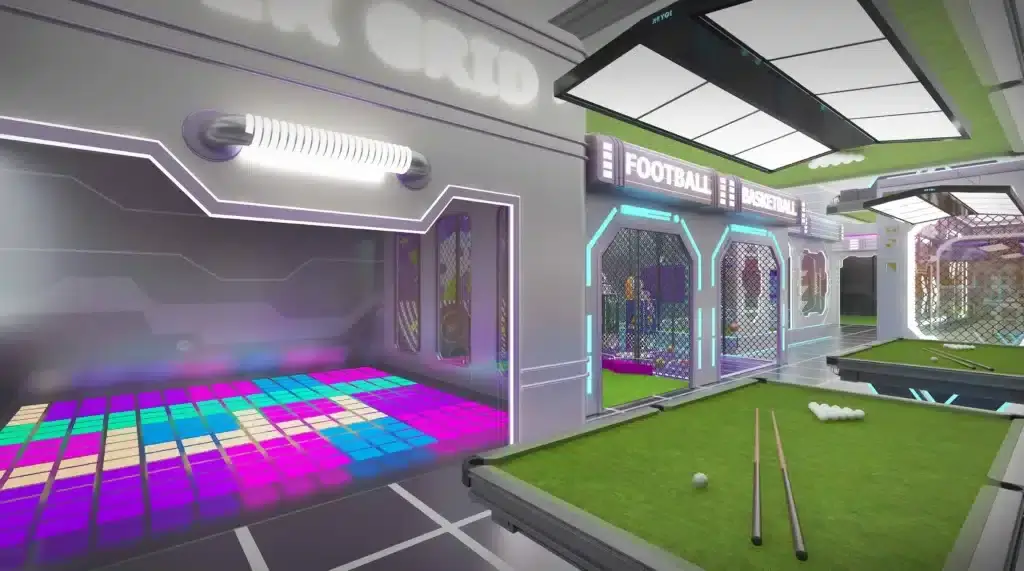
Successful entertainment venues will combine:
diverse attractions
immersive technology
strong food and beverage offerings
data-driven management
cross-generational entertainment design
Operators who adapt to these trends will be well positioned to thrive in the next generation of indoor entertainment.