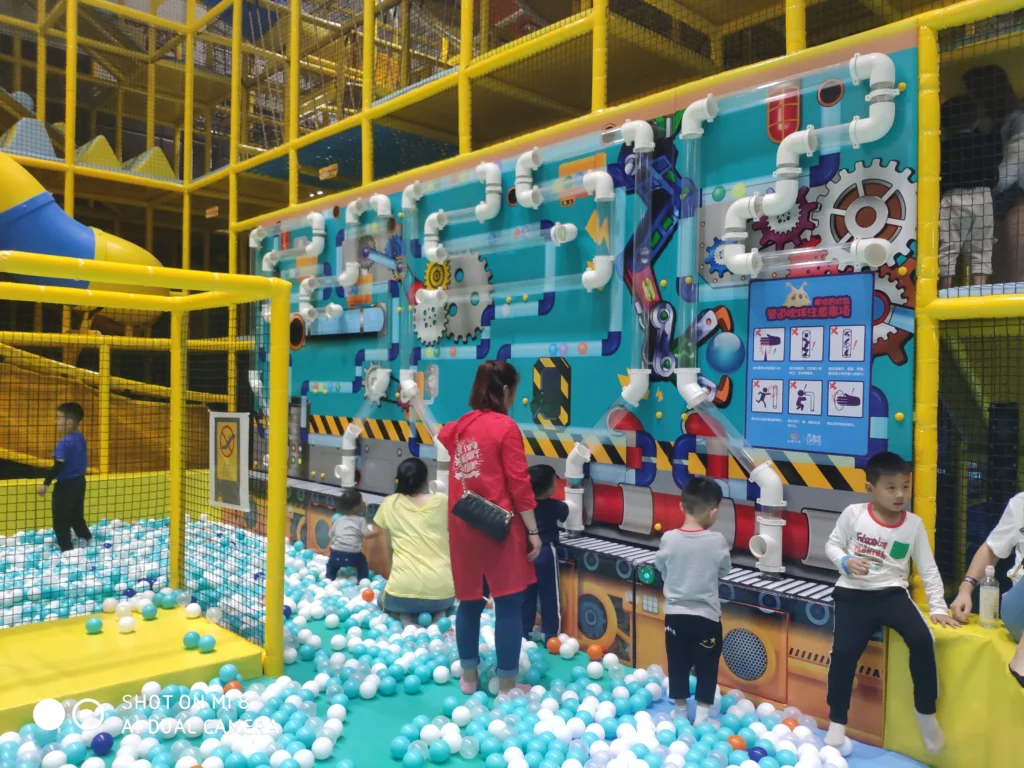
An inclusive playground typically requires a more substantial investment than standard playground installations. Small inclusive playgrounds generally range from $200,000 to $600,000, while large handicap-accessible playgrounds can cost from $750,000 to over $1 million . The estimated total cost encompasses playground equipment, professional installation, safety surfacing, site preparation, and applicable taxes.
Although the budget required for installing commercial playground equipment accessible to children of all abilities may be significant, the outcomes in terms of children’s developmental progress and community cohesion consistently justify the investment. Inclusive play environments deliver lasting value that extends far beyond initial construction costs.
Benefits of an Inclusive Playground
An inclusive playground in a public space reflects the community’s commitment to valuing and accommodating children of all abilities. By implementing an inclusive playground design, children receive the following evidence-based benefits:
- Social Inclusion and Confidence: Inclusive playground equipment offers opportunities that standard playgrounds cannot provide. Research confirms that inclusive design allows all children to play, create, interact, and develop empathy with one another . When children with disabilities no longer feel excluded or limited from participating in the joys of play, they develop greater self-confidence and social competence. As one student at an inclusive playground noted, “It gives the students who maybe can’t access everything an equal chance to have a lot of the experiences that other children can have” . The social integration fostered by inclusive design enables children of all abilities to interact naturally, building friendships across traditional barriers .
- Cognitive and Physical Development: Play structures play a vital role in children’s development across multiple domains—physical skills such as balance and coordination, cognitive abilities including creative thinking and problem-solving, and sensory integration . With commercial playground equipment designed for diverse needs, children of all abilities can now experience similar developmental benefits. According to playground researchers, truly inclusive environments intentionally provide opportunities across the entire developmental spectrum—physical, cognitive, sensory, social, and communicative development . The ASTM F1951 standard specifically addresses accessibility surface systems, ensuring that children with mobility devices can access play areas without expending excessive energy, leaving more capacity for actual play .
- Stronger Community Bond: Within the inclusive playground, families and caretakers of children of all abilities interact and bond over shared experiences. As one executive director observed about their inclusive playground, “For some of them this may be the first time that they have had the opportunity to experience what it is like to be able to play alongside their friends” . Within the broader community, the shared play space becomes a welcoming environment where families of diverse backgrounds and needs feel included and valued. The 7 Principles of Inclusive Playground Design emphasize that inclusion is not merely about physical access but addresses the social aspects of what happens once individuals arrive at the space .
Recommended Equipment for Inclusive Playgrounds
The playground equipment for an inclusive play area shares many components with typical playgrounds but incorporates additional features specifically designed to increase accessibility and inclusion for children with diverse needs. Based on industry best practices and current research, recommended equipment includes:
- Inclusive Swings: Comprehensive swing options accommodate various user needs, including adaptive seats with harness support, basket swings that can accommodate wheelchairs, expression swings allowing face-to-face interaction, and multi-seat swings enabling children to swing together regardless of ability . These varied options ensure that swinging—a fundamentally important activity for vestibular stimulation—is accessible to all children.
- Inclusive Play Structures: These structures feature wider designs to accommodate mobility devices, multiple climbing options at graduated challenge levels, customized climbers with varied grip types, and side-by-side equipment that supports parallel play experiences . The integration of double-wide ramps allows wheelchair users to access elevated play components alongside their peers .
- Sensory-Friendly Elements: Multi-sensory play components stimulate multiple senses through physical, tactile, and auditory activities. Recommended elements include interactive play panels with varied textures, outdoor musical instruments such as drums and chimes, balance equipment for proprioceptive input, and sign language panels that teach communication skills . As one observer noted, children at an inclusive playground were already “learning to communicate with their friends” through a sign language panel .
- Quiet Zones: Dedicated quiet areas serve as safe retreats for children who experience sensory overload and need calming time before returning to active play . These spaces are particularly beneficial for children with autism and other sensory processing challenges, providing respite without requiring departure from the playground entirely.
- Social Interaction Spaces: Group-oriented equipment fosters connection and teamwork through cooperative play experiences. Multi-person spinners that accommodate wheelchairs, group swings, and cooperative play structures enable children to play together at eye level . The inclusive Wiggley carousel, developed with input from people with various disabilities, exemplifies equipment designed so “everyone could really fit in” .
- Safe and Smooth Surfing: Playground surfacing must meet dual requirements: impact attenuation for fall safety and accessibility for mobility devices. Engineered wood fiber (EWF) provides a soft, impact-absorbing surface that, when properly compacted and leveled, allows wheelchair access in compliance with ADA standards . Poured-in-place rubber offers superior accessibility with firm, stable surfaces that meet ASTM F1951 requirements for wheelchair work reduction . The choice of surfacing material significantly affects both safety and accessibility outcomes.
- Seamless Transition and Access: Comprehensive access design incorporates ramps meeting slope requirements, transfer stations at multiple heights for children who can transfer from mobility devices, and wider pathways connecting elevated and ground-level play areas throughout the facility . These elements ensure that the entire playground, not just isolated components, is navigable by all users.
Differences Between ADA-Compliant, Inclusive, and Accessible Playgrounds
Understanding the distinctions between these three classifications is essential for making informed investment decisions. Industry experts and accessibility researchers have established clear definitions :
| Category | Description | Key Features |
|---|---|---|
| ADA-Compliant | Meets the minimum legal requirements of the Americans with Disabilities Act (ADA). | Adaptive seats; Limited wheelchair ramp access; Signage with visual and tactile elements |
| Accessible | Goes beyond basic ADA compliance by adding convenient features that increase usability and access. | Transfer stations at multiple points; Safety harnesses; Adjustable seat height and backrest options |
| Inclusive | Designed so children with and without special needs can play together in the same environment. | Multi-sensory play structures; Quiet spaces; Seamless transitions and continuous access throughout the playground |
ADA-Compliant Playground
The Americans with Disabilities Act (ADA) provides guidelines and regulations that establish minimum requirements for creating play areas accessible to children and users with disabilities. When commercial playground equipment incorporates these guidelines as the baseline requirement according to the act, it becomes ADA-compliant. Typically, an ADA-compliant playground includes a swing set with adaptive seats, a ramp providing wheelchair access to 50% of elevated play equipment, and signage incorporating visual and tactile elements . However, ADA playground equipment still has limitations in serving the full spectrum of abilities, as only a certain percentage of play structures must be accessible, and the focus remains primarily on physical access rather than comprehensive inclusion. As the National Center on Health Physical Activity and Disability notes, “A playground constructed to ADA standards follows all specified ADA guidelines, but it may still present obstacles that hinder the full inclusion of individuals with various disabilities” .
Accessible Playground
Accessible playgrounds go beyond ADA compliance and offer broader play experiences for children of all abilities. They are characterized by enhanced features and additional physical access to equipment beyond minimum requirements. An accessible playground contains commercial playground equipment with more convenient features such as transfer stations at multiple heights, harness options for swings, varied seat height and back support configurations, and ramps wider than the minimum ADA guidelines . These details exceed standard legal requirements and demonstrate commitment to usability. According to accessibility experts, “An accessible playground goes beyond meeting ADA standards. It is designed so individuals with a physical disability who use a wheelchair or other mobility device can easily reach all playground features” .
Inclusive Playground
Inclusive playgrounds are designed to encourage every child, regardless of their needs and abilities, to play together meaningfully. This classification encompasses a comprehensive range of considerate playground equipment addressing physical, social, cognitive, communicative, and sensory needs . An inclusive playground combines the best features of ADA-compliant and accessible equipment while adding dimensions of social and sensory inclusion. It provides inclusive play features such as multi-sensory play structures, dedicated quiet spaces, diverse inclusive swing seat options, and seamless transition and access throughout the entire playground environment . The 7 Principles of Inclusive Playground Design emphasize that inclusive environments address “the developmental needs of the whole child—intentionally providing opportunities for physical, cognitive, communicative, social/emotional, and sensory development” .
To provide a clearer comparison of the three playground types:
- ADA-Compliant Playground: Meets minimum legal requirements with accessible routes to 50% of elevated components, adaptive swing seats, and tactile signage. Focuses on basic access but may not address full participation.
- Accessible Playground: Exceeds ADA standards with enhanced physical access features including transfer stations, comprehensive ramp systems, and mobility-friendly pathways throughout the facility. Prioritizes physical access for individuals with mobility devices.
Inclusive Playground: Integrates physical access with sensory-rich experiences, social engagement opportunities, cognitive challenges, and emotional support features. Designed intentionally for all children to play together, addressing the whole child’s development.
An all-inclusive playground design can create a wonderful and safe environment for every child, including those with diverse abilities, all of whom deserve to experience the joys of play and creation. Whether your organization has a budget for creating such a playground from scratch or seeks to transform an existing play space into an inclusive environment, Guangdong Dream Catch Recreation Equipment Co., Ltd. is prepared to guide you through your specific requirements and allocated resources. Connect with us today, and let us build more safe and inclusive play spaces together.