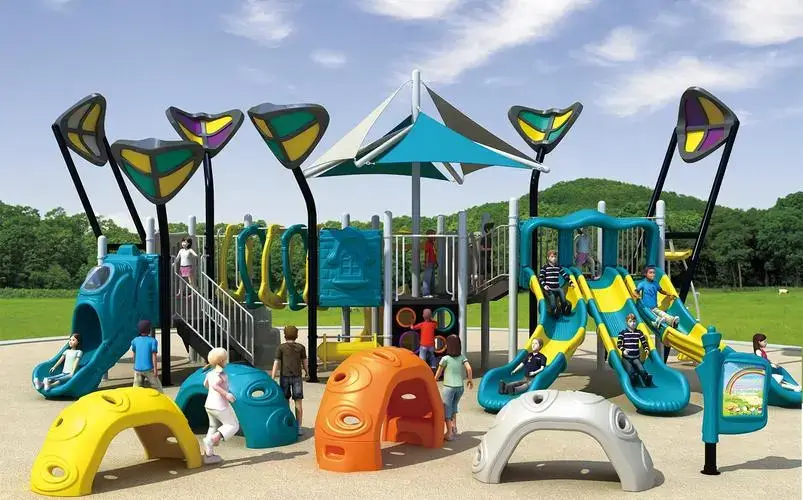
The average cost of building a children’s playground typically ranges from $15,000 to $75,000 for smaller installations, while larger, more complex community or school playgrounds can range from $50,000 to over $250,000. As a general rule of thumb, you should expect to budget approximately $1,000 per child of intended capacity, meaning the more children you plan to accommodate simultaneously, the greater the investment required.
If you are creating a new community playground as part of a school, church, or public space, careful planning and realistic budgeting are essential. With numerous important factors influencing final costs, we have compiled detailed information to help you understand the expenses involved and plan effectively for your playground project.
Factors That Affect Playground Construction Costs
More than likely, over half of your budget will be allocated to outdoor play equipment, but creating a complete, safe, and compliant playground involves significantly more than just the structures themselves. Here are the key factors that influence overall playground costs, explained in detail:
- Size and Complexity: The physical footprint and design intricacy of your playground are primary cost drivers. A larger playground designed to accommodate more children simultaneously requires more materials and a larger structure. The complexity of the design—such as custom themes, multi-level towers, or intricate architectural elements—increases engineering and fabrication costs. A simple, pre-configured structure for 15-25 children may cost $25,000-$50,000, while a large, custom destination playground for a community park can exceed $250,000.
Equipment Selection: The volume, variety, and quality of play components directly impact your budget. This includes slides, swings, climbing structures, overhead events, interactive play panels, and standalone components like spinners or spring riders. Commercial-grade equipment manufactured with durable materials such as powder-coated steel, rotationally molded polyethylene, and stainless steel hardware commands a higher initial investment but delivers a lifespan of 15-20+ years with lower long-term replacement costs . Equipment typically accounts for 40-60% of the total project budget.
- Safety Surfacing: The choice of playground surfacing material significantly affects both cost and safety compliance. Surfacing typically represents 20-30% of the total budget, though this can vary based on material selection and coverage area . Options include:
- Engineered Wood Fiber (EWF) : The most budget-friendly option initially, costing approximately $5-$15 per square foot installed. However, EWF requires annual replenishment to maintain proper depth (9-12 inches) and regular raking to prevent displacement .
- Poured-in-Place (PIP) Rubber : A premium unitary surface costing approximately $15-$35 per square foot installed . PIP offers superior accessibility for wheelchairs, seamless design eliminating tripping hazards, and minimal long-term maintenance, making it ideal for inclusive playgrounds despite higher upfront costs .
- Rubber Tiles: Interlocking tiles cost approximately $10-$25 per square foot installed and provide consistent shock absorption with the ability to replace individual damaged sections .
- Synthetic Turf with Shock Pad: Combines natural aesthetics with engineered safety, typically costing $12-$25 per square foot installed .
- Site Preparation and Location: Existing site conditions substantially influence preparation costs, which typically account for 5-15% of the total budget.
- Factors Include:
- Grading and Drainage: Sloped sites require excavation and levelling to create a safe, level play surface. Proper drainage installation prevents water accumulation that can compromise surfacing integrity.
- Soil Conditions: Rocky terrain, hard soil, or contaminated ground requires specialized equipment and additional labor.
- Existing Structure Removal: Demolition and disposal of old equipment adds to costs.
- Accessibility Compliance: Ensuring routes to and through the playground meet ADA requirements may require additional grading and pathway construction.
Professional Installation: Certified professional installation is strongly recommended to ensure compliance with safety standards such as ASTM F1487 and CSA Z614. Installation labor typically represents 15-25% of equipment and surfacing costs, or approximately 25-35% of equipment costs alone . Professional installers ensure proper anchoring, accurate assembly, and warranty validation.
- Additional Features and Amenities: Supplementary elements enhance usability and can add 10-20% to total costs :
- Site amenities: Benches ($500-$2,000), picnic tables ($800-$3,000), trash receptacles ($300-$1,000 each)
- Shade structures: Canopies or shade sails ($5,000-$20,000+ depending on size)
- Fencing and gates: Perimeter safety fencing ($15-$30 per linear foot)
- Landscaping: Trees, shrubs, and plantings ($2,000-$10,000+)
- Signage: Park rules, interpretive, or donor recognition signs ($500-$3,000)
Pathways: Accessible routes connecting playground to parking or facilities
- Freight and Shipping: Distance from the manufacturer affects delivery costs, typically adding 5-15% to equipment costs depending on location and shipment size.
Permits and Inspections: Local jurisdiction requirements may include permit fees and final safety inspections, typically $500-$3,000 depending on project scope.
Budgeting for Playground Equipment and Installation
Breaking down costs into specific categories provides clarity for financial planning. The following sample budget allocation represents typical commercial playground projects based on industry data:
| Budget Category | Estimated Percentage of Total Budget | What This Covers | Detailed Considerations |
|---|---|---|---|
| Playground Equipment | 40–60% | Main play structures, swings, slides, climbers, freestanding components, interactive panels | Custom-themed designs, inclusive features, and larger structures increase this percentage. Pre-designed packages offer cost savings. High-quality commercial-grade materials justify higher initial investment through extended lifespan. |
| Safety Surfacing | 20–30% | Impact-attenuating materials, installation, borders, and containment systems | Material choice significantly affects this category. PIP rubber commands premium pricing but minimizes long-term maintenance. EWF offers lower upfront costs but requires annual replenishment budgeting. |
| Installation Labor | 15–25% | Professional assembly and installation of all equipment and surfacing | Certified installers ensure compliance with ASTM, CSA, or EN standards. Complex structures require more installation time. Geographic region affects labor rates. |
| Site Preparation | 5–15% | Excavation, grading, drainage solutions, removal of existing structures, utility work | Challenging terrain, poor drainage, or contaminated soil increases costs. Some schools offset expenses through community volunteer labor for non-technical work. |
| Additional Features & Contingency | 10–20% | Site amenities, shade structures, fencing, landscaping, permits, and unexpected costs | Allocate 10–15% contingency for unforeseen site conditions or price fluctuations. Amenities enhance user experience but can be phased in as budgets allow. |
Sample Budget Scenarios
To illustrate how these percentages translate to actual dollars, consider these common project scenarios based on industry examples:
Small Daycare or Church Playground (Capacity: 15-25 children)
| Cost Category | Estimated Cost |
|---|---|
| Equipment | $15,000–$25,000 |
| Safety Surfacing | $5,000–$10,000 (EWF or basic rubber tiles) |
| Installation | $4,000–$8,000 |
| Site Preparation | $2,000–$5,000 |
| Amenities / Contingency | $2,000–$5,000 |
| Total Estimated Range | $28,000–$53,000 |
Elementary School Playground (Capacity: 50-75 children)
| Cost Category | Estimated Cost |
|---|---|
| Equipment | $35,000–$60,000 |
| Safety Surfacing | $15,000–$30,000 (mix of EWF and high-traffic mats) |
| Installation | $10,000–$20,000 |
| Site Preparation | $5,000–$15,000 |
| Amenities / Contingency | $8,000–$15,000 |
| Total Estimated Range | $73,000–$140,000 |
Community Park Destination Playground (Capacity: 100+ children, inclusive design)
| Cost Category | Estimated Cost |
|---|---|
| Equipment | $80,000–$150,000+ (custom-themed, inclusive features) |
| Safety Surfacing | $40,000–$80,000 (PIP rubber for accessibility) |
| Installation | $25,000–$50,000 |
| Site Preparation | $15,000–$40,000 |
| Amenities / Contingency | $20,000–$50,000+ |
| Total Estimated Range | $180,000–$370,000+ |
Tips for Cost-Effective Playground Planning
Several strategic approaches can help maximize your budget while creating a quality play environment:
- Prioritize Essential Equipment First: Focus on core pieces that deliver the greatest play value for your target age group. Additional features can be added through phased construction as more funds become available.
- Consider Phased Implementation: Build the playground in stages, installing foundational elements first and expanding over time. This spreads costs across multiple budget cycles while allowing children to begin using the space sooner.
- Choose Modular, Expandable Designs: Select equipment systems designed for future expansion. This allows seamless addition of components later without replacing existing structures.
- Engage Community Volunteers: For non-technical tasks such as site clearing, painting, or landscaping, community volunteers can significantly reduce labor expenses while building project ownership and pride.
- Explore Grant Funding: Research playground grants from government agencies, private foundations, and organizations supporting community development, childhood health, or inclusive recreation.
Consider Pre-Designed Packages: Manufacturers often offer pre-configured playground packages at lower prices than fully custom designs, while still allowing some color and component customization.
Plan for Long-Term Maintenance: Factor ongoing maintenance costs into your operational budget. Quality materials may have higher upfront costs but lower total ownership costs over the playground’s 15-20+ year lifespan.
Conclusion
By now, you should have a clearer understanding of the investment required to build a children’s playground. With careful planning and knowledge of the key factors affecting construction costs, you can budget effectively and avoid unexpected expenses. Researching funding options—including grants, sponsorships, and community fundraising—can support your playground project’s financial feasibility. Maximizing cost-effective strategies, such as phased construction and volunteer engagement, helps stretch your dollars further while maintaining quality and safety standards.
Guangdong Dream Catch Recreation Equipment Co., Ltd. offers high-quality, compliant outdoor play equipment suitable for any site, from small faith-based organizations to large municipal parks. We provide comprehensive resources and expert guidance on proper playground planning and installation. If you have any inquiries about product specifications, budgeting, or project development, feel free to contact us—we are happy to answer any questions and help bring your playground vision to life.