How AI, Family Entertainment Centers, and Experience Economy Are Reshaping the Industry
Fast Installation
and Delivery to all regions worldwide
100% Customizable
to maximize business value per square meter
24/7 Support
to provide full and continuous customer support
Numerous Design Options
12-Hour / 2D Design & 36-Hour / 3D Design
Turnkey Solutions Worldwide
Safe, Durable, and Fun Indoor Play Areas For All Age
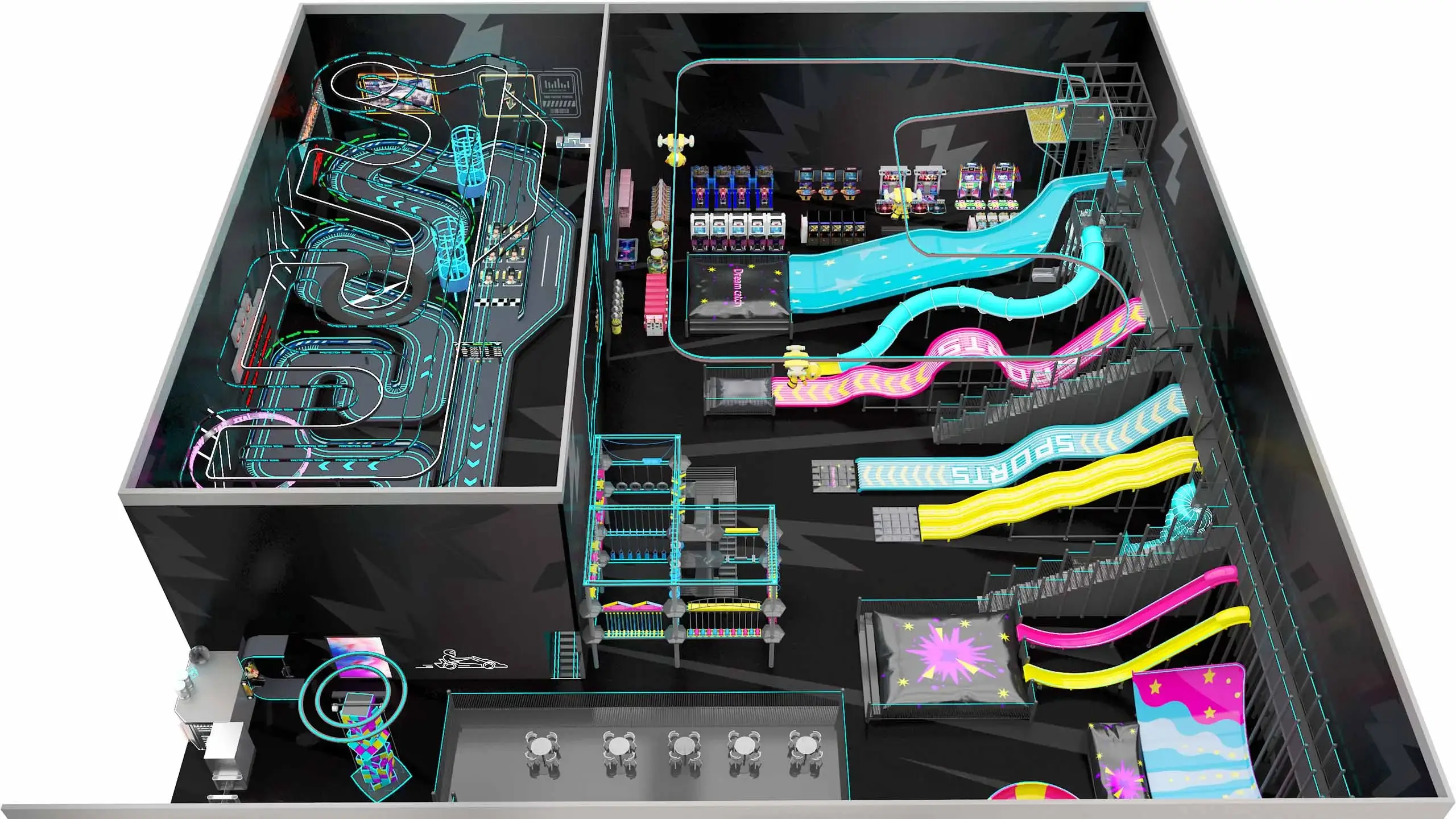
A New Era for Indoor Entertainment
Over the last decade, the global indoor amusement industry has undergone a dramatic transformation. What once consisted primarily of arcade halls, soft play areas, and trampoline parks has evolved into sophisticated Family Entertainment Centers (FECs) designed to deliver immersive, multi-generational experiences.
Today’s indoor entertainment venues are no longer built solely for children. They are becoming social hubs where families, teenagers, and adults gather to play, dine, and connect.
Several forces are driving this shift:
- The rise of the experience economy
- The rapid growth of AI-powered technologies
- Changing consumer expectations after the pandemic
The transformation of shopping malls and commercial real estate
According to industry estimates, the global Family Entertainment Center market exceeded $29 billion in 2024 and is expected to reach over $60 billion by 2032, growing at a compound annual growth rate (CAGR) of around 11–12%.
As the industry moves forward, developers, investors, and operators must rethink how indoor entertainment spaces are designed, operated, and technologically integrated.
This article explores the evolution of indoor playgrounds, the transformation of operational strategies, the role of artificial intelligence, and how investors should select suppliers in the new AI-driven entertainment era.
1. The Evolution of Indoor Playgrounds
Past vs Present vs AI-Era Entertainment Centers
Indoor playgrounds have evolved through three major stages: product-driven venues, experience-driven entertainment centers, and AI-connected play ecosystems.
| Industry Stage | Time Period | Core Concept | Typical Attractions & Features | Typical Space Allocation / Zones | Technology Level | Customer Experience Goal | Investment Logic / Revenue Model | Typical Venue Size | Industry Trend / Market Data |
|---|---|---|---|---|---|---|---|---|---|
| Traditional Model (Product-Centered Arcades) | Pre-2015 | Entertainment venues focused on individual attractions rather than overall experiences. Operators relied on foot traffic and simple game monetization. | • Arcade game clusters • Small soft play areas • Trampoline parks • Limited F&B services • Minimal theming or storytelling | Arcade Games: 50–70% Children Soft Play: 20–30% Food & Beverage: <10% Retail / Merchandise: <5% | Low technology integration | Transactional entertainment where guests play a few games and leave. | Revenue mainly from coin-operated games and ticket redemption machines. High machine density but limited repeat engagement. | 300–1,500 sqm | Before 2015, over 60% of indoor entertainment venues globally were single-concept facilities. |
| Modern Model (Experience-Driven Family Entertainment Centers) | 2016–Present | Multi-activity entertainment destinations designed to encourage longer stays, social interaction, and family participation. | • Multi-level indoor playgrounds • VR / AR attractions • Karting, bowling, sports simulators • Climbing walls and adventure courses •Restaurants, cafés, themed bars • Social-media-friendly installations | Immersive Playground Zones VR / AR Interactive Gaming Competitive Attractions (karting, bowling, simulators) Adventure Elements (climbing walls, ropes) Dining & Social Spaces Content Sharing & Scoreboards | Medium–High digital integration | Experience-driven entertainment focused on memory creation and social interaction. | Revenue diversification through tickets, food & beverage, birthday parties, memberships, and events. Longer dwell time increases spending per visitor. | 2,000–8,000 sqm | Global FEC market reached $28–30 billion in 2024, with projected 10–12% CAGR through 2030. Over 70% of new FEC projects integrate five or more entertainment formats. |
| AI-Driven Model (Connected Entertainment Ecosystems) | 2025–2035 (Emerging) | Fully connected entertainment ecosystems where attractions are integrated through digital systems and AI-driven gameplay. | • AI-powered player profiles • Cross-attraction scoring systems •Personalized gameplay experiences • Team-based challenges • Real-time analytics and performance tracking • Digital highlight videos and replay content | Integrated gameplay ecosystem connecting: Go-kart racing results VR performance scores Climbing challenge rankings Slide speed measurements Team-based competitions across attractions | Advanced AI integration, IoT sensors, real-time analytics | Continuous entertainment journey where every attraction contributes to a single connected gaming experience. | Monetization through data-driven engagement, membership ecosystems, gamified loyalty systems, and digital content sharing. | 4,000–15,000 sqm | Entertainment centers may evolve into “Game Vaults”, where visitors receive personalized highlight videos, team rankings, and shareable digital memories after each visit. |
2. The Transformation of Indoor Playground Operations
The Old Strategy VS The Modern Strategy VS The Future
One of the most significant shifts in the industry has been the change in operational philosophy.
| Industry Stage / Strategy | Operational Concept | Typical Layout / Features | Customer Role | Business Impact |
|---|---|---|---|---|
| Traditional Indoor Playground Operations | Age-Based Segmentation | • Toddler areas • Children’s play zones • Teen arcades | Children were the primary users. Adults usually waited on the sidelines and rarely participated in activities. | Limited engagement and lower revenue potential. Parents often viewed visits as obligations rather than enjoyable family experiences. |
| Modern Indoor Playground Strategy | Adults as Active Participants | • VR gaming • Bowling • Darts • Kart racing • Climbing challenges • Social gaming | Parents and adults are now treated as customers and participants rather than observers. | Higher engagement and longer visit duration. Venues evolve into full family entertainment centers (FECs) serving multiple age groups. |
| Modern FEC Revenue Structure | Food & Beverage as a Core Attraction | Restaurants, cafés, themed dining areas integrated into the venue environment. | Families dine together while participating in entertainment activities. | Increased visitor dwell time and spending. Guests who dine may stay 3–4 hours, significantly increasing total revenue. |
Typical revenue structure of modern FECs
Food and beverage services have become a critical component of modern entertainment centers. In many Asian markets especially, F&B acts as a core attraction rather than a secondary service.
Revenue Category Share
- Attractions 45–55%
- Food & Beverage 25–35%
- Arcade / Games 10–20%
Merchandise 5–10%
Restaurants, cafés, and themed dining areas significantly increase visitor dwell time. Guests who dine at the venue may stay up to 3–4 hours, increasing overall spending.
Future Operational Model
The next stage of evolution will eliminate strict age segmentation. Instead of separating children and adults, future venues will be designed as all-age entertainment ecosystems. The goal is to allow parents, teenagers, and children to participate in the same entertainment environment simultaneously.
| Future Strategy | Concept | Design Principles | Customer Experience Goal |
|---|---|---|---|
| All-Age Entertainment Ecosystems | Entertainment environments designed for simultaneous participation by children, teenagers, and adults. | • Multi-difficulty attractions• Adaptive gameplay• Shared family challenges• Cooperative team experiences | Encourage cross-generational interaction, longer visits, and stronger emotional engagement across families. |
3. AI Applications in Indoor Entertainment Environments
Artificial intelligence will significantly enhance both visitor experiences and operational efficiency.
| AI Application Area | Core Function | Key Capabilities | Example Metrics / Features | Operational Benefits |
|---|---|---|---|---|
| Data-Driven Venue Management | AI analyzes visitor behavior and attraction usage in real time to optimize venue operations. | • Real-time data collection • Attraction usage analytics •Performance benchmarking • Layout optimization insights | Example attraction usage metrics:
| • Identify high-performing attractions • Detect underperforming zones • Optimize space allocation • Replace or redesign low-performing attractions |
| Intelligent Queue Management | AI predicts peak visitor periods and manages queue systems dynamically. | • Visitor flow prediction • Dynamic queue allocation • Real-time traffic monitoring | AI systems analyze attendance trends, time-of-day demand, and attraction popularity. | • Reduced waiting times • Improved visitor flow • Higher operational efficiency |
| Personalized Gameplay Experiences | AI adapts gameplay difficulty and challenges based on player profiles. | • Adaptive difficulty levels • Player behavior tracking • Real-time gameplay adjustments | Examples:Children receive simplified challengesExperienced players receive advanced levelsGroups receive cooperative missions | • Higher engagement across age groups • Better visitor satisfaction • Inclusive gameplay for different skill levels |
| Smart Safety Monitoring | AI-powered systems monitor attractions to enhance safety and prevent risks. | • Behavior recognition • Crowd density monitoring • Equipment misuse detection | Systems detect:Unusual behaviorImproper equipment useOvercrowding in play areas | • Improved safety management • Faster incident response • Reduced operational risk |
4. How Investors and Operators Should Choose Suppliers in the AI Era
Building a modern entertainment center requires collaboration among multiple international stakeholders. Selecting the right suppliers is critical for project success.
| Strategic Factor | Core Concept | Key Requirements | Examples / Supporting Details | Business Impact |
|---|---|---|---|---|
| Continuous Innovation | Suppliers must continuously develop new attractions and creative concepts to keep entertainment venues competitive. | • Ongoing product innovation • Creative attraction concepts • Ability to adapt to changing entertainment trends | Entertainment trends evolve quickly, and operators increasingly prefer partners who provide innovative experiences rather than standard equipment packages. | Keeps venues fresh and engaging, increases repeat visitation, and strengthens long-term competitiveness. |
| Strong Communication & Global Collaboration | Large entertainment projects often involve multiple international stakeholders working together. | • Cross-cultural communication • Coordination across technical teams • Clear project documentation | Typical global collaboration structure:
| Effective communication ensures smooth coordination, fewer delays, and better project outcomes. |
| Safety & Engineering Expertise | Safety is the highest priority in indoor amusement projects. Suppliers must meet strict engineering and certification standards. | • Engineering certifications • Structural safety calculations • Installation documentation • Maintenance guidelines | Equipment must maintain high reliability for at least 3–5 years to ensure operational stability and protect investor returns. | Reduces operational risk, improves regulatory compliance, and protects brand reputation. |
| Speed & Reliability of Project Execution | Timely project delivery is critical because delays significantly increase investment costs. | • Fast response times • Proactive problem solving • Reliable production and delivery schedules | Example monthly project costs:
| A 6-month delay can exceed $1 million in costs before opening, making execution speed a key factor in supplier selection. |
Conclusion: The Future of Indoor Entertainment
Indoor entertainment is entering a new era defined by technology integration, social experiences, and cross-generational engagement.
The most successful entertainment venues of the future will combine:
immersive physical attractions
AI-powered personalization
social gaming environments
data-driven operational management
Rather than simply offering games or rides, these venues will create shared memories and meaningful social interactions.
In the AI era, the ultimate goal of indoor entertainment remains simple:
Bring people together through play, creativity, and shared experiences.
Recommended
Top 10 Trends Shaping the Global Family Entertainment Center (FEC) Industry
How to Design a Profitable Indoor Playground: A Strategic Guide for Investors
AI + Playground: The Next Revolution in Location-Based Entertainment