A 2026 Business Guide for Canadian Indoor Playground Owners and Family Entertainment Centers
Introduction: An Indoor Playground Is More Than an Admission-Based Business
When entrepreneurs consider opening an indoor playground, admission fees are usually the first source of revenue they think about. Parents pay for their children to play, and the business earns money from each visit.
However, an admission-only business model has limitations.
Revenue depends heavily on visitor numbers, ticket prices, opening hours, available capacity, and seasonal demand. Weekends, school holidays, and bad-weather days may be busy, while weekday afternoons and warmer months can be considerably quieter.
For Canadian indoor playground operators, this creates an important business question:
How can an indoor playground generate revenue beyond selling admission tickets?
The answer is to develop several complementary revenue streams that serve different customer needs, use the facility more efficiently, and encourage families to spend more over time.
A well-planned indoor playground or family entertainment center (FEC) may earn revenue from birthday parties, memberships, food and beverages, school visits, camps, private events, retail products, additional attractions, sponsorships, and special programmes.
Not every venue needs all these options. A small neighbourhood play café will have different opportunities from a large commercial indoor playground or a multi-attraction FEC. The right revenue model depends on the target market, facility size, operating capabilities, and local demand.
This guide explores ten revenue streams beyond admission fees, explains how each works, and shows how Canadian operators can evaluate their potential.
Birthday Parties and Private Celebrations
Birthday parties are one of the most important additional revenue opportunities for many indoor playgrounds.
Parents often want a convenient way to celebrate their children’s birthdays without preparing their homes, organising activities, purchasing decorations, or cleaning up afterwards.
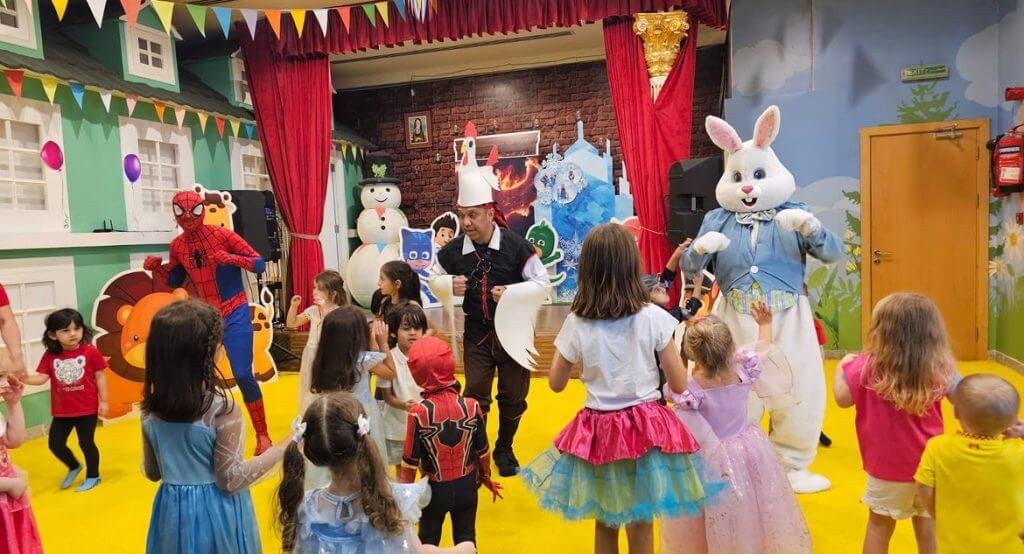
An indoor playground can offer a complete celebration experience by combining play access, a private party room, food, decorations, and optional entertainment.
How the birthday party revenue model works
A typical birthday package may include:
Admission for a specified number of children.
Reserved access to a party room for a defined period.
A dedicated party host or support staff.
Basic decorations and tableware.
Drinks or selected food items.
Invitations or digital booking support.
Operators can then offer additional products or services, such as extra guests, premium decorations, themed activities, party favours, food upgrades, or extended room time.
The objective is not simply to charge more for a room. It is to create a convenient, clearly packaged experience that parents are willing to pay for.
Example of a birthday party package
Consider a hypothetical indoor playground in Ontario offering the following package:
| Package component | Illustrative price |
|---|---|
| Base birthday package | CAD $399 |
| Additional children | CAD $15 per child |
| Food upgrade | CAD $60 |
| Premium decorations | CAD $50 |
| Party favour bundle | CAD $40 |
These figures are examples for financial modelling, not market averages or recommended prices. Actual pricing should reflect local competitors, food costs, labour, room capacity, taxes, and customer expectations.
If a customer chooses the base package and all three upgrades, the booking generates CAD $549 before applicable taxes and costs.
However, operators should calculate the contribution margin rather than looking at package revenue alone. Party hosts, food, cleaning, supplies, booking fees, and room turnover all affect profitability.
How to improve birthday party performance
Create clearly differentiated packages. Offer two or three options rather than an overwhelming list of individual services.
Make online booking easy. Parents should be able to see package details, available dates, guest limits, deposits, cancellation policies, and upgrade options.
Sell relevant upgrades during booking. A customer who has already chosen a party package may appreciate the convenience of adding food or decorations in advance.
Use party rooms efficiently. Schedule bookings around realistic setup, cleaning, and turnover times. Overlapping bookings can damage the customer experience.
Build a repeatable operating process. Standardised packages help staff deliver consistent experiences and make labour costs easier to forecast.
Why birthday parties matter
Birthday parties can generate higher-value transactions than ordinary admission visits. They also create opportunities for additional food sales, repeat visits, customer referrals, and online reviews.
Nevertheless, parties require dedicated space and staff. A venue should compare the contribution generated by a party room with what that space could earn through ordinary admissions or other activities.
For many operators, birthday parties deserve to be among the first revenue streams developed after admission sales.
Memberships and Annual Passes
Memberships help transform occasional visitors into repeat customers.
Instead of paying the full admission price for every visit, families purchase a recurring membership or prepaid pass that gives them access to the facility under specified conditions.
For operators, memberships can provide more predictable revenue and help establish long-term relationships with local families.
Common membership models
Indoor playgrounds can experiment with several membership structures.
Monthly membership
Customers pay a recurring fee for access under defined terms.
Annual membership
Families pay for a longer period, often in exchange for a discounted effective monthly price or additional benefits.
Multi-child family membership
A plan designed for households with more than one eligible child.
Off-peak membership
Access is focused on quieter periods, such as weekday mornings or selected afternoons.
Membership with added benefits
The plan may include discounts on birthday parties, food, special events, or additional attractions.
Each model serves a different business purpose. An off-peak membership, for example, can help attract families during periods when the playground has spare capacity.
The financial logic of memberships
Membership revenue is recurring, but membership profitability depends on more than the number of active subscribers.
Operators need to understand:
Monthly membership revenue.
Customer acquisition costs.
Cancellation and renewal rates.
Average visit frequency.
Additional spending per visit.
Capacity usage during peak and off-peak periods.
Discounts or benefits provided to members.
Consider a hypothetical membership priced at CAD $45 per month.
If 200 members remain active for a month, the business receives CAD $9,000 in membership billings before considering refunds, applicable taxes, payment fees, and other adjustments.
However, that does not mean the entire amount is profit. Members may visit frequently, consume staff capacity, increase cleaning requirements, and occupy space that could otherwise be used by full-price customers.
How to design a sustainable membership programme
Avoid unlimited access without modelling usage. Estimate how often members are likely to visit and how those visits affect peak capacity.
Use memberships to fill quiet periods. Consider weekday-focused plans or other carefully defined access benefits.
Encourage additional spending without making membership feel restrictive. Food discounts, priority party booking, and selected event benefits can create value while supporting other revenue streams.
Monitor renewal behaviour. Membership growth is not sustainable if new subscriptions merely replace large numbers of cancelling customers.
Keep terms transparent. Explain access restrictions, cancellation procedures, renewal dates, and any blackout periods clearly.
Memberships are especially worth evaluating for facilities located near residential communities with a substantial population of families with young children.
Food and Beverage Sales
Food and beverages can increase spending per family visit while improving the overall customer experience.
Parents may want coffee, tea, snacks, or light meals while their children play. Families attending birthday parties may also prefer to purchase refreshments directly from the venue rather than bring everything themselves.
The right food and beverage model depends on the facility’s size, customer profile, available infrastructure, and operational capabilities.
Three possible food and beverage models
Model A: Simple snack and beverage counter
This may include bottled drinks, packaged snacks, coffee, tea, and a small selection of convenient food items.
It is relatively simple compared with operating a full kitchen, although operators still need to consider applicable food safety requirements, storage, cleaning, and staffing.
Model B: Play café
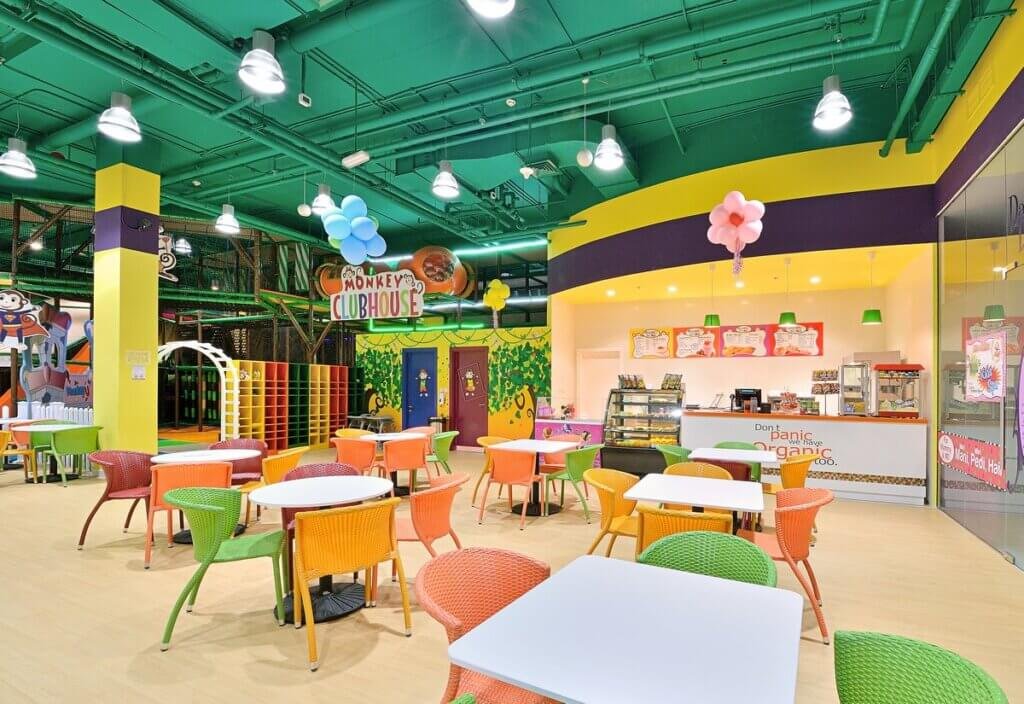
A play café combines a children’s play area with a café-style seating environment. Parents can relax, socialise, and purchase refreshments while maintaining appropriate supervision of their children.
This model may work well in neighbourhoods with young families and demand for shorter, more frequent visits.
Model C: Full café or food service
A larger FEC may offer a broader menu, hot food, party catering, and meal packages.
This can create more spending opportunities, but it also introduces additional equipment, labour, inventory, waste, food preparation, and compliance requirements.
How to increase food and beverage revenue
Design the seating area carefully. Comfortable seating with appropriate sightlines into the play area can encourage parents to remain on site.
Offer party food packages. Preselected menus simplify planning for parents and make costs easier to forecast.
Build convenient combinations. An admission-and-snack bundle or family refreshment package can make purchasing easier.
Control menu complexity. A large menu is not necessarily better. Begin with products that match customer demand and operational capabilities.
Track waste and inventory. Revenue alone does not reveal whether a food service operation is financially successful.
A key financial consideration
Food and beverage sales should be measured using both revenue and contribution margin.
For example, a product that sells well may still contribute little after ingredient costs, packaging, waste, labour, and transaction fees are considered.
For a small indoor playground, a carefully managed beverage and snack counter may be more practical than building a full restaurant.
School Trips, Daycare Visits, and Group Bookings
Group bookings provide an opportunity to generate revenue during periods when ordinary walk-in traffic may be lower.
Schools, daycare centres, summer programmes, community organisations, and parent groups may need indoor activities that can accommodate multiple children in a controlled environment.
For Canadian venues, weekday group bookings can be particularly useful when weekend demand is already strong but weekday utilisation remains limited.
Potential group customers
Indoor playground operators may approach:
Daycare centres and childcare providers.
Preschools and early learning programmes.
Elementary schools.
Summer camps and holiday programmes.
Homeschooling groups.
Community organisations.
Parent associations.
Youth and family organisations.
The suitability of each group depends on the venue’s age range, capacity, accessibility, supervision requirements, and operating policies.
How group pricing can work
Possible pricing structures include:
Per-child admission: Each participating child pays a negotiated group rate.
Minimum group charge: The organiser pays a minimum amount regardless of final attendance.
Private session: The venue reserves a defined period or designated area for the group.
Programme package: Admission is combined with a structured activity, refreshments, or educational content.
Operators should specify minimum group sizes, adult supervision requirements, booking lead times, payment terms, cancellation policies, and any restrictions on food or equipment use.
How to develop a group sales programme
Start by creating a dedicated group booking page on the website. Include the target age range, capacity, available time slots, pricing structure, supervision requirements, and enquiry form.
Then build a local outreach list of schools, daycares, camps, and community organisations.
Rather than offering discounts indiscriminately, focus on periods when the facility has available capacity. A discounted weekday group booking may be worthwhile if the additional contribution exceeds the costs of staffing, cleaning, and servicing the group.
Group bookings can also introduce new families to the venue. Some participants may return later with their own families, although this repeat business should be measured rather than assumed.
Seasonal Camps, Holiday Camps, and School-Break Programmes
Indoor playgrounds can extend their role beyond casual play by offering structured programmes during school holidays and other periods when parents need activities for their children.
Depending on the venue and its capabilities, programmes may include:
Winter-break activities.
March Break programmes.
Summer day camps.
School professional development day programmes.
Themed activity weeks.
Parent-child workshops.
Supervised play sessions.
The Canadian school calendar creates opportunities for seasonal programming, but demand and schedules vary by province, school board, and community.
How camps generate revenue
Unlike ordinary admission, which is generally tied to a single visit, a camp programme can sell multiple sessions or a block of attendance.
A programme might charge per day, per week, or for a defined series of activities. Operators can also offer optional meal packages, special activities, or extended care where they are properly equipped and authorised to provide them.
What operators need to consider
Camps are operationally different from open play.
Depending on the programme, operators may need additional staff, activity leaders, registration procedures, emergency contacts, attendance records, supervision policies, and child protection procedures.
They should also verify applicable provincial and municipal requirements before advertising a programme as childcare, day camp, or supervised care. Requirements can differ according to the nature and duration of the service.
A practical approach
Start with a small number of clearly defined programmes rather than immediately launching a large camp operation.
For example, a venue might test a one-day school-break activity programme before expanding into week-long camps.
Track registration numbers, staff hours, supplies, cancellations, customer feedback, and contribution per programme. Use those results to determine whether the service should become a regular part of the business.
Private Events and Corporate Family Days
Birthday parties are one form of private event, but indoor playgrounds may be able to serve other types of celebrations and gatherings.
Depending on the target market and venue design, opportunities may include:
Corporate family days.
Company holiday parties for employees and their children.
Private family gatherings.
Community celebrations.
Club and association events.
After-hours venue rentals.
Selected seasonal celebrations.
This revenue stream is particularly relevant to larger facilities with flexible activity areas, multiple party rooms, or the ability to reserve all or part of the venue.
How private events can be packaged
An operator may offer a package that combines facility access, a defined booking period, activity access, refreshments, event support, and optional catering.
Pricing may be based on the number of guests, the duration of the booking, the areas reserved, or a combination of these factors.
Private hire should be priced carefully because reserving a venue can prevent the business from selling ordinary admissions during the same period.
How to make private events commercially viable
Create a separate event enquiry page. Corporate and community organisers may have different requirements from parents booking a birthday party.
Define what is included. Clearly specify guest limits, setup time, staffing, catering, access restrictions, and cleaning arrangements.
Use periods with spare capacity where possible. After-hours events can create revenue without necessarily displacing normal daytime business, provided staffing and operating costs remain manageable.
Develop a repeat-booking process. Keep a record of event organisers, feedback, and opportunities for annual or seasonal bookings.
Corporate events can involve more coordination than ordinary admissions. Their financial value should be assessed after labour, cleaning, catering, security, and any lost public admission revenue are considered.
Retail Products, Toys, Socks, and Party Supplies
Retail sales provide another way to generate revenue from customers who are already visiting the venue.
Products may include:
Grip socks or other required play accessories.
Small toys and activity products.
Plush toys and character merchandise.
Branded clothing.
Water bottles and reusable drinkware.
Birthday party favours.
Small gifts and seasonal items.
Not every indoor playground needs a large retail area. In many cases, a small, carefully selected range is easier to manage.
Essential items versus optional purchases
There is an important distinction between products customers need and products they choose to buy.
If particular socks or other accessories are required by the venue’s rules, operators should explain the requirement before customers arrive or complete online booking.
Optional retail products should be positioned as convenient additions rather than unnecessary obstacles to entry.
How to manage retail effectively
Choose products that match the audience. Small toys, activity kits, and party supplies may be more suitable for a children’s play venue than a broad gift shop.
Keep inventory limited at first. Test demand before committing substantial capital to merchandise.
Place products where purchasing is convenient. The reception area or party check-in point may work well, provided the layout does not obstruct circulation or emergency access.
Track sell-through and stock turnover. A product with a high selling price is not necessarily attractive if it sits in inventory for months.
Review the full cost. Account for wholesale costs, shipping, storage, damaged goods, unsold stock, payment fees, and staff time.
Retail is often best treated as a supporting revenue stream. Its value comes from meeting customer needs and adding incremental spending without creating excessive operational complexity.

Additional Attractions and Paid Experiences
A commercial indoor playground may include more than a traditional soft play structure.
Depending on the concept, budget, target age range, and available space, operators could consider additional paid experiences such as:
Arcade games.
Interactive projection games.
Small rides or motion-based attractions.
Climbing or challenge activities.
Creative activity stations.
Selected digital or interactive experiences.
Special themed activities.
These attractions can provide customers with more reasons to visit and may encourage additional spending during an existing visit.
However, new attractions should be selected based on the needs of the target audience and the economics of the facility—not simply because the technology looks impressive.
Three possible pricing models
Pay per play: Customers pay for each individual game or activity.
Prepaid credits: Customers purchase a credit package that can be used across selected attractions.
Bundled access: Admission includes some attractions, while premium experiences require an additional payment.
Timed sessions: Customers pay for a defined duration of access to a specific activity.
The best model depends on the attraction, maintenance requirements, customer expectations, and how easily the operator can manage access.
How to evaluate an additional attraction
Before purchasing new play equipment, estimate:
Initial equipment and installation costs.
Floor area and infrastructure requirements.
Expected utilisation.
Revenue per play or session.
Consumables and prize costs, where applicable.
Staffing and maintenance requirements.
Downtime and repair costs.
Impact on visitor flow and supervision.
For example, an arcade game may generate additional spending without requiring a large dedicated area, while a more complex attraction may require extra staffing and significant space.
Operators should also confirm that the attraction is suitable for the intended age group and that its safety, accessibility, maintenance, and insurance implications have been assessed.
An additional attraction should support the overall customer experience and produce a measurable contribution—not merely increase the equipment count.
Classes, Workshops, and Enrichment Activities
Some indoor playgrounds can extend their offering through structured classes and workshops.
These programmes may appeal to families who want more than unstructured play, particularly when the activities complement the venue’s age range and existing facilities.
Potential options include:
Parent-and-child activity sessions.
Creative arts and crafts.
Building and construction workshops.
Movement and coordination activities.
Themed learning sessions.
Special-interest workshops delivered by qualified partners.
The right programme will depend on local demand and the expertise available to deliver it.
How these programmes generate revenue
Operators can charge per session, offer a multi-session package, or work with an external instructor under an agreed revenue-sharing arrangement.
For example, a venue might reserve a quiet weekday morning for a small parent-child workshop. The activity could bring customers into the facility during a period when ordinary admission demand is limited.
Partnering with external instructors
Not every operator needs to develop every programme internally.
A qualified local instructor or activity provider may be able to deliver a workshop while the venue supplies the space, marketing, booking system, and customer access.
Any partnership should clearly define responsibilities, insurance, payment arrangements, cancellations, supervision, equipment use, and applicable safety requirements.
A practical warning
Structured classes require more planning than simply opening the play area.
Operators need to account for instructor fees, preparation time, materials, room turnover, booking administration, and minimum attendance.
A class that sells out occasionally may still be commercially weak if it requires substantial setup and staff time. Track profitability and repeat registration before expanding the programme.
Sponsorships, Local Partnerships, and Brand Collaborations
A final revenue stream involves generating commercial value through relationships with other businesses and community organisations.
An indoor playground often serves a clearly defined audience: local families with young children. This may create opportunities for relevant partnerships.
Potential partners include:
Children’s product retailers.
Local family photographers.
Party suppliers and entertainers.
Children’s activity providers.
Family-focused businesses.
Community organisations.
Relevant local brands.
The structure of each partnership should fit the venue’s audience, reputation, and operating model.
Possible partnership models
Sponsored events
A business contributes financially or provides products in exchange for agreed event visibility.
Co-promotions
Two businesses promote complementary services to their respective audiences.
Referral arrangements
The playground recommends a relevant provider, or receives referrals from that provider, under clearly defined terms.
Event participation
A partner provides an activity, product demonstration, or service as part of a themed event.
In-venue advertising
A business pays for an appropriate promotional placement or sponsorship opportunity within the facility.
How to build useful partnerships
The first step is to identify businesses whose customers overlap with the playground’s target market.
The second is to create a clear proposal explaining the audience, promotional opportunity, expected deliverables, and commercial terms.
The third is to evaluate the results. Track leads, bookings, event attendance, customer feedback, and actual payments rather than relying only on social media exposure.
Partnerships should enhance the visitor experience. Irrelevant advertising or excessive commercial activity can undermine customer trust, particularly in a venue designed for children and families.
Operators should also establish appropriate rules for children’s privacy, photography, data collection, advertising, and sponsored content.
How to Choose the Right Revenue Streams for Your Indoor Playground
The ten revenue streams above do not all have the same cost structure, operational requirements, or commercial value.
The best combination depends on the business model.
A small play café may benefit from memberships, café sales, and parent-child activities. A medium-sized commercial indoor playground may prioritise birthday parties, school groups, memberships, and food packages. A large FEC may have the space and demand to support multiple attractions, private events, camps, and broader food service.
The goal is not to launch every possible revenue stream. It is to select complementary options that make good use of the facility, serve local demand, and can be delivered consistently.
Revenue stream comparison
| Revenue stream | Main commercial benefit | Key operational requirement | Most suitable setting |
|---|---|---|---|
| Birthday parties | Higher-value bookings and add-ons | Party rooms, hosts, booking management | Small to large venues |
| Memberships | Recurring revenue and retention | Usage and capacity management | Neighbourhood and community venues |
| Food and beverage | Additional spending per visit | Food service, inventory, cleaning | Play cafés and FECs |
| Group bookings | Weekday utilisation | Group sales and scheduling | Medium to large venues |
| Camps and holiday programmes | Multi-session bookings | Staffing and programme management | Venues with suitable facilities |
| Private events | Revenue from reserved venue time | Event coordination and flexible scheduling | Larger venues and suitable play cafés |
| Retail | Incremental sales | Stock control and product selection | Most venues with relevant demand |
| Additional attractions | More spending opportunities | Equipment, maintenance, capacity | Multi-attraction FECs |
| Classes and workshops | Off-peak activity and repeat visits | Instructors and programme planning | Venues with suitable space |
| Sponsorships and partnerships | External commercial support | Sales, relationship management, brand controls | Established venues with a local audience |
This table is a planning framework, not a ranking of profitability. The actual result depends on local pricing, customer demand, costs, and operating capacity.
How Revenue Streams Work Together
The strongest revenue models often combine several sources that support one another.
For example, a family may first discover a playground through a school group visit. The parents later return for a normal play session, purchase a membership, buy refreshments during visits, and eventually book a birthday party.
This creates a potential customer journey:
Discovery: A family learns about the venue through search, local partnerships, or a group booking.
First visit: The family pays admission and may purchase refreshments.
Repeat visits: A membership or multi-visit pass encourages return visits.
Higher-value occasion: The family books a birthday party or private celebration.
Additional purchases: Food, merchandise, workshops, or other experiences increase spending where relevant.
Referral: A positive experience leads the family to recommend the venue to others.
This journey will not happen for every customer. However, it demonstrates how different revenue streams can be connected rather than managed as unrelated products.
Design the facility around the business model
Revenue diversification begins before the playground opens.
If birthday parties are expected to be a major revenue source, the design should consider party rooms, guest circulation, food delivery, storage, cleaning, and room turnover.
If food and beverage sales are important, the layout should account for seating, service flow, storage, utilities, cleaning, and appropriate visibility into play areas.
If weekday group visits are a priority, the venue needs a suitable booking and supervision process, along with sufficient capacity to accommodate groups without disrupting other customers.
If the business plans to add interactive attractions, the layout should consider space allocation, queues, access, supervision, maintenance, and the impact on the main play experience.
Commercial indoor playground design should connect customer experience, physical layout, operating procedures, and revenue strategy.
Adding revenue streams after opening may be possible, but designing for them from the beginning can reduce expensive modifications later.
How to Evaluate the Profitability of Each Revenue Stream
Revenue is not the same as profit.
A venue may generate substantial sales from birthday parties, food service, or camps while earning less than expected after paying for labour, supplies, cleaning, maintenance, marketing, and other direct costs.
Operators should therefore model each revenue stream separately.
Step 1: Estimate sales using a clear unit driver
Each revenue stream needs a measurable basis for forecasting.
| Revenue stream | Example sales driver |
|---|---|
| Birthday parties | Number of parties × average booking value |
| Memberships | Active members × average monthly fee |
| Food and beverage | Transactions × average spend |
| Group bookings | Booked groups × average booking value |
| Camps | Registered participants × programme price |
| Private events | Events × average event revenue |
| Retail | Transactions × average purchase value |
| Additional attractions | Paid plays or sessions × average price |
| Classes and workshops | Paid registrations × average fee |
| Sponsorships | Signed agreements and contracted payments |
These are starting points. A detailed forecast should also account for discounts, refunds, cancellations, taxes, seasonality, and capacity constraints.
Step 2: Estimate direct and variable costs
Different revenue streams create different costs.
For birthday parties, these may include food, supplies, party-host labour, room cleaning, and booking fees.
For memberships, the important factors include payment fees, incremental operating costs, usage frequency, and any benefits provided.
For food service, direct costs may include ingredients, packaging, spoilage, and the labour associated with preparation and service.
For additional attractions, operators should consider consumables, prizes, maintenance, downtime, and any extra staffing requirements.
Step 3: Calculate contribution
A useful starting point is:
Contribution = Revenue − Direct and variable costs
Contribution is the amount remaining to support fixed operating expenses and, eventually, operating profit.
It is not the same as net profit. Rent, base staffing, utilities, insurance, financing, depreciation, marketing, and other expenses may still need to be covered.
Step 4: Consider capacity and opportunity cost
Every revenue stream uses some combination of space, time, staff, equipment, and customer attention.
A birthday party room may generate valuable bookings, but it also occupies floor area. A private event may produce substantial revenue, but it may displace ordinary admission sales. A membership programme may improve retention, but frequent peak-period visits can create capacity pressure.
The key question is not simply whether a revenue stream generates sales.
It is whether that revenue stream generates an attractive contribution relative to the resources it consumes.
Step 5: Test conservative scenarios
Avoid assuming that every revenue stream will perform at its target level from the first month.
Instead, model at least three scenarios:
Conservative: Lower bookings, slower membership growth, and weaker weekday demand.
Base case: Performance based on reasonable local assumptions.
Upside: Stronger bookings, repeat visits, and successful add-on sales.
This approach helps investors understand how much the business depends on optimistic assumptions.
A Simple Monthly Revenue Model for an Indoor Playground
The following example illustrates how several revenue streams can be combined in a financial forecast.
The figures are hypothetical and are not a forecast for a specific Canadian market or facility.
| Revenue stream | Illustrative monthly sales |
|---|---|
| Birthday parties | CAD $12,000 |
| Memberships | CAD $8,000 |
| Food and beverage | CAD $7,000 |
| Group bookings | CAD $3,000 |
| Camps and workshops | CAD $2,000 |
| Retail and other add-ons | CAD $1,500 |
| Additional attractions | CAD $2,500 |
| Private events and partnerships | CAD $2,000 |
| Total non-admission revenue | CAD $38,000 |
This example shows how an operator can build a revenue forecast beyond admission fees.
It does not establish whether the business is profitable. Admission revenue has not been included, and the table does not deduct costs, taxes, refunds, or expenses.
The next step is to build a separate cost estimate for each revenue line and combine those estimates with admission revenue and the facility’s fixed operating costs.
A financial model should also distinguish between recurring revenue, bookings made in advance, and sales that depend on actual customer attendance.
For example, a birthday party deposit received today may relate to an event scheduled several weeks later. Operators should follow appropriate accounting treatment and avoid treating every advance payment as revenue already earned.
Key Performance Indicators for Revenue Management
Once the business is operating, revenue streams should be monitored through a consistent set of performance indicators.
Revenue indicators
Average revenue per paid child visit
Total relevant revenue divided by the number of paid child visits, using a consistent definition of revenue.
Average spending per family visit
Total customer spending divided by the number of family visits or transactions, depending on the tracking method.
Birthday party conversion rate
The proportion of relevant enquiries that become confirmed bookings.
Membership renewal rate
The proportion of eligible memberships that renew during the measured period.
Group booking utilisation
The number of completed group bookings compared with available group booking slots.
Cost and profitability indicators
Contribution by revenue stream
Revenue less the direct and variable costs associated with that activity.
Labour cost by activity
Staffing costs associated with parties, camps, food service, and other activities.
Retail inventory turnover
How efficiently retail stock is sold and replenished.
Food waste and product loss
The value or quantity of products discarded or otherwise lost.
Capacity utilisation
The extent to which the venue uses its available operating capacity during different periods.
Customer indicators
Repeat visit rate
The proportion of customers who return within a defined period.
Customer acquisition cost
Marketing and sales costs associated with acquiring a customer, calculated using a consistent method.
Customer lifetime value
An estimate of the revenue or contribution generated by a customer relationship over time.
Customer satisfaction and review trends
Feedback that helps identify issues with booking, cleanliness, service, food, activities, or the overall visitor experience.
The most useful reporting system separates revenue by source instead of combining everything into a single sales number. This makes it easier to understand which activities are generating growth and which are consuming resources without delivering sufficient returns.
Common Mistakes When Diversifying Indoor Playground Revenue
Adding more revenue streams does not automatically make a business more profitable.
Several mistakes can undermine the benefits of diversification.
Mistake 1: Launching too many services at once
A new operator may attempt to offer a café, retail shop, camps, workshops, memberships, corporate events, and multiple attractions from the beginning.
The result can be operational complexity before customer demand has been established.
A better approach is to prioritise a small number of complementary revenue streams and expand after reviewing actual performance.
Mistake 2: Confusing sales with profit
A busy café, fully booked party calendar, or high membership count may appear successful, but the financial result depends on costs and capacity.
Every revenue stream should have its own basic contribution calculation.
Mistake 3: Ignoring weekday demand
Many indoor playgrounds experience stronger demand on weekends and during school holidays.
Building a financial plan around peak-period attendance can lead to unrealistic expectations for the rest of the year.
Group bookings, off-peak memberships, workshops, and selected programmes may help fill quieter periods, but their demand should be tested locally.
Mistake 4: Underestimating staffing requirements
Parties, camps, food service, and private events may require additional labour and more complex scheduling.
Operators should consider preparation, setup, supervision, cleaning, and post-event tasks—not just the hours during which customers are present.
Mistake 5: Adding attractions without validating demand
An additional attraction can require capital investment, maintenance, space, and ongoing operational attention.
Before purchasing equipment, estimate likely utilisation and the contribution required to justify the investment.
Mistake 6: Designing the facility without considering revenue operations
If party rooms, café seating, storage, reception, circulation, and play zones are poorly integrated, the venue may find it difficult to deliver the services it intended to sell.
Commercial planning and physical design should be developed together.
Mistake 7: Treating prepaid cash as immediate profit
Memberships, annual passes, deposits, and advance event bookings can improve cash flow, but they may also create future service obligations.
Accounting treatment, refund policies, and customer terms should be established appropriately.
Mistake 8: Expanding without measuring customer experience
More commercial activity can create queues, noise, crowding, or confusion if it is not properly integrated into the visitor experience.
Revenue growth should support the venue’s core promise: an enjoyable, well-managed place for children and families.
Which Revenue Streams Should a New Indoor Playground Prioritise?
The best starting point depends on the type of business being developed.
Small indoor playground or play café
Potential priorities include:
Admission revenue.
Memberships or multi-visit passes.
Food and beverage.
Birthday parties.
Small workshops or community activities.
A smaller venue may not have enough space for a broad retail offer, multiple attractions, or large private events. The priority should be repeat local customers and efficient use of the existing facility.
Medium-sized commercial indoor playground
Potential priorities include:
Admission revenue.
Birthday parties.
Memberships.
Food and beverage.
School and daycare bookings.
Seasonal programmes.
Selected retail and paid add-ons.
This model may have enough space and staffing flexibility to serve both individual families and organised groups.
Large family entertainment center
Potential priorities may include:
Admission and attraction sales.
Birthday parties and private celebrations.
Food and beverage.
Memberships and passes.
School groups and corporate events.
Camps and structured programmes.
Retail and sponsorships.
A larger FEC may support a broader range of revenue sources, but it also carries higher operating costs and greater complexity. Market demand must justify the scale of the facility.
These are suggested starting points rather than universal formulas. Operators should adjust the mix according to the local market, customer research, physical layout, and financial model.
How Indoor Playground Design Supports Revenue Growth
Revenue strategy should influence the facility’s design from the earliest planning stages.
An indoor playground is not simply a collection of play equipment. It is a commercial environment in which families arrive, check in, play, rest, eat, celebrate, and potentially return for future visits.
The layout can influence how smoothly these activities take place.
Party rooms and celebration areas
If birthday parties are a major part of the business plan, party rooms should be designed around realistic guest numbers, seating, storage, food delivery, cleaning, and booking turnover.
Café and parent seating
A café or refreshment area should support convenient service and comfortable seating without compromising appropriate supervision or circulation.
Reception and retail
Reception may need to accommodate check-in, payments, memberships, party arrivals, and selected retail products. Good organisation can reduce congestion and improve the customer experience.
Activity zones and attraction placement
Additional attractions should be positioned to support customer flow, supervision, and the intended age range.
Operators should avoid adding attractions simply to fill available space. Each feature should serve a clear customer or commercial purpose.
Flexible space for events and programmes
Where appropriate, flexible activity areas can allow the venue to host workshops, group visits, and selected events without disrupting normal operations.
Future expansion and replacement
The design should also consider access for maintenance, replaceable components, storage, equipment servicing, and possible future upgrades.
For investors, the important question is not only how attractive a playground looks at opening. It is whether the facility can support the intended business model efficiently over time.
Conclusion: Build a Revenue Model Around the Whole Family Experience
An indoor playground does not have to rely entirely on admission fees.
Birthday parties, memberships, food and beverage, group bookings, camps, private events, retail, additional attractions, workshops, and commercial partnerships can all provide opportunities to generate additional revenue.
However, each opportunity comes with different costs, staffing requirements, space needs, and risks.
The strongest approach is to start with a clear understanding of the target market, choose a manageable number of complementary revenue streams, and evaluate each one using realistic financial assumptions.
For Canadian investors and operators, the objective should be to build a business that combines repeat family visits, effective use of the facility, reliable service delivery, and disciplined cost management.
A well-designed indoor playground can create value beyond the time a child spends on the play structure. It can become a place where families return regularly, celebrate important occasions, participate in activities, and build long-term relationships with the business.
The commercial opportunity lies in designing that experience intentionally—and measuring whether each part of the business contributes to sustainable performance.
Frequently Asked Questions
1. What is the biggest source of revenue for an indoor playground besides admission fees?
Birthday parties are an important additional revenue source for many venues because they combine a booking fee with potential spending on food, decorations, and other upgrades. However, the largest source varies by facility size, local demand, and business model.
2. Are birthday parties profitable for indoor playgrounds?
They can be profitable when packages are priced appropriately and room capacity, labour, food, supplies, and cleaning costs are controlled. Operators should calculate contribution per booking rather than judging performance by package revenue alone.
3. Do memberships help indoor playgrounds make more money?
Memberships can support recurring revenue and repeat visits. Their financial value depends on membership pricing, renewal rates, visit frequency, customer acquisition costs, and whether member usage creates pressure during peak periods.
4. Should an indoor playground operate a café?
A café or simple refreshment counter can increase spending per visit and improve the customer experience. The right option depends on local demand, available space, infrastructure, staffing, food service requirements, and expected contribution.
5. How can indoor playgrounds attract more weekday customers?
Possible strategies include school and daycare bookings, off-peak memberships, workshops, parent-child activities, camps, and selected group programmes. The best option depends on local demand and the venue’s capacity to serve these customers.
6. Can a small indoor playground use the same revenue model as a large FEC?
Not necessarily. A small venue may focus on admissions, memberships, birthday parties, refreshments, and local activities. A larger FEC may have the space and customer demand to support more attractions, camps, corporate events, and retail operations.
7. How many revenue streams should a new indoor playground have?
There is no universal ideal number. It is generally more practical to establish a few complementary revenue streams and expand after collecting reliable operating data than to launch many complex services at once.
8. How should investors forecast indoor playground revenue?
Investors should forecast each revenue stream separately, using measurable drivers such as paid visits, party bookings, active memberships, food transactions, group attendance, and event bookings. Each forecast should account for seasonality, capacity, direct costs, and realistic ramp-up periods.
9. Does adding more play equipment automatically increase revenue?
No. Additional equipment may create more play opportunities, but it also requires investment, space, maintenance, and sometimes additional staffing. Equipment should be selected based on target customers, demand, layout, and the expected commercial contribution.
10. What should investors consider before designing an indoor playground?
Investors should consider the target market, facility size, customer flow, age-segmented play areas, party rooms, food service, supervision, maintenance access, and the revenue streams the business intends to support. These factors should be assessed together rather than as separate decisions.
A Note on Financial Planning
This guide provides general business-planning information, not a guarantee of revenue or profitability. Actual results depend on location, customer demand, pricing, competition, facility capacity, operating costs, and management. Investors should validate assumptions using local market research and qualified financial, legal, and operational advice.
Plan Your Indoor Playground Around Your Business Model
Dream Catch® works with investors, operators, and commercial developers on indoor playground equipment, customised design, manufacturing, and project delivery.
When planning a new indoor playground or upgrading an existing facility, consider how the equipment layout and supporting spaces can accommodate your target customers, operating model, and future development plans.
The objective is to create a play environment that works for children and families while supporting the commercial requirements of the business.