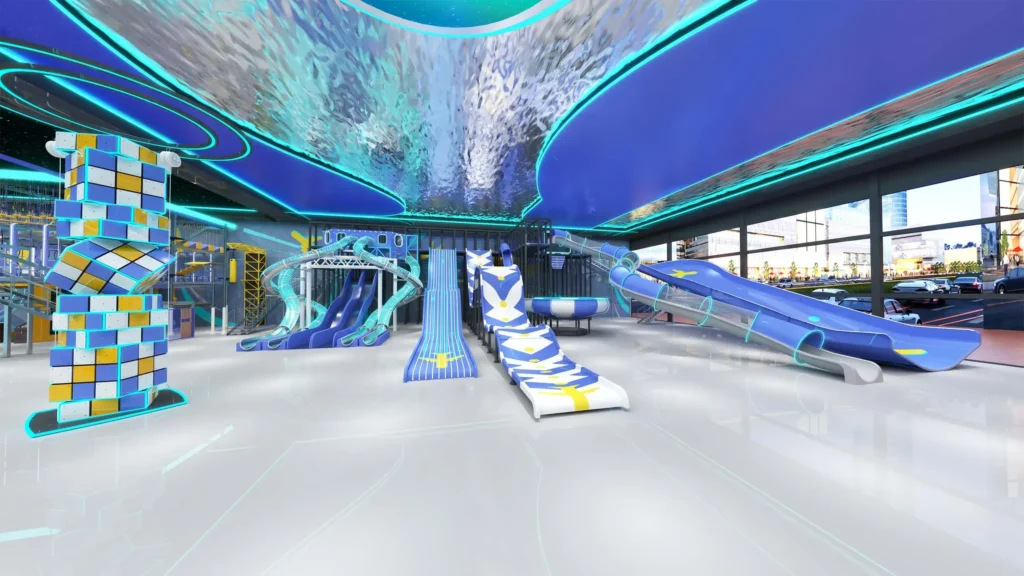
For more than thirty years, I have watched the indoor playground industry evolve from simple soft-play centres into sophisticated family entertainment destinations.
What was once considered a niche business has become an increasingly important part of Canada’s family recreation economy.
Today’s indoor playgrounds are no longer just places where children burn off energy on rainy afternoons.
They have become community gathering spaces, birthday party destinations, educational play environments, cafés for parents, and year-round entertainment venues that meet the changing lifestyles of modern Canadian families.
At the same time, investors have begun paying much closer attention to the sector.
Rising urban density, longer winters, increasing demand for family-oriented experiences, and a growing preference for experiential spending have all created favourable conditions for well-managed indoor playground businesses.
However, opportunity alone does not guarantee success.
The Canadian market is changing rapidly.
Consumer expectations are evolving.
Competition is becoming more sophisticated.
Operating costs continue to rise.
Regulatory requirements are becoming more demanding.
Entrepreneurs who rely on outdated business models may struggle, while those who understand where the market is heading can position themselves for sustainable long-term growth.
This report provides a comprehensive analysis of Canada’s indoor playground industry in 2026.
Drawing on industry experience, market observations, and operational best practices, we will examine:
- The current size and maturity of the Canadian indoor playground market
- Demographic and economic factors driving future demand
- Regional opportunities across different provinces
- Emerging business models reshaping the industry
- Consumer behaviour and spending trends
- Competitive landscape
- Major investment opportunities
- Key operational challenges
- Industry outlook through the remainder of the decade
Whether you are an entrepreneur evaluating your first investment, an existing operator planning expansion, or an investor seeking opportunities in the family entertainment sector, understanding the broader market is essential before making strategic decisions.
Because successful businesses do not simply respond to today’s market.
They anticipate tomorrow’s.
Chapter 1 — Overview of Canada’s Indoor Playground Industry
Before evaluating future opportunities, we must first understand where the industry stands today.
Canada’s indoor playground sector has experienced steady development over the past two decades.
What began as relatively simple play centres has evolved into a diverse industry that now includes:
- Boutique Play Cafés
- Commercial Indoor Playgrounds
- Family Entertainment Centers (FECs)
- Indoor Adventure Parks
- Trampoline Parks
- Ninja Warrior Facilities
- Edutainment Centres
- Multi-attraction entertainment complexes
Although these businesses differ significantly in size and target audience, they share a common purpose:
Providing safe, weather-independent recreational experiences for families with young children.
This positioning is particularly valuable in Canada, where long winters, frequent rain in coastal regions, and increasingly unpredictable weather encourage demand for indoor leisure activities throughout much of the year.
Unlike outdoor playgrounds, indoor facilities offer operators a more consistent revenue opportunity across all seasons.
That stability has attracted a growing number of entrepreneurs over the past decade.
However, the market remains highly fragmented.
Most indoor playground businesses in Canada are independently owned and operated rather than part of large national chains.
This fragmentation creates both challenges and opportunities.
On one hand, independent operators must compete without the purchasing power or marketing budgets of major brands.
On the other hand, local ownership allows businesses to adapt quickly to community needs, build strong customer relationships, and differentiate through personalised experiences.
The industry’s evolution has also shifted the basis of competition.
Twenty years ago, success often depended on having the largest play structure in town.
Today, parents evaluate far more than equipment.
They consider:
- Safety standards
- Facility cleanliness
- Customer service
- Birthday party quality
- Café offerings
- Educational value
- Online reviews
- Booking convenience
- Overall customer experience
This shift has transformed indoor playgrounds from equipment-focused businesses into experience-driven businesses.
As a result, operators who invest in operational excellence often outperform competitors with larger—but less engaging—facilities.
Chapter 2 — Market Size, Growth Drivers & Economic Outlook
When evaluating the opportunity of Canada’s indoor playground industry, investors often begin with a simple question:
“How big is the market?”
However, market size alone does not determine whether an industry is attractive.
A large market can still be difficult to enter if competition is intense or margins are declining.
A smaller market can create excellent opportunities if customer demand is growing and existing solutions are inadequate.
For indoor playground businesses, the more important question is:
“Are the underlying conditions that support long-term growth becoming stronger or weaker?”
From this perspective, Canada’s market fundamentals remain highly favourable.
Several powerful forces are supporting continued demand:
Population growth through immigration
Increasing urban density
Growth of suburban family communities
Demand for year-round recreational activities
Rising preference for experiential spending
Greater awareness of child development and active play
Limited availability of high-quality family entertainment spaces
Together, these trends create a positive environment for professionally operated indoor playground businesses.
1. The Current Position of the Canadian Indoor Playground Market
Canada’s indoor playground industry does not operate as a single unified market.
Instead, it is composed of multiple segments serving different customer needs.
The industry includes:
| Market Segment | Typical Size | Primary Customers | Main Revenue Drivers |
|---|---|---|---|
| Play Café | 1,000–3,000 sq. ft. | Parents with young children | Admission, café, memberships |
| Traditional Indoor Playground | 3,000–8,000 sq. ft. | Families with children aged 1–12 | Admission, parties, memberships |
| Family Entertainment Center (FEC) | 5,000–20,000+ sq. ft. | Families, groups, events | Attractions, parties, memberships |
| Edutainment Center | 3,000–15,000 sq. ft. | Families, schools | Programs, classes, experiences |
This diversity is one reason the industry continues to attract entrepreneurs.
A small investor can enter through a community-focused Play Café.
A larger investor can develop a regional entertainment destination.
The market provides multiple entry points.
2. Demographic Growth: Canada’s Family Population Advantage
One of the most important drivers behind indoor playground demand is population growth.
Canada continues to experience population expansion, largely supported by immigration.
New families arriving in Canada often create demand for:
Child-focused services
Educational activities
Community spaces
Recreational facilities
This is especially important because many immigrant families are settling in major metropolitan areas where housing density is increasing.
The result?
More families are living in environments where private outdoor play space is limited.
Indoor playgrounds provide an accessible alternative.
3. Urbanisation and the Changing Family Lifestyle
The way Canadian families live has changed significantly.
Historically, many families had:
Larger homes
Private yards
More outdoor space
Today, especially in major urban centres, families increasingly live in:
Condominiums
Townhouses
Higher-density neighbourhoods
Cities such as:
Toronto
Vancouver
Calgary
Ottawa
Montreal
have experienced significant residential intensification.
For young families, this creates a practical challenge:
Where can children play safely, actively, and socially throughout the year?
Indoor playgrounds increasingly fill this gap.
They provide:
Physical activity
Social interaction
Parent convenience
Weather-independent recreation
This makes them more than entertainment businesses.
They become part of the community infrastructure.
4. Canada’s Climate Creates Structural Demand
Canada’s climate is one of the industry’s greatest advantages.
Unlike regions where outdoor recreation is available year-round, many Canadian communities experience:
Long winters
Snow
Freezing temperatures
Heavy rainfall
During these periods, families still need places for children to:
Exercise
Socialise
Explore
Outdoor playgrounds become unavailable.
Indoor playgrounds become the natural alternative.
This creates a recurring seasonal demand cycle.
Seasonal Demand Pattern
Many Canadian operators experience stronger demand during:
Winter
Typically the strongest season.
Reasons:
Cold temperatures
Limited outdoor activities
School breaks
Holiday periods
Spring
Often stable demand.
Rainy periods encourage indoor visits.
Summer
Demand may soften because families spend more time outdoors.
Successful operators compensate through:
Camps
Special programs
Summer events
Fall
Demand often increases again as:
School resumes
Weather becomes cooler
Families return to routines
5. The Growth of Experiential Spending
A major consumer trend affecting many industries is the shift from purchasing products toward purchasing experiences.
Modern parents increasingly value:
Family memories
Social experiences
Educational activities
Shared time together
This benefits indoor playground businesses.
A birthday party is no longer simply a room rental.
Parents are purchasing:
Convenience
Entertainment
Stress reduction
Professional organisation
A memorable experience for their children
This explains why birthday parties have become one of the most profitable revenue streams in the industry.
6. Increasing Demand for Premium Experiences
The market is becoming more sophisticated.
Parents are increasingly willing to pay more when they perceive greater value.
Premium facilities often differentiate through:
Creative themes
High-quality design
Better cleanliness
Comfortable parent areas
Premium cafés
Digital booking systems
Professional staff
The industry is gradually moving away from:
“A place where children play.”
toward:
“A complete family entertainment experience.”
7. The Role of Immigration in Market Expansion
Immigration is one of Canada’s strongest demographic growth factors.
New Canadian families often create demand for:
Community integration spaces
Children’s activities
Weekend entertainment
Birthday celebrations
Indoor playgrounds naturally support these needs.
They provide environments where:
Children interact with others
Parents meet local communities
Families establish social connections
This community function gives indoor playgrounds a unique position compared with traditional entertainment businesses.
8. Economic Outlook: Opportunities and Challenges
Although market fundamentals remain positive, investors must also understand economic pressures.
The industry faces several challenges.
Challenge 1 — Rising Operating Costs
Major cost pressures include:
Commercial rent
Labour costs
Insurance premiums
Utilities
Construction expenses
Operators must focus heavily on efficiency.
Challenge 2 — Consumer Price Sensitivity
While families continue spending on children’s activities, economic uncertainty can influence purchasing decisions.
Successful operators respond through:
Membership options
Flexible pricing
Value packages
Multiple revenue streams
Challenge 3 — Higher Entry Costs
Compared with previous decades, opening a modern indoor playground requires more investment.
Expectations have increased.
Customers now expect:
Better design
Better cleanliness
Better service
Better technology
Low-investment facilities may struggle to compete.
9. Market Opportunity by Business Model
Different investors will find opportunities in different segments.
Opportunity A — Community-Based Play Café
Best suited for:
Smaller cities
Growing suburbs
Neighbourhood markets
Advantages:
Lower startup cost
Strong community connection
Repeat customers
Challenges:
Limited capacity
Lower scalability
Opportunity B — Regional Indoor Playground
Best suited for:
Growing suburban markets
Areas with young families
Advantages:
Balanced investment level
Multiple revenue streams
Strong birthday party potential
Challenges:
Requires professional operations
Opportunity C — Large Family Entertainment Center
Best suited for:
Major metropolitan areas
High-density family markets
Advantages:
Higher revenue potential
Multiple attractions
Strong brand-building opportunity
Challenges:
Significant capital requirements
More complex management
10. Long-Term Market Outlook Toward 2030
Looking ahead, several trends are likely to shape the Canadian indoor playground industry.
Trend 1 — More Professionalisation
The market will increasingly reward operators who invest in:
Safety systems
Professional design
Customer experience
Technology
Trend 2 — Hybrid Entertainment Models
Future facilities will combine:
Indoor playgrounds
Cafés
Educational programs
Fitness activities
Interactive technology
The boundary between recreation, education, and community services will continue to blur.
Trend 3 — Data-Driven Operations
Successful operators will increasingly use:
Customer management systems
Membership analytics
Online booking data
Marketing automation
Technology will improve both customer experience and operational efficiency.
Trend 4 — Stronger Demand for Premium Family Spaces
Parents are becoming more selective.
Facilities that provide safe, clean, comfortable, and meaningful experiences will continue gaining market share.
Chapter 3 — Regional Market Opportunities Across Canada
One of the most common mistakes first-time investors make is evaluating Canada as a single market.
Experienced operators know better.
An indoor playground that thrives in suburban Toronto may struggle in downtown Vancouver.
A successful Play Café in Victoria may not generate enough traffic in rural Saskatchewan.
Likewise, a 12,000-square-foot Family Entertainment Center (FEC) that performs exceptionally well in Calgary could be far too large for a smaller Atlantic Canadian city.
Location is not simply about finding available commercial space.
It is about matching the right business model with the right local market.
This chapter examines Canada’s regional opportunities, highlighting where demand is strongest, what challenges investors should expect, and which business models are best suited for different provinces and metropolitan areas.
What Makes a Strong Indoor Playground Market?
Before comparing provinces, let’s define the characteristics of an attractive market.
The strongest locations typically share several traits:
Growing population
High concentration of young families
Stable household incomes
Residential expansion
Limited direct competition
Convenient transportation access
Strong retail ecosystem
Year-round demand
No city is perfect.
The objective is to find markets where these factors align.
Ontario — Canada’s Largest Indoor Playground Market
Market Overview
Ontario remains Canada’s largest opportunity for indoor playground investment.
It has:
The country’s largest population
Strong immigration growth
Numerous rapidly expanding suburbs
High concentration of children under 12
Large shopping centres
Mature commercial real estate market
For many entrepreneurs, Ontario serves as the logical first choice.
However, competition is also more intense than in most other provinces.
Greater Toronto Area (GTA)
The Greater Toronto Area (GTA) represents Canada’s largest concentration of potential customers.
Communities such as:
Mississauga
Brampton
Vaughan
Markham
Richmond Hill
Oakville
Milton
continue attracting young families through residential development.
Advantages
Large customer base
Excellent highway access
High birthday party demand
Strong purchasing power
Large immigrant population
Growing suburban communities
Challenges
High commercial rent
Strong competition
Labour shortages
Expensive leasehold improvements
Recommended Business Models
Excellent for:
Premium Indoor Playgrounds
Family Entertainment Centers
Multi-attraction concepts
Premium Play Cafés
Hamilton & Niagara Region
Hamilton has experienced significant residential growth during the past decade.
Compared with Toronto, investors often benefit from:
Lower commercial rent
Lower operating costs
Growing suburban neighbourhoods
The region also attracts families from surrounding communities.
This creates opportunities for medium-sized facilities.
Ottawa
Ottawa offers several unique advantages.
As Canada’s capital, it benefits from:
Stable government employment
High household incomes
Educated population
Strong family demographics
Customer spending tends to remain relatively stable during economic fluctuations.
Play Cafés and premium indoor playgrounds perform particularly well in family-oriented suburban districts.
British Columbia — Premium Experience Market
British Columbia presents a different investment environment.
The province is characterised by:
High household incomes
Dense urban development
Mild climate
Strong tourism
High commercial property costs
Metro Vancouver
The Vancouver metropolitan area contains one of Canada’s most affluent customer bases.
Parents often expect:
High-quality design
Modern facilities
Premium cafés
Exceptional cleanliness
Strong customer service
Price competition alone is unlikely to succeed.
Experience becomes the differentiator.
Advantages
High purchasing power
Large immigrant communities
Strong birthday market
High population density
Challenges
Extremely high rent
Limited large commercial spaces
Expensive construction
High labour costs
Recommended Business Models
Boutique Play Café
Premium Indoor Playground
Experience-focused facilities
Large FEC developments are possible but require careful site selection due to real estate costs.
Victoria
Victoria offers a smaller but attractive market.
Key characteristics include:
Family-oriented communities
Stable economy
Strong local customer loyalty
Facilities that become part of the local community often enjoy high repeat visitation.
Alberta — One of Canada’s Fastest Growing Opportunities
Alberta continues attracting both domestic migration and international newcomers.
Major cities include:
Calgary
Edmonton
These cities offer favourable conditions for indoor recreation businesses.
Calgary
Calgary has experienced significant suburban expansion.
Many new communities include:
Young homeowners
Growing families
Limited local entertainment
This creates demand for indoor recreation.
Advantages
Lower commercial rent than Vancouver or Toronto
Larger commercial spaces
Strong household incomes
Rapid suburban growth
Challenges
Economic cycles tied to energy markets
Increasing competition
Recommended Business Models
Excellent for:
Family Entertainment Centers
Large Indoor Playgrounds
Multi-attraction facilities
Calgary’s commercial property market often accommodates larger buildings than major coastal cities.
Edmonton
Edmonton shares many of Calgary’s strengths.
The city benefits from:
Large suburban population
Cold winters
Strong family orientation
Winter weather creates particularly strong seasonal demand.
Quebec — A Distinct Market
Quebec deserves separate consideration.
The province differs in several important ways.
Successful businesses generally require:
French-language branding
Localised marketing
Strong understanding of cultural preferences
Ignoring localisation significantly reduces market potential.
Montreal
Montreal remains Quebec’s largest opportunity.
Advantages include:
Large population
Strong family market
Growing suburbs
Challenges include:
Language requirements
Competitive entertainment sector
Investors should consider bilingual customer service as a competitive advantage.
Atlantic Canada — Underserved Local Markets
Atlantic Canada includes:
Nova Scotia
New Brunswick
Prince Edward Island
Newfoundland and Labrador
Although these provinces have smaller populations, they also experience:
Less competition
Strong community engagement
Limited family entertainment options
Large FEC developments may be difficult to justify.
However, community-focused indoor playgrounds often perform well.
Recommended Business Models
Play Café
Community Indoor Playground
Birthday-focused facilities
Saskatchewan & Manitoba
These provinces represent smaller but stable markets.
Cities such as:
Regina
Saskatoon
Winnipeg
offer opportunities where:
Competition remains moderate
Winters are long
Families seek indoor recreation
Facilities should be appropriately sized for local demand rather than copying larger metropolitan concepts.
Comparing Canada’s Regional Markets
| Region | Population Growth | Competition | Startup Cost | Recommended Model | Overall Opportunity |
|---|---|---|---|---|---|
| Greater Toronto Area | Very High | High | Very High | Premium Indoor Playground / FEC | ★★★★★ |
| Hamilton & Niagara | High | Medium | Medium | Indoor Playground | ★★★★★ |
| Ottawa | High | Medium | Medium | Play Café / Indoor Playground | ★★★★☆ |
| Metro Vancouver | High | High | Very High | Premium Play Café | ★★★★☆ |
| Calgary | Very High | Medium | Medium | FEC / Large Indoor Playground | ★★★★★ |
| Edmonton | High | Medium | Medium | Indoor Playground / FEC | ★★★★☆ |
| Montreal | High | Medium | Medium | Indoor Playground | ★★★★☆ |
| Atlantic Canada | Moderate | Low | Low | Community Play Café | ★★★☆☆ |
| Saskatchewan & Manitoba | Moderate | Low | Medium | Community Indoor Playground | ★★★☆☆ |
Emerging Opportunities: The Suburban Advantage
One of the strongest investment trends is occurring outside Canada’s largest downtown cores.
Rapidly growing suburban communities often provide:
Lower commercial rent
New residential developments
High concentration of young families
Limited entertainment options
Easier parking
Better accessibility
Many successful indoor playground businesses are located not in city centres, but in suburban retail plazas close to schools, grocery stores, and family-oriented services.
This trend is expected to continue through the remainder of the decade.
Beyond Geography: Understanding Micro-Markets
Selecting the right province is only the first step.
Within every city are multiple micro-markets.
A successful location analysis should examine:
Population within a 10–15 minute drive
Number of children aged 0–12
Household income
Residential growth permits
Nearby schools and childcare centres
Existing family attractions
Planned commercial developments
Ease of parking and access
Two sites only five kilometres apart can perform very differently depending on these local conditions.
Professional site selection relies on detailed trade-area analysis rather than intuition.
Chapter 4 — Consumer Behavior & Family Entertainment Trends
One of the greatest mistakes entrepreneurs make is assuming that children are their primary customers.
They are not.
Children influence the decision.
Parents make the purchase.
That distinction changes everything.
A child may be excited by the tallest slide or the biggest climbing structure.
Parents, however, evaluate an entirely different set of factors:
Is it safe?
Is it clean?
Is it worth the price?
Will my child enjoy it?
Is the booking process easy?
Is parking convenient?
Can I relax while my child plays?
Would I recommend this place to another family?
Successful indoor playground operators understand that they are creating an experience for two audiences simultaneously:
Children seek excitement, exploration, and adventure.
Parents seek convenience, safety, comfort, and value.
The businesses that satisfy both groups consistently outperform those that focus on only one.
Understanding Today’s Canadian Family
The Canadian family has changed significantly over the past two decades.
Parents today are generally:
Busier
More digitally connected
More informed
More experience-oriented
More willing to research before purchasing
They compare options online.
They read reviews.
They expect transparent pricing.
They reserve birthday parties online.
They share experiences on social media.
This means an indoor playground’s reputation often begins long before a family walks through the front door.
The Shift from “Play” to “Experience”
Perhaps the biggest transformation in the industry is the move from selling play to selling experiences.
Twenty years ago, many facilities competed by advertising:
Bigger slides
Taller climbing structures
More play equipment
Today, families evaluate the complete experience.
That includes:
The arrival process
Staff friendliness
Cleanliness
Food quality
Seating comfort
Wi-Fi availability
Washroom cleanliness
Party organisation
Departure experience
Parents often remember these details more vividly than the playground itself.
What Influences Parents’ Purchasing Decisions?
Consumer research across the family entertainment industry consistently shows that parents rarely choose a venue based on a single factor.
Instead, they evaluate a combination of practical and emotional considerations.
The most influential decision factors include:
| Purchase Factor | Importance |
|---|---|
| Safety | Very High |
| Cleanliness | Very High |
| Online Reviews | Very High |
| Value for Money | High |
| Location | High |
| Birthday Party Quality | High |
| Staff Friendliness | High |
| Food & Beverage Options | Medium |
| Modern Facilities | Medium |
| Brand Reputation | Medium |
Notice that only one of these factors directly relates to playground equipment.
Everything else reflects the overall customer experience.
Safety Has Become a Competitive Advantage
Parents have never cared more about safety.
This extends far beyond compliant equipment.
Families evaluate:
Staff supervision
Check-in procedures
Exit security
Equipment maintenance
Cleaning routines
First-aid preparedness
Emergency procedures
Visible safety measures build confidence.
Confidence builds repeat business.
For many parents, peace of mind is worth paying for.
Cleanliness Is No Longer Optional
The COVID-19 pandemic permanently changed customer expectations.
Families now notice details that previously went unnoticed.
Examples include:
Sanitized play equipment
Clean seating areas
Fresh-smelling facilities
Well-maintained washrooms
Air quality
Hand sanitizer stations
A clean environment communicates professionalism.
A neglected environment damages trust immediately.
Online Reviews Shape Consumer Decisions
Before visiting an indoor playground, many parents conduct online research.
They typically check:
Google reviews
Photos
Social media
Website
Birthday party images
A facility with hundreds of positive reviews gains an immediate competitive advantage.
Conversely, unresolved negative reviews can discourage first-time visitors.
Responding professionally to customer feedback is now an essential part of business operations.
The Growing Popularity of Membership Programs
Memberships have become increasingly important in the Canadian indoor playground industry.
Why?
Because families value predictability.
Instead of paying admission every visit, memberships provide:
Unlimited or discounted play
Exclusive events
Café discounts
Priority booking
Member-only promotions
For operators, memberships create recurring revenue and improve customer retention.
A well-designed membership program strengthens long-term cash flow while encouraging repeat visitation.
Birthday Parties Remain the Highest-Value Customer Journey
Birthday parties continue to represent one of the industry’s most profitable revenue streams.
However, parents are purchasing far more than venue rental.
They are buying convenience.
Professional operators reduce stress by handling:
Invitations
Decorations
Food
Activities
Setup
Cleanup
Party coordination
Parents increasingly value experiences that save time.
This explains why premium birthday packages continue gaining popularity despite rising prices.
Parents Are Spending More on Experiences Than Possessions
Across Canada, consumer preferences continue shifting toward experiential spending.
Many families now prioritise:
Weekend outings
Birthday celebrations
Educational activities
Family experiences
instead of purchasing additional toys or material goods.
This trend benefits indoor playground businesses because experiences create emotional value.
A successful visit generates memories.
Memories generate recommendations.
Recommendations generate new customers.
The Importance of Convenience
Modern parents manage busy schedules.
Convenience often determines where they choose to spend their time.
Facilities that reduce friction perform better.
Examples include:
Easy Online Booking
Parents expect fast reservations.
Digital Waivers
Nobody enjoys filling out lengthy paperwork at reception.
Contactless Payments
Fast transactions improve the customer experience.
Clear Pricing
Hidden fees create frustration.
Convenience is increasingly viewed as part of customer service.
Social Media’s Influence on Family Entertainment
Parents frequently discover indoor playgrounds through:
Instagram
Facebook
TikTok
YouTube
This has changed facility design.
Many operators now intentionally create:
Photo-worthy entrances
Attractive cafés
Colourful themed play areas
Birthday party backdrops
These spaces encourage families to share their experiences online.
User-generated content often becomes one of the most effective forms of marketing.
The Rise of Educational Play
Parents increasingly seek activities that combine entertainment with development.
They value environments that encourage:
Creativity
Physical activity
Problem-solving
Social interaction
Imaginative play
This has contributed to the growth of:
STEM-inspired play zones
Pretend-play villages
Sensory play areas
Interactive educational exhibits
Play is increasingly viewed as part of childhood learning rather than simply recreation.
Demand for Comfortable Parent Spaces
One of the fastest-growing expectations has little to do with children.
Parents increasingly expect facilities to provide comfortable environments for adults.
Features that influence satisfaction include:
Comfortable seating
Charging stations
Reliable Wi-Fi
Good coffee
Healthy food options
Quiet work areas
Clear sightlines into play areas
For many parents, especially those working remotely or caring for multiple children, these amenities transform a one-hour visit into a three-hour stay.
Longer visits often result in higher spending.
Value Perception Matters More Than Low Prices
Price-sensitive customers do exist.
However, most Canadian families evaluate value rather than simply cost.
Parents are generally willing to pay higher admission fees when they perceive:
Better safety
Cleaner facilities
Higher-quality service
Better birthday experiences
More engaging attractions
Competing solely on price often leads to shrinking margins.
Competing on value creates long-term sustainability.
Consumer Trends Shaping the Next Five Years
Several behavioural trends are expected to influence the industry through the remainder of the decade.
Trend 1 — More Frequent, Shorter Visits
Families increasingly favour shorter, spontaneous outings over full-day entertainment experiences.
Membership programs support this behaviour.
Trend 2 — Digital-First Customer Journeys
Customers increasingly expect to:
Discover
Research
Book
Pay
Receive confirmations
entirely online.
Facilities with outdated digital experiences risk losing customers before they even arrive.
Trend 3 — Personalised Experiences
Parents increasingly appreciate:
Birthday customisation
Loyalty rewards
Targeted promotions
Flexible memberships
Personalisation strengthens customer loyalty.
Trend 4 — Community Engagement
Families increasingly support businesses that participate in local communities.
Successful operators often collaborate with:
Schools
Daycares
Sports clubs
Charities
Parent organisations
Community relationships generate trust that advertising alone cannot achieve.
Trend 5 — Health and Wellness Awareness
Parents increasingly value active play over passive entertainment.
Indoor playgrounds provide opportunities for:
Physical movement
Motor skill development
Social interaction
Screen-free recreation
As concerns about children’s screen time continue to grow, active indoor play is likely to remain an attractive option for Canadian families.
Chapter 5 — Competitive Landscape & Industry Challenges
Many first-time entrepreneurs believe they are competing against other indoor playgrounds.
In reality, they are competing for something much broader:
A family’s leisure time and discretionary spending.
On any given weekend, a Canadian family might choose to:
Visit an indoor playground
Attend a trampoline park
Go to the cinema
Visit a science museum
Spend the afternoon at a recreation centre
Go bowling
Visit an aquarium
Stay home and stream movies
The question parents ask is not:
“Which indoor playground should we visit?”
It is:
“What’s the best way for our family to spend today?”
Understanding this broader competitive landscape is essential for building a business that remains relevant as consumer preferences evolve.
Understanding Competition Beyond the Industry
Competition exists on multiple levels.
The first level is direct competition.
These are businesses offering similar products to similar customers.
The second level is indirect competition.
These businesses satisfy the same customer need through different experiences.
Finally, there is substitute competition—activities that may not resemble an indoor playground but compete for the same family entertainment budget.
Successful operators understand all three.
Direct Competitors
Direct competitors include businesses whose primary offering is indoor children’s play.
Examples include:
Independent indoor playgrounds
Commercial soft-play centres
Play Cafés
Community indoor play facilities
Multi-level playground operators
Most Canadian cities have a mix of independent businesses rather than dominant national chains.
This creates opportunities for new entrants.
However, it also means local competition can vary significantly from one neighbourhood to another.
Strengths of Independent Operators
Independent operators often succeed because they can:
Respond quickly to customer feedback
Adapt pricing
Personalize customer service
Build strong community relationships
Introduce new attractions more rapidly
Flexibility is one of their greatest competitive advantages.
Weaknesses
Smaller businesses may face challenges such as:
Limited marketing budgets
Smaller purchasing power
Less operational standardization
Greater dependence on owner involvement
Scaling operations often becomes more difficult as the business grows.
Family Entertainment Centers (FECs)
Over the past decade, Family Entertainment Centers have become increasingly influential.
Unlike traditional indoor playgrounds, FECs combine multiple attractions under one roof.
Typical attractions include:
Indoor playgrounds
Ninja courses
Climbing walls
Arcade games
Redemption prizes
Laser tag
Mini golf
Virtual reality experiences
These businesses target a broader age range and encourage longer customer visits.
Competitive Strength
FECs benefit from:
Higher average spending per visit
Larger customer groups
Corporate events
School outings
Teenagers and adults
Greater cross-selling opportunities
Competitive Weakness
However, FECs also require:
Significantly higher investment
Larger facilities
More employees
Greater operational complexity
For many communities, a professionally operated indoor playground remains a more practical investment.
Trampoline Parks
Trampoline parks represent one of the industry’s most recognizable competitors.
They appeal primarily to:
Older children
Teenagers
Active families
Their strengths include:
High-energy activities
Large facilities
Broad age appeal
However, they often attract a different demographic than indoor playgrounds.
Families with toddlers and preschool children frequently prefer traditional indoor playgrounds because they provide safer and more age-appropriate environments.
Public Recreation Facilities
Municipal recreation centres increasingly compete for family entertainment spending.
Many offer:
Indoor play spaces
Swimming pools
Sports programs
Community events
Advantages include:
Government-supported pricing
Established community trust
Diverse programming
However, they often lack the themed environments, birthday party services, and specialized attractions offered by commercial operators.
Museums, Zoos, and Educational Attractions
Educational attractions compete for weekend family outings.
Examples include:
Children’s museums
Science centres
Aquariums
Wildlife attractions
These venues typically emphasize learning over active play.
Indoor playgrounds complement rather than directly replace these experiences.
Many families regularly visit both.
Digital Entertainment
One competitor receives surprisingly little attention.
Home entertainment.
Children today have unprecedented access to:
Video games
Streaming services
Tablets
Mobile devices
Virtual reality
The challenge for indoor playground operators is therefore larger than attracting visitors.
It is creating experiences that cannot be replicated at home.
Active play, social interaction, imaginative exploration, and physical movement remain powerful competitive advantages.
What Truly Differentiates Successful Indoor Playgrounds?
If every operator can purchase similar equipment, where does competitive advantage come from?
The answer increasingly lies outside the equipment itself.
Successful businesses differentiate through:
Customer experience
Operational excellence
Brand reputation
Community engagement
Staff quality
Consistency
Equipment attracts first-time visitors.
Operations create repeat customers.
The Industry’s Biggest Challenges
Although market demand remains positive, the Canadian indoor playground industry faces several structural challenges.
Understanding these challenges allows investors to prepare realistic strategies.
Challenge 1 — Rising Commercial Rent
Commercial real estate costs continue increasing across many Canadian cities.
Higher rents create pressure on:
Cash flow
Profit margins
Expansion plans
How Successful Operators Respond
They focus on:
Efficient floor plans
Higher revenue per square foot
Membership growth
Birthday party utilization
Café revenue optimization
Productivity becomes more important than simply occupying larger spaces.
Challenge 2 — Labour Shortages
Recruiting reliable employees has become increasingly difficult.
Operators compete with:
Retail
Hospitality
Recreation
Childcare
Food service
Labour shortages influence:
Customer service
Cleaning quality
Safety
Operating hours
Competitive Response
Leading businesses invest in:
Structured onboarding
Continuous training
Positive workplace culture
Clear career pathways
Employee recognition
Happy teams create better customer experiences.
Challenge 3 — Insurance Costs
Commercial liability insurance has become one of the industry’s fastest-growing expenses.
Premiums have increased significantly in many Canadian markets.
Insurance providers increasingly evaluate:
Safety records
Maintenance documentation
Staff training
Incident reporting
Businesses with disciplined risk management often receive more favourable underwriting consideration.
Challenge 4 — Higher Customer Expectations
Modern families compare every experience.
Not just against other playgrounds.
Against:
Premium cafés
Hotels
Theme parks
Retail stores
Online shopping
Customers now expect:
Professional websites
Fast online booking
Friendly staff
Spotless facilities
Quick issue resolution
Meeting these expectations requires continual investment.
Challenge 5 — Technology Adoption
Technology has become essential rather than optional.
Today’s customers expect:
Online reservations
Digital waivers
Mobile payments
Membership management
Automated reminders
Behind the scenes, operators increasingly rely on:
Customer Relationship Management (CRM) systems
Point-of-sale (POS) platforms
Inventory management software
Analytics dashboards
Marketing automation
Technology improves efficiency while enhancing the customer experience.
Challenge 6 — Rising Capital Requirements
Opening a modern indoor playground is becoming more expensive.
Startup costs continue increasing because of:
Construction costs
Equipment pricing
Commercial fit-outs
Building code requirements
Technology investments
Entrepreneurs should budget conservatively and maintain adequate working capital.
Competing Without Competing on Price
One of the most common mistakes new operators make is reducing prices to attract customers.
Lower prices rarely create sustainable competitive advantage.
Instead, successful operators compete through value.
Examples include:
Superior birthday experiences
Better coffee
Cleaner facilities
Faster customer service
Stronger community relationships
Exclusive member benefits
Customers often remain loyal to businesses that consistently exceed expectations—even when prices are higher.
The Future Competitive Landscape
Several trends are expected to reshape competition over the coming decade.
Trend 1 — Greater Industry Professionalization
Customers increasingly expect professionally managed facilities.
Businesses with standardized operating procedures will gain market share.
Trend 2 — Experience-Based Differentiation
Play equipment alone will become less important.
The overall customer journey will become the primary competitive advantage.
Trend 3 — Hybrid Business Models
Future facilities will increasingly combine:
Indoor playgrounds
Premium cafés
Educational programming
Birthday experiences
Community events
Retail offerings
Diversification improves both revenue stability and customer engagement.
Trend 4 — Data-Driven Decision Making
Operators will increasingly use business intelligence to understand:
Customer lifetime value
Membership retention
Peak attendance
Marketing performance
Party booking trends
The most successful businesses will rely on data rather than intuition.
Competitive Benchmark Checklist
When evaluating competitors in your target market, compare them across the following categories:
| Evaluation Area | Questions to Consider |
|---|---|
| Facility Quality | Is the equipment modern, safe, and visually appealing? |
| Customer Experience | How smooth is the booking, check-in, and departure process? |
| Cleanliness | Does the facility appear consistently clean and well maintained? |
| Pricing | How are admissions, memberships, and birthday packages positioned? |
| Digital Presence | Are the website, online booking system, and social media effective? |
| Customer Reviews | What do parents consistently praise or criticize? |
| Revenue Streams | Does the business rely only on admissions, or has it diversified? |
| Brand Reputation | Is the business known as a destination or simply another play centre? |
A structured competitive analysis often reveals opportunities that are invisible when focusing only on admission prices.
Chapter 6 — Emerging Business Models & Future Industry Trends
If there is one lesson the indoor playground industry has repeatedly taught over the past thirty years, it is this:
Consumer expectations evolve faster than play equipment.
A decade ago, simply installing a modern soft-play structure was enough to attract families.
Today, that is merely the starting point.
Tomorrow’s successful operators will not compete solely on square footage or equipment value.
They will compete on:
Customer experience
Operational efficiency
Technology integration
Community engagement
Revenue diversification
Brand identity
In other words, the industry’s future belongs to businesses that evolve continuously rather than those that simply expand.
This chapter explores the emerging business models and long-term trends that are reshaping Canada’s indoor playground market.
The Evolution of the Indoor Playground Industry
The Canadian indoor playground industry has gone through several distinct stages.
First Generation (1990s–Early 2000s)
The focus was simple:
Provide a safe indoor place for children to play.
Typical features included:
Basic soft-play equipment
Ball pits
Small party rooms
Limited food service
The playground itself was the product.
Second Generation (Mid-2000s–Late 2010s)
Competition increased.
Operators began adding:
Larger play structures
Interactive attractions
Better birthday packages
Improved cafés
Branded environments
The experience became part of the product.
Third Generation (Today)
Modern facilities increasingly function as:
Community hubs
Lifestyle destinations
Family entertainment venues
Educational play environments
Social gathering spaces
Today’s most successful operators understand that they are managing a service business—not simply a recreational facility.
Emerging Model 1 — The Premium Play Café
One of the fastest-growing concepts in Canada is the premium Play Café.
Unlike traditional indoor playgrounds, Play Cafés intentionally serve two customers at once:
Young children
Parents
Children enjoy carefully designed play environments.
Parents enjoy:
Specialty coffee
Comfortable seating
Healthy food
Reliable Wi-Fi
Relaxed social spaces
The emphasis shifts from maximizing attendance to maximizing customer satisfaction and repeat visitation.
Why the Model Works
Many Canadian parents are seeking places where they can:
Meet friends
Work remotely for short periods
Spend quality time with children
Escape poor weather
A premium Play Café satisfies all of these needs simultaneously.
Investment Profile
Typical characteristics include:
1,500–3,000 sq. ft.
Lower startup investment than large FECs
Higher average customer loyalty
Strong membership potential
This model performs particularly well in affluent suburban communities with young families.
Emerging Model 2 — The Hybrid Family Entertainment Center
The traditional Family Entertainment Center is evolving.
Rather than relying on one flagship attraction, many operators are creating hybrid entertainment environments.
These facilities combine multiple experiences under one roof.
Examples include:
Indoor playground
Ninja course
Climbing walls
Interactive games
Trampoline attractions
Café
Birthday suites
Event spaces
The objective is to attract multiple age groups while increasing average spending per visit.
Advantages
Hybrid facilities benefit from:
Multiple revenue streams
Broader customer demographics
Longer average visit duration
Greater resilience to changing trends
The downside is greater operational complexity and significantly higher capital investment.
Emerging Model 3 — Edutainment
Education and entertainment are becoming increasingly interconnected.
Parents are actively seeking experiences that combine fun with learning.
This has encouraged growth in:
STEM-inspired play
Science exploration
Role-play villages
Sensory development zones
Creative maker spaces
These environments encourage:
Problem-solving
Creativity
Collaboration
Imagination
rather than purely physical activity.
Why Edutainment Is Growing
Modern parents increasingly evaluate activities according to developmental value.
Questions have shifted from:
“Will my child enjoy this?”
to
“What will my child learn?”
Facilities that successfully combine education with play create additional value without sacrificing enjoyment.
Emerging Model 4 — Membership-Based Businesses
Historically, many indoor playgrounds relied heavily on admissions and birthday parties.
Increasingly, operators are shifting toward recurring revenue.
Membership programs may include:
Unlimited weekday visits
Unlimited monthly play
Café discounts
Birthday discounts
Exclusive events
Priority reservations
Recurring revenue improves:
Cash flow
Customer retention
Revenue predictability
Memberships also strengthen long-term customer relationships.
Emerging Model 5 — Community-Centered Facilities
Many successful operators no longer define themselves simply as entertainment businesses.
Instead, they position themselves as community partners.
Examples include:
Parent networking events
Early childhood classes
School partnerships
Charity fundraising
Holiday celebrations
Family workshops
Community engagement increases customer loyalty while reducing dependence on paid advertising.
Emerging Model 6 — Technology-Enabled Operations
Technology is rapidly changing how indoor playgrounds operate.
Today’s leading facilities increasingly use integrated digital systems.
Customer-facing technologies include:
Online booking
Mobile payments
Digital waivers
Membership portals
Automated reminders
Loyalty programs
Operational technologies include:
POS integration
CRM systems
Attendance analytics
Inventory management
Staff scheduling
Marketing automation
Technology reduces administrative work while improving the customer experience.
Emerging Model 7 — Smart Play Experiences
Technology is also becoming part of the play experience itself.
Examples include:
Interactive projection games
Motion-sensitive climbing walls
Digital scavenger hunts
Augmented reality (AR) play
RFID-enabled attractions
These technologies add novelty and encourage repeat visits.
However, they should enhance—not replace—physical activity.
The greatest value comes from combining digital engagement with active play.
Sustainability Is Becoming a Competitive Advantage
Environmental responsibility is gaining importance across Canada’s commercial real estate sector.
Families increasingly appreciate businesses that demonstrate sustainable practices.
Examples include:
Energy-efficient lighting
Durable materials
Recyclable products
Water-efficient fixtures
Waste reduction programs
While sustainability alone rarely drives purchasing decisions, it reinforces a positive brand image and may reduce operating costs over time.
Health & Wellness as a Growth Driver
Parents are increasingly concerned about:
Screen time
Physical inactivity
Childhood obesity
Social development
Indoor playgrounds naturally support healthier lifestyles by encouraging:
Active movement
Climbing
Balance
Coordination
Social interaction
Imaginative play
As awareness of children’s physical and emotional well-being continues to grow, active play is likely to become an even stronger competitive advantage.
The Rise of Data-Driven Management
Future operators will increasingly rely on business intelligence rather than intuition.
Key performance indicators (KPIs) may include:
Customer Lifetime Value (CLV)
Customer Acquisition Cost (CAC)
Membership renewal rate
Birthday conversion rate
Average spend per visit
Repeat visitation frequency
Café revenue per guest
Data enables managers to make faster, more informed decisions.
Businesses that measure performance consistently are better positioned to improve profitability.
Artificial Intelligence in Indoor Playground Operations
Artificial Intelligence (AI) is beginning to influence the family entertainment industry.
Potential applications include:
Customer service chatbots
Dynamic marketing campaigns
Demand forecasting
Staffing optimization
Inventory management
Personalized promotions
AI is unlikely to replace human interaction.
Instead, it will automate routine tasks, allowing staff to focus on delivering exceptional customer experiences.
What Will the Indoor Playground of 2030 Look Like?
Looking ahead, the most successful Canadian indoor playgrounds are likely to share several characteristics.
They will be:
Membership-driven rather than admission-driven
Experience-focused rather than equipment-focused
Technology-enabled rather than technology-dependent
Community-oriented rather than transaction-oriented
Data-informed rather than intuition-led
Flexible rather than fixed
Future facilities will likely generate revenue from multiple complementary sources rather than relying on admissions alone.
Emerging Trends Summary
| Trend | Impact on the Industry | Opportunity for Investors |
|---|---|---|
| Premium Play Cafés | Higher customer loyalty | Strong suburban markets |
| Hybrid FECs | Multiple revenue streams | Larger metropolitan areas |
| Edutainment | Greater educational value | Partnerships with schools and families |
| Membership Economy | Predictable recurring revenue | Improved long-term cash flow |
| Community Engagement | Higher customer retention | Lower customer acquisition costs |
| Digital Operations | Greater efficiency | Better customer experience |
| Interactive Technology | Increased visitor engagement | Attraction differentiation |
| Sustainability | Stronger brand perception | Lower long-term operating costs |
| AI & Data Analytics | Smarter decision-making | Improved profitability |
Future-Proofing Your Business
Entrepreneurs often ask:
“Which trend should I invest in?”
The better question is:
“How can I build a business that adapts as trends change?”
Future-proof businesses typically share several characteristics:
✓ Flexible floor plans
✓ Diversified revenue streams
✓ Strong brand identity
✓ Community engagement
✓ Continuous staff development
✓ Investment in technology
✓ Ongoing facility improvements
Adaptability has become one of the industry’s most valuable competitive advantages.
Chapter 7 — Investment Outlook & Growth Forecast Through 2030
Every entrepreneur eventually asks the same question:
“Is now the right time to invest?”
After examining Canada’s market fundamentals, regional opportunities, consumer behaviour, competitive landscape, and emerging business models, we can now answer that question from a strategic perspective.
The Canadian indoor playground industry is no longer an emerging market.
It is a maturing industry.
That distinction is important.
Emerging industries often reward speed.
Maturing industries reward professionalism, operational excellence, and long-term strategic planning.
Between now and 2030, I expect Canada’s indoor playground sector to continue expanding—but not because there will suddenly be millions of new children.
Growth will come from operators creating better experiences, stronger brands, and more diversified revenue streams than ever before.
For disciplined investors, the opportunity remains compelling.
For poorly prepared investors, the barriers to entry are becoming higher every year.
The Investment Case for Canada’s Indoor Playground Industry
An attractive investment is built on structural advantages rather than short-term trends.
Canada’s indoor playground industry benefits from several long-term structural drivers.
Demographic Stability
Canada continues to experience:
Population growth
Immigration
Expansion of suburban communities
Increasing numbers of young families
These trends support long-term demand for family-oriented recreation.
Climate Advantage
Few countries offer indoor recreation businesses such consistent seasonal demand.
Long winters, rain, and unpredictable weather naturally encourage indoor family activities for much of the year.
Unlike seasonal outdoor attractions, well-managed indoor playgrounds can generate revenue throughout the year.
Experience Economy
Canadian consumers continue shifting spending toward experiences rather than physical products.
Parents increasingly prioritize:
Birthday celebrations
Family outings
Active recreation
Educational experiences
Indoor playgrounds are well positioned to benefit from this behavioural shift.
Community Integration
The industry’s future is closely tied to community engagement.
Facilities that become trusted neighbourhood destinations often develop:
High repeat visitation
Strong membership bases
Reliable birthday bookings
Word-of-mouth referrals
These characteristics create more stable businesses than those relying solely on walk-in traffic.
Growth Drivers Through 2030
Looking ahead, several factors are expected to shape the industry’s development.
1. Continued Urban Expansion
Canadian metropolitan areas will continue growing outward.
New suburban communities require:
Child-focused services
Recreational facilities
Community gathering spaces
Indoor playgrounds are increasingly becoming part of that infrastructure.
2. Rising Expectations Create Higher Entry Barriers
Ironically, higher customer expectations benefit experienced operators.
Families now expect:
Beautiful facilities
Excellent service
Digital convenience
Strong safety standards
Premium food and beverage options
While these expectations increase startup costs, they also discourage undercapitalized competitors.
For investors who are prepared to build professionally, this creates a healthier competitive environment.
3. Revenue Diversification
The next generation of successful businesses will rely less on admissions alone.
Future revenue will increasingly come from:
Membership programs
Birthday parties
Seasonal camps
Educational workshops
Café operations
Retail merchandise
Corporate events
Community programming
A diversified revenue model reduces dependence on any single income source.
4. Technology Will Improve Profitability
Digital systems will continue improving operational efficiency.
Examples include:
AI-assisted customer service
Automated marketing
CRM-driven customer retention
Smart staffing systems
Dynamic pricing
Predictive maintenance
Technology cannot replace excellent hospitality.
However, it can improve efficiency, reduce administrative costs, and provide better business insights.
Risks Investors Must Consider
Every attractive industry also carries meaningful risks.
The goal is not to avoid risk entirely.
It is to understand and manage it.
Risk 1 — Real Estate Costs
Commercial lease rates continue increasing in many Canadian cities.
A poor lease agreement can undermine an otherwise successful business.
Key considerations include:
Lease duration
Renewal options
Rent escalation clauses
Exclusive-use provisions
Responsibility for building improvements
A favourable lease often contributes more to long-term profitability than negotiating a lower equipment price.
Risk 2 — Insurance Availability
Commercial liability insurance has become increasingly expensive and selective.
Before signing a lease or purchasing equipment, investors should:
Obtain insurance quotations
Confirm equipment compliance
Understand insurer requirements
Insurance should be incorporated into the business model—not treated as an afterthought.
Risk 3 — Labour Availability
Excellent employees remain difficult to recruit and retain.
Future operators must compete not only on wages but also on:
Workplace culture
Training
Career development
Scheduling flexibility
Great customer experiences begin with engaged employees.
Risk 4 — Changing Consumer Expectations
Customer expectations will continue evolving.
Businesses that stop investing in:
Facility maintenance
Customer service
Technology
Brand development
will gradually lose market share.
The indoor playground industry rewards continuous improvement.
Which Business Models Have the Strongest Future?
Different concepts will perform differently over the remainder of the decade.
Premium Play Cafés
Investment Outlook: ★★★★★
Ideal for:
Affluent suburban communities
Young families
Membership-focused operations
Strengths:
Lower capital requirements
High repeat visitation
Strong community engagement
Community Indoor Playgrounds
Investment Outlook: ★★★★☆
Ideal for:
Mid-sized cities
Underserved suburban markets
Strengths:
Balanced investment
Strong birthday revenue
Broad family appeal
Family Entertainment Centers (FECs)
Investment Outlook: ★★★★☆
Ideal for:
Major metropolitan areas
Regional destination markets
Strengths:
Multiple revenue streams
Higher average transaction values
Broader demographic reach
Challenges:
Higher capital requirements
More complex operations
Edutainment Concepts
Investment Outlook: ★★★★★
Ideal for:
Education-conscious communities
Markets with strong preschool populations
Strengths:
Differentiation
School partnerships
Premium positioning
As parents increasingly value developmental benefits alongside entertainment, edutainment is expected to become an important source of competitive advantage.
Investment Timing: Is 2026–2030 the Right Window?
In my view, the answer is yes—but with an important qualification.
The coming years represent an attractive investment window for operators who enter with a long-term perspective.
The industry is becoming more professional.
Customer expectations are rising.
Weak operators are finding it harder to compete.
At the same time, high-quality businesses continue to attract loyal customers.
This is not an industry where shortcuts produce lasting success.
It is an industry where thoughtful planning, disciplined execution, and continuous improvement are rewarded.
Strategic Recommendations for New Investors
Based on three decades of experience, I would offer the following guidance.
1. Prioritize Location Over Facility Size
A well-located 3,500-square-foot playground often outperforms a poorly located 8,000-square-foot facility.
Demographics, accessibility, parking, and visibility matter more than scale alone.
2. Invest in Operational Systems Early
Documented operating procedures improve:
Staff consistency
Customer satisfaction
Safety
Scalability
Businesses should be designed to operate efficiently even when the owner is not present.
3. Build Multiple Revenue Streams from Day One
Avoid relying exclusively on admission fees.
Plan for:
Memberships
Birthday parties
Camps
Café sales
Merchandise
Community events
Diversification improves resilience during economic fluctuations.
4. Design for Adaptability
Consumer preferences will continue changing.
Choose:
Flexible floor plans
Modular attractions
Expandable technology
Adaptable programming
Future-proof facilities remain competitive longer.
5. Build a Brand, Not Just a Playground
Equipment depreciates.
A trusted brand appreciates.
Invest consistently in:
Customer relationships
Community engagement
Online reputation
Staff training
Marketing
Strong brands create pricing power and customer loyalty.
Looking Beyond 2030
Although this report focuses on the period through 2030, several longer-term trends are already emerging.
The next generation of indoor playgrounds is likely to feature:
Greater personalization through AI and customer data
Integrated digital and physical play experiences
More sustainable facility design
Stronger partnerships with schools and community organizations
Increased emphasis on health, wellness, and child development
However, one thing is unlikely to change.
Children will continue needing places to explore, move, imagine, and connect.
Parents will continue seeking safe, welcoming environments where those experiences can happen.
That enduring human need is the industry’s strongest foundation.
Final Thoughts
The Canadian indoor playground industry should not be viewed as a short-term investment driven by trends.
It is a long-term service business built on relationships, operational excellence, and community trust.
Success will increasingly belong to operators who:
Understand local demographics
Invest in professional operations
Diversify revenue streams
Deliver exceptional customer experiences
Continuously adapt to changing family lifestyles
For entrepreneurs willing to approach the business with patience, discipline, and a commitment to quality, Canada’s indoor playground market continues to offer meaningful opportunities for sustainable growth.
Conclusion
Canada’s indoor playground industry stands at an important point in its evolution.
The market is no longer defined by simple play centres—it has matured into a dynamic segment of the broader family entertainment industry, where customer experience, operational excellence, and community engagement determine long-term success.
Throughout this report, we have explored the industry’s market fundamentals, regional opportunities, consumer behaviour, competitive landscape, emerging business models, and future growth prospects. Together, these insights reveal a consistent message: the opportunity remains strong, but success is becoming increasingly selective.
Entrepreneurs entering the market between 2026 and 2030 will benefit from favourable demographic trends, resilient demand for indoor family recreation, and growing consumer interest in premium experiences. Yet they must also be prepared to navigate higher expectations around safety, digital convenience, sustainability, and service quality.
For investors, the lesson is clear.
Do not build an indoor playground simply because the market is growing.
Build one because you understand the families you serve, the community you operate in, and the long-term value of creating experiences that parents trust and children remember.
In the years ahead, the industry’s leaders will not be those with the tallest slides or the largest buildings.
They will be the businesses that consistently deliver meaningful experiences, cultivate loyal communities, and adapt confidently to an ever-changing marketplace.
That is the real growth forecast for Canada’s indoor playground industry through 2030—and beyond.