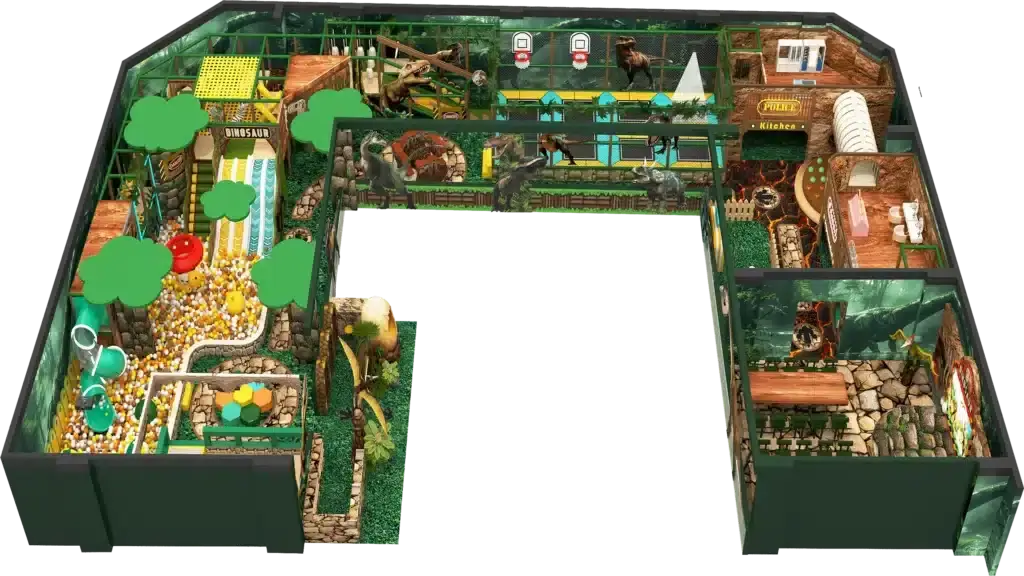
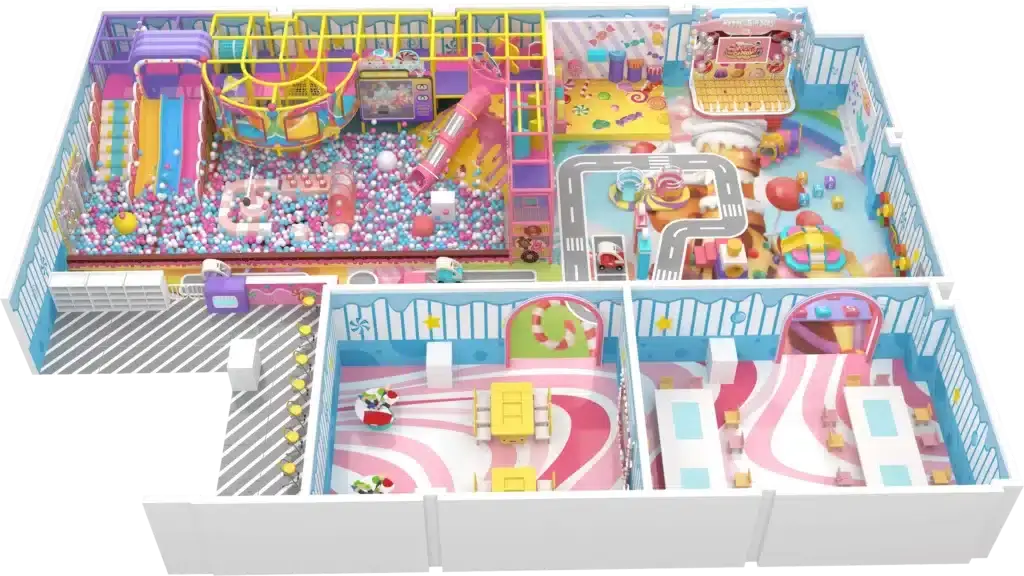
Modern commercial spaces are no longer designed only for shopping or dining. Today, successful malls, family entertainment centers (FECs), restaurants, community centers, and mixed-use developments increasingly rely on interactive family experiences to increase foot traffic and customer retention.
Commercial indoor playground equipment has become one of the most effective tools for creating longer visitor dwell time, stronger community engagement, and repeat family visits. According to industry-focused indoor playground planning guides, modern indoor play environments are now commonly integrated into shopping malls, restaurants, retail parks, and entertainment centers as both attractions and revenue-generating assets.
This guide explains the best types of indoor playground equipment for commercial community-focused spaces, how to choose the right equipment, and which layouts generate the strongest long-term operational value.


What Is Commercial Indoor Playground Equipment?
Commercial indoor playground equipment refers to professionally designed play systems built for high-traffic public environments such as shopping malls, family entertainment centers, restaurants, schools, hotels, and community facilities.
Unlike residential playground products, commercial systems are engineered for:
- High daily visitor capacity
- Long-term durability
- ASTM and EN safety compliance
- Commercial-grade materials
- Easier maintenance and cleaning
- Multi-age engagement
Revenue generation
Commercial indoor playground systems often include soft play structures, climbing areas, slides, trampoline zones, sensory play equipment, ninja courses, and interactive digital attractions.
Why Commercial Spaces Are Investing in Indoor Play Equipment
Indoor play environments are no longer viewed as simple children’s amenities. They are strategic commercial assets.
Increased Dwell Time: Shopping malls and commercial centers use playgrounds to encourage families to stay longer, increasing spending opportunities in nearby retail and dining areas.
Repeat Family Visits: A well-designed indoor playground can turn a commercial venue into a repeat destination for local families.
Community Engagement: Community-focused indoor play spaces help create stronger emotional connections between families and commercial venues.
Weather-Independent Entertainment: Indoor playgrounds provide year-round operation regardless of weather conditions, making them highly attractive in urban environments.
Revenue Diversification: Commercial indoor playgrounds may generate income through:
- Admission fees
- Birthday parties
- Memberships
- Food & beverage sales
- Sponsorships
- Retail merchandise
Key Factors When Choosing Commercial Indoor Playground Equipment
Before selecting equipment, commercial operators should evaluate several critical factors.
1. Target Age Group
Different commercial environments serve different audiences.
| Commercial Space | Main Age Group |
|---|---|
| Shopping malls | 2–10 years |
| Restaurants | 2–6 years |
| Family entertainment centers | 4–14 years |
| Community centers | Mixed ages |
| Hotels & resorts | 2–12 years |
Age targeting strongly influences equipment selection, safety requirements, and operational layout.
2. Available Space
Space efficiency is one of the most important considerations in commercial indoor playground planning.
High-performing layouts maximize:
- Child capacity
- Visibility
- Circulation flow
- Safety supervision
Play variety
Modern multi-level playground systems help commercial venues maximize vertical space while reducing floor footprint requirements.
3. Durability and Maintenance
Commercial playground equipment operates under continuous daily use.
Operators should prioritize:
- Commercial-grade steel structures
- High-density foam padding
- Durable PVC coverings
- Easy-clean surfaces
- Replaceable modular components
Fire-retardant materials
Industry discussions among playground operators frequently emphasize that poor material quality and difficult maintenance are among the biggest long-term operational problems.
4. Safety and Compliance
Commercial indoor playgrounds should comply with recognized international standards such as:
- ASTM
- EN1176
ADA accessibility guidelines
Professional installation and regular inspection are essential for long-term operational safety.
Best Types of Commercial Indoor Playground Equipment
Choosing the right combination of attractions is critical for maximizing visitor engagement and operational ROI.
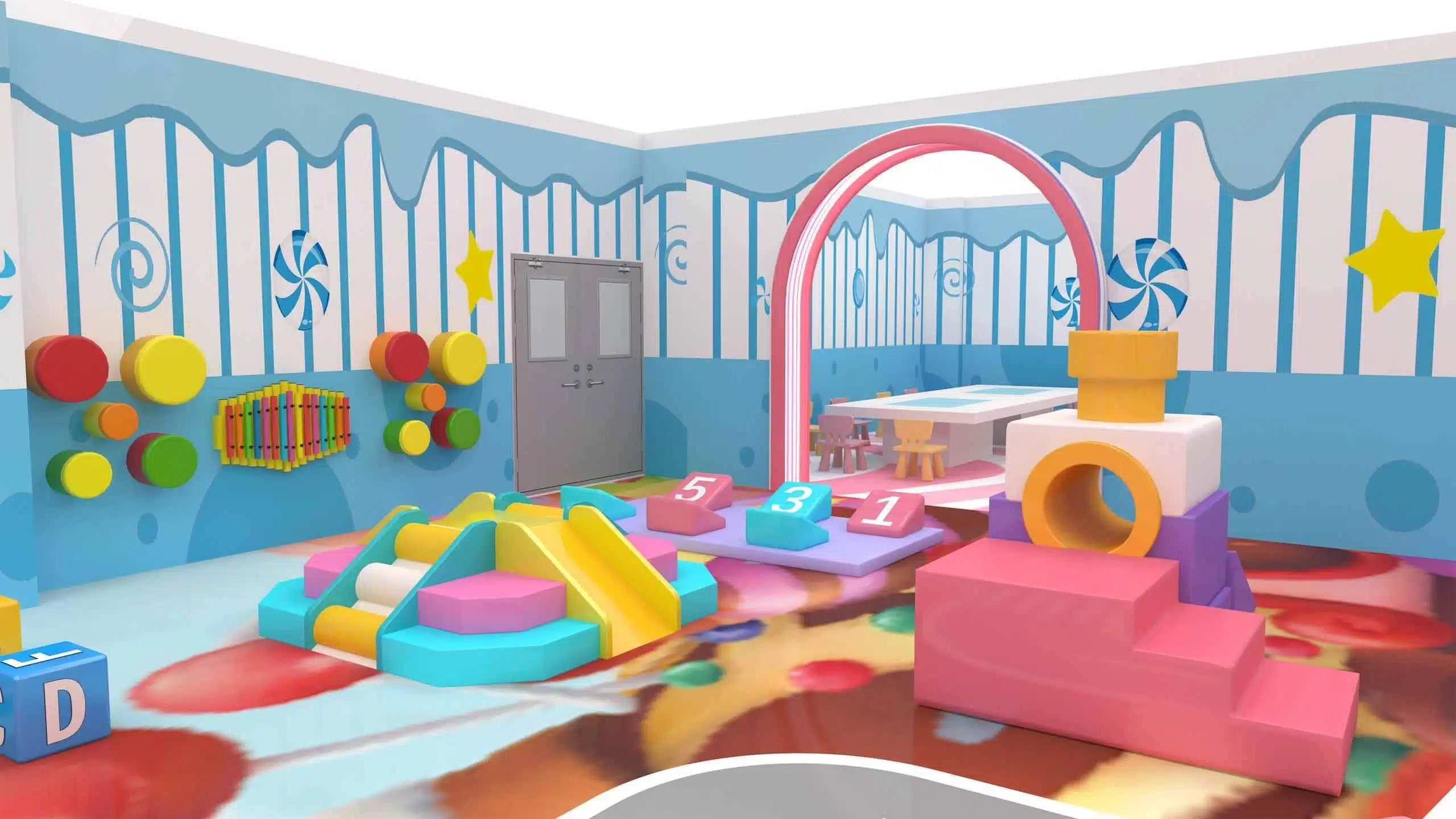

1. Soft Play Structures
Soft play remains one of the most popular forms of commercial indoor playground equipment.
These systems use padded obstacles, tunnels, slides, crawl areas, and interactive elements to create safe, flexible environments for younger children.
Best For
- Shopping malls
- Restaurants
- Daycare centers
- Community play spaces
Hotels
Advantages
- Strong safety performance
- Compact layouts
- High visual appeal
- Lower operational complexity
Excellent for toddlers and preschoolers
Soft play systems are particularly effective in family-oriented commercial environments because they support repeat visits and longer parent dwell time.
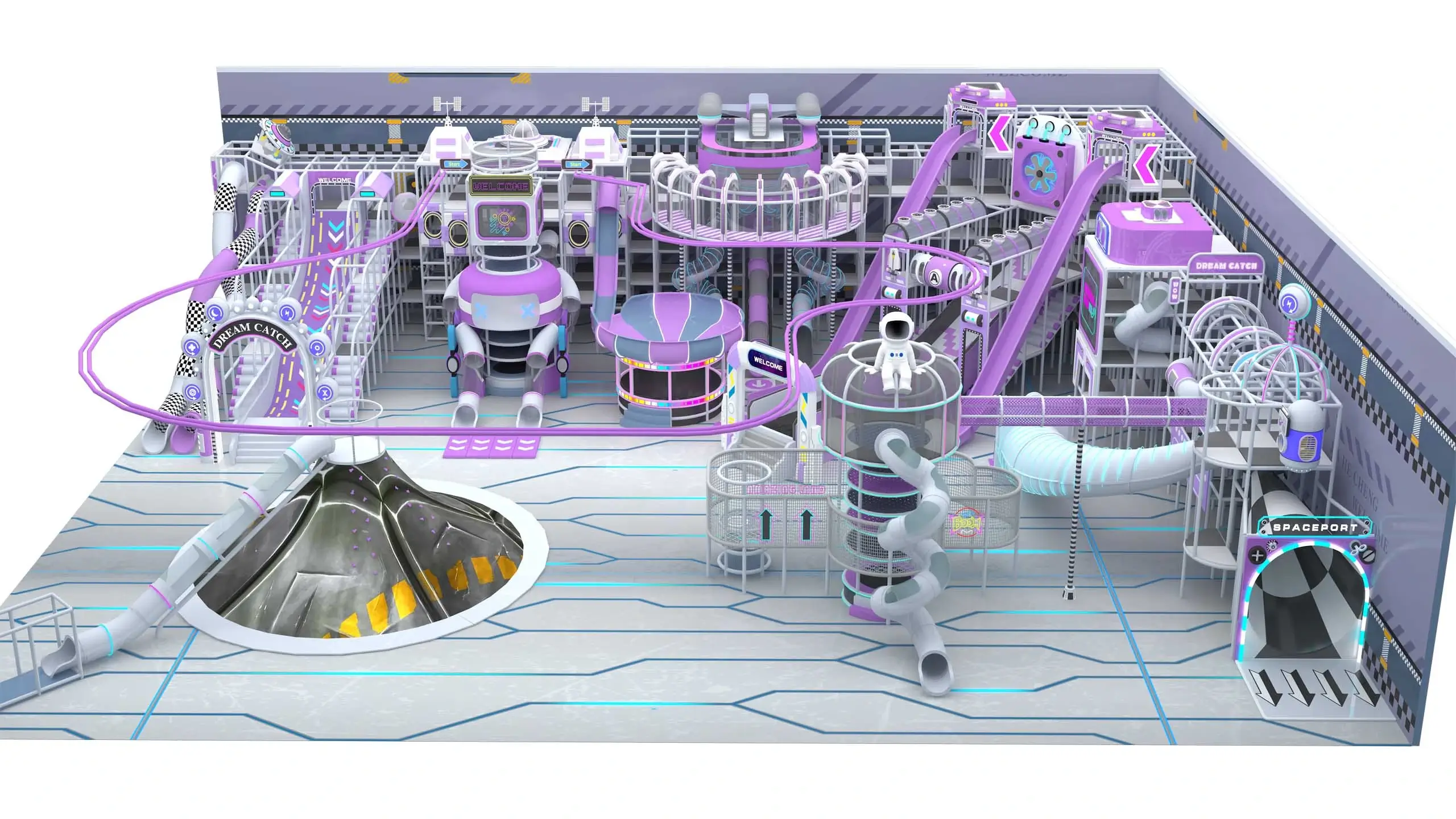

2. Multi-Level Indoor Playgrounds
Multi-level structures maximize vertical play value while increasing child capacity.
These systems typically combine:
- Slides
- Climbing obstacles
- Ball pits
- Rope bridges
- Crawl tunnels
Observation decks
Best For
- Family entertainment centers
- Large shopping malls
Indoor amusement facilities
Advantages
- High throughput capacity
- Strong visual impact
- Longer play sessions
Excellent ROI potential
Commercial playground planning guides increasingly recommend vertical integration strategies for high-rent commercial environments.


3. Trampoline Zones
Commercial trampoline attractions remain one of the highest-engagement indoor play categories.
Best For
- Teen-focused FECs
- Adventure parks
Active entertainment centers
Advantages
- High energy activity
- Strong repeat visitation
- Excellent birthday party appeal
Broad age engagement
Modern trampoline parks often combine:
- foam pits
- dodgeball courts
- air bags
- ninja challenges
- interactive games
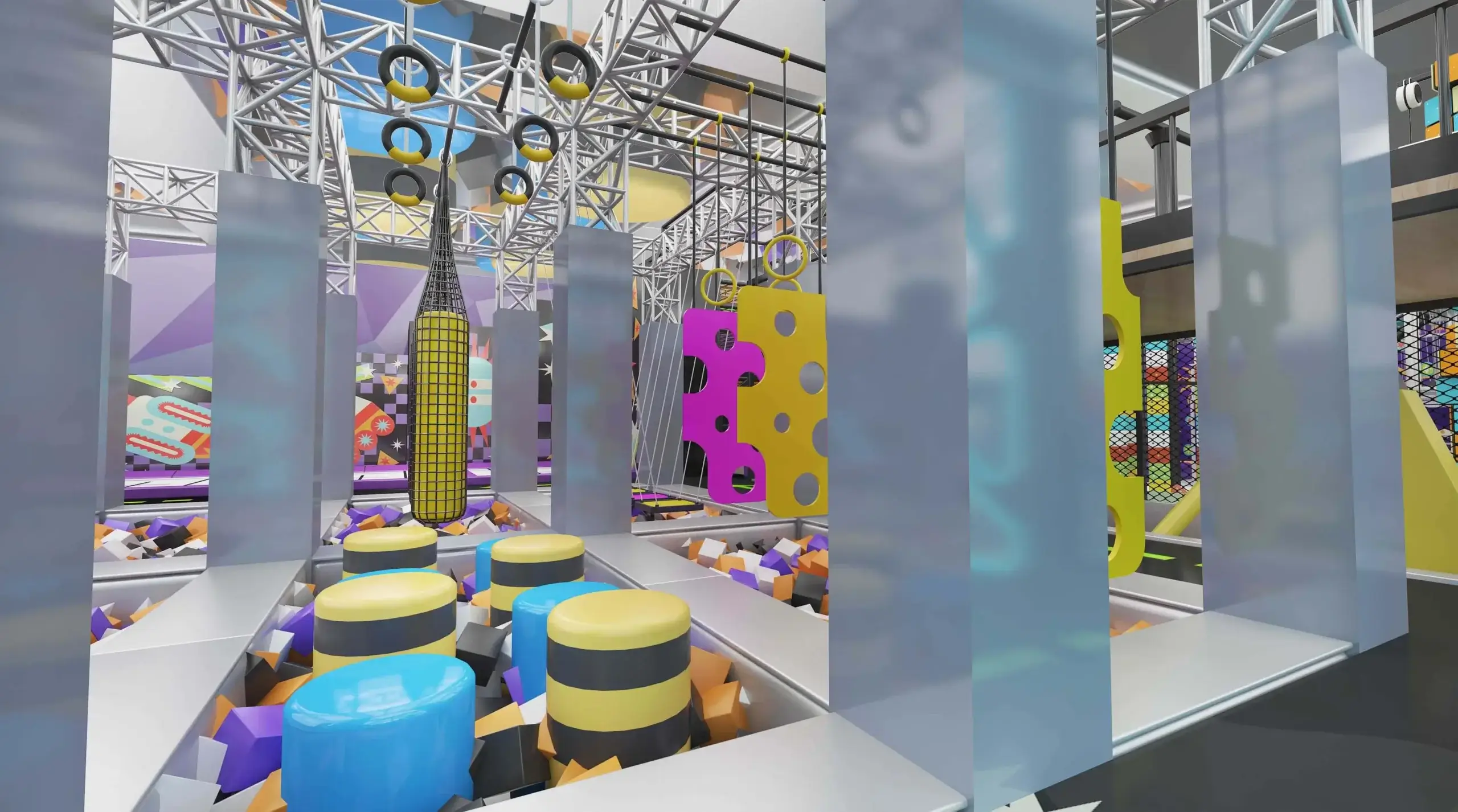

4. Ninja Courses and Adventure Challenges
Ninja-style challenge courses are increasingly popular among older children and teenagers.
Best For
- Competitive entertainment spaces
- Sports-focused FECs
High-energy play centers
Advantages
- Social competition
- Strong physical activity
- High repeat value
Excellent social media appeal
These attractions help commercial venues expand beyond traditional toddler-focused soft play.

5. Sensory Play Equipment
Sensory play is becoming increasingly important in modern community-focused commercial spaces.
Sensory attractions support:
- cognitive development
- inclusive play
- emotional regulation
multi-sensory engagement
Popular Sensory Equipment
- Interactive panels
- Light-based play
- Musical stations
- Texture walls
- Projection games
Sand and water interaction
Inclusive sensory play environments also help commercial venues appeal to wider family demographics.


6. Interactive Digital Play Systems
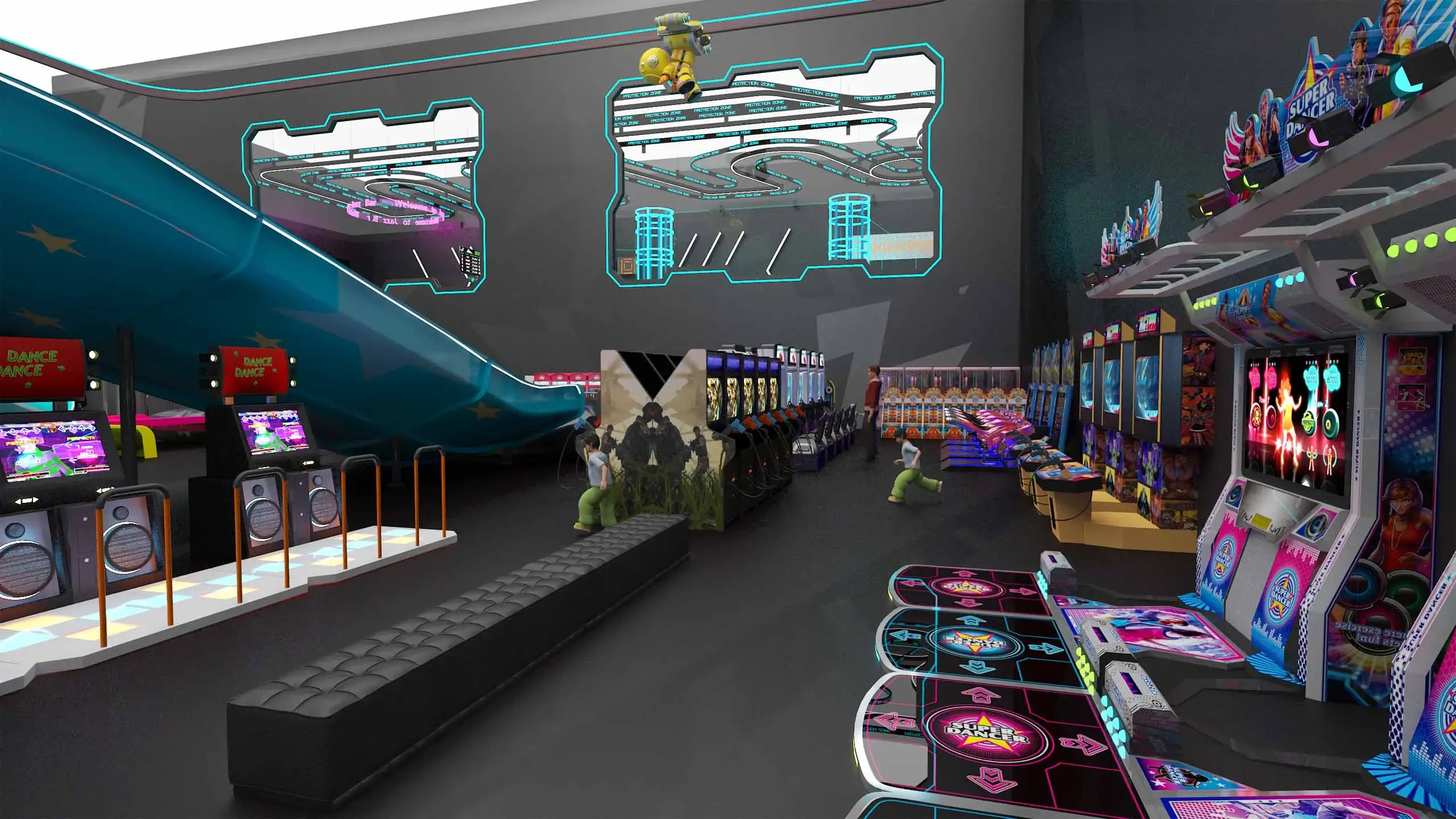
Interactive digital attractions combine physical movement with projection mapping and game technology.
Best For
- Modern malls
- Premium FECs
Technology-focused play centers
Advantages
- High replay value
- Easy theme updates
- Strong visual attraction
Lower physical wear than mechanical equipment
Interactive digital play is becoming one of the fastest-growing segments in commercial indoor entertainment.
Commercial Indoor Playground Equipment Comparison
| Equipment Type | Best For | Main Age Group | Space Requirement | ROI Potential |
|---|---|---|---|---|
| Soft Play Structures | Restaurants & malls | 2–6 | Small to medium | Medium |
| Multi-Level Playgrounds | FECs & malls | 4–12 | Medium to large | High |
| Trampoline Zones | Active entertainment | 6–16 | Large | Very High |
| Ninja Courses | Older children & teens | 6–16 | Medium to large | High |
| Sensory Play Equipment | Inclusive community spaces | All ages | Flexible | Medium |
| Interactive Digital Play | Premium entertainment spaces | 4–14 | Medium | High |
How to Design a Profitable Community-Focused Indoor Playground
Successful indoor playgrounds are designed as integrated visitor experiences rather than random collections of equipment.
Create Clear Play Zones
Modern indoor playgrounds often separate spaces into:
Toddler Zones: Low-height, soft, sensory-focused play.
Active Play Zones: Slides, climbing, trampolines, obstacle play.
Social Zones: Interactive group play and role-play activities.
Parent Comfort Zones: Seating, cafés, visibility areas, charging stations, and observation spaces.
Avoid “Dead-End” Layouts
One of the most common design mistakes is creating disconnected layouts that reduce exploration and shorten play duration.
Experienced commercial playground designers increasingly recommend circular circulation routes that encourage continuous movement and discovery.
Prioritize Visibility and Supervision
Parents and staff should maintain clear sightlines throughout the facility.
Good visibility improves:
- safety
- comfort
- operational efficiency
- customer satisfaction
Plan for Long-Term Operations
Operators should evaluate:
- cleaning access
- modular repairs
- foam replacement
- sanitation workflows
replacement part availability
Operational efficiency often has a larger long-term financial impact than initial equipment cost.
Real Commercial Indoor Playground Example
A recent indoor playground concept developed for a mixed-use commercial center included:
- Multi-level soft play structure
- Interactive projection games
- Toddler sensory area
- Ninja challenge zone
- Parent café seating
- Birthday party rooms
ADA-accessible circulation pathways
The facility was designed to increase family dwell time, support repeat visits, and create stronger integration between retail and entertainment functions.
Common Mistakes When Buying Commercial Indoor Playground Equipment
Choosing Equipment Based Only on Appearance: Visually impressive equipment may still perform poorly operationally if maintenance and supervision are difficult.
Ignoring Community Demographics: Equipment should match local age groups and visitor behavior patterns.
Underestimating Maintenance Requirements: Low-quality padding, weak seams, and difficult cleaning access often create long-term operational problems.
Poor Space Planning: Inefficient layouts reduce capacity and weaken customer flow.
Focusing Only on Toddlers: Modern commercial play spaces increasingly benefit from multi-age attraction strategies.
Future Trends in Commercial Indoor Play Equipment
The commercial indoor playground industry continues evolving toward more immersive and experience-focused environments.
Key trends include:
- Interactive digital play
- Inclusive sensory environments
- Multi-generational entertainment
- Compact urban playground layouts
- Sustainable materials
- Modular playground systems
- Story-driven themed environments
Community-centered design strategies
Commercial indoor playgrounds are becoming an essential component of modern family-focused commercial development.
Need Help Planning a Commercial Indoor Playground?
Successful indoor playground projects require more than equipment selection. They involve strategic layout planning, operational flow design, safety compliance, visitor psychology, and long-term profitability analysis.
Our commercial playground design team can help with:
- Indoor playground master planning
- Family entertainment center design
- Mall playground layout optimization
- 2D & 3D playground design
- ASTM & EN1176 compliance planning
- Custom themed playground development
Manufacturing and installation consultation
Whether you are developing a shopping mall playground, restaurant play area, indoor amusement center, or community entertainment facility, thoughtful planning is the foundation of long-term success.
FAQ
What is commercial indoor playground equipment?
Commercial indoor playground equipment is professionally engineered play equipment designed for high-traffic public environments such as malls, FECs, restaurants, and community centers.
What type of indoor playground equipment is best for shopping malls?
Multi-level soft play systems are among the most effective solutions because they maximize visual impact, child capacity, and repeat family visits.
What equipment generates the highest ROI?
Large multi-level playgrounds, trampoline zones, and ninja challenge areas often generate strong ROI due to high engagement and repeat visitation.
How much space is needed for a commercial indoor playground?
Small indoor playgrounds may operate within 500–1,500 square feet, while large FEC projects often exceed 10,000 square feet.
What is the safest indoor playground equipment?
Soft play structures with commercial-grade padding, certified materials, and proper safety surfacing are among the safest commercial indoor play solutions.
What is the difference between soft play and trampoline parks?
Soft play focuses on padded climbing and exploratory activities for younger children, while trampoline parks emphasize high-energy jumping and active movement for older age groups.