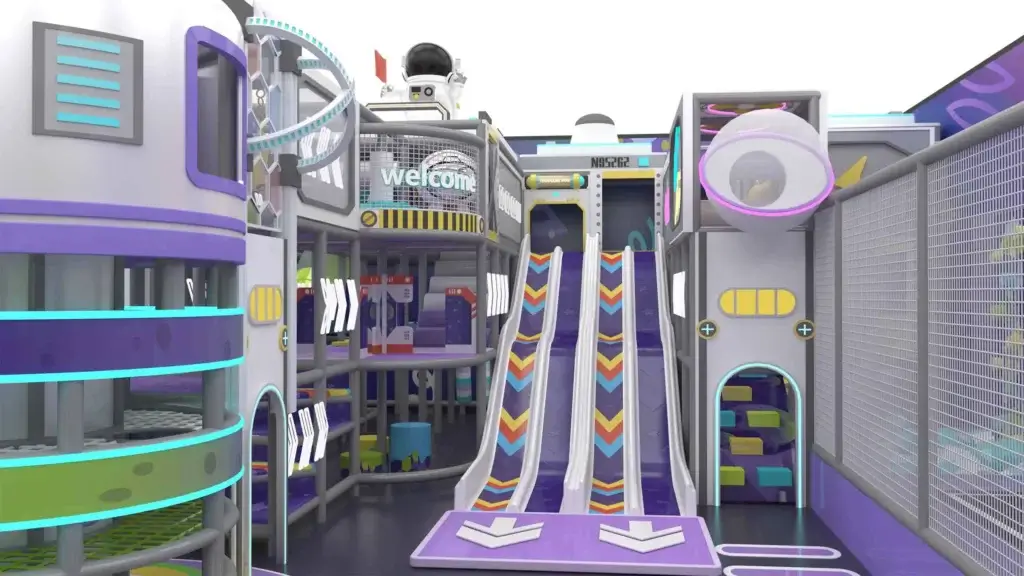
This comprehensive guide is designed for mall owners, property developers, and retail operators seeking to integrate playground facilities into commercial retail environments. We will walk you through:
- Key Considerations for Mall-Based Playgrounds
- Comparing Materials and Design Standards for High-Traffic Environments
- Safety Certifications and Compliance Requirements
- Optimizing Your Investment for Maximum Commercial Return
Key Considerations When Investing in Mall Playground Equipment
Shopping malls present unique opportunities and challenges for playground installation. Unlike school or community parks, mall playgrounds serve a distinct commercial purpose: attracting families, extending dwell time, and increasing foot traffic to retail areas. Here are the critical factors to evaluate:
Target Demographics and Traffic Patterns: Mall playgrounds must accommodate a diverse, transient population. Consider the volume of daily visitors, peak shopping hours, and the mix of local families versus tourists. Equipment must be sized for high-capacity use, typically serving 50-100+ children during peak weekend hours.
- Age Appropriateness for Mixed-Audience Environments: Mall playgrounds must engage children across multiple age groups while their parents shop or dine nearby.
- Toddlers (6 months–3 years): Secure, ground-level soft play areas with low-height elements and clear sightlines for parental supervision.
- Preschoolers (3–6 years): Moderate-challenge equipment with slides, small climbers, and interactive panels that encourage imaginative play.
School-Aged Children (6–12 years): More physically demanding elements such as climbing structures, overhead challenges, and active play components that justify repeat visits.
- Commercial Objectives and ROI Considerations: Mall playgrounds are revenue-generating assets, not merely amenities. Key performance indicators include:
- Dwell Time Extension: Quality play environments keep families in the mall longer, increasing the probability of food and beverage purchases and retail transactions.
- Repeat Visitation: A compelling playground becomes a destination that brings families back weekly, creating predictable traffic patterns.
Adjacent Retail Activation: Playgrounds strategically positioned near food courts, children’s retail, or family restaurants drive spillover traffic to neighboring tenants.
- Space Optimization and Vertical Integration: Mall space comes at a premium. Efficient design maximizes play value within limited footprints:
- Multi-Level Structures: Utilize vertical space to increase play capacity without expanding floor area.
- Mezzanine and Atrium Integration: Some malls incorporate playgrounds into multi-story atriums, using height to create visual impact and operational efficiency.
Compact, High-Density Configurations: Equipment designed for commercial indoor use can achieve high child capacity in as little as 500-1,500 square feet.
- Durability and Maintenance Requirements: Mall playgrounds operate 7 days a week, often 10-12 hours daily, subjecting equipment to continuous, heavy use. Commercial-grade components must withstand:
- High-frequency cleaning and sanitation protocols
- Abrasion from shoes, strollers, and cleaning equipment
Potential vandalism or rough use requiring easy replacement of modular components
- Aesthetic Integration and Brand Alignment: Mall playgrounds should complement the overall retail environment. Custom theming can align with:
- Mall-wide branding initiatives
- Seasonal promotional campaigns
Anchor tenant partnerships or sponsorship opportunities
- Revenue-Generating Potential: Unlike public playgrounds, mall facilities can incorporate revenue streams:
- Admission fees for premium play areas
- Birthday party packages and group bookings
- Corporate sponsorship or naming rights
Membership programs for frequent visitors
- Safety and Liability Management: Mall operators face heightened liability concerns given the public nature of the space and high visitor volumes. Comprehensive risk management includes:
- Certified equipment meeting international safety standards
- Professional installation by credentialed installers
- Regular inspections by Certified Playground Safety Inspectors (CPSI)
- Robust supervision protocols and clear signage
Comparing Materials and Design Standards for High-Traffic Mall Environments
Mall playgrounds require materials engineered for commercial durability, aesthetic appeal, and ease of maintenance. Here is a detailed comparison of materials suitable for high-traffic retail environments:
| Material | Applications | Advantages for Mall Use | Maintenance Considerations |
|---|---|---|---|
| Powder-Coated Steel | Structural frameworks, support posts, climbing elements | Maximum structural durability; corrosion-resistant; available in custom colors; withstands years of continuous use | Occasional touch-up for scratches; inspect connections quarterly |
| Rotationally Molded Polyethylene | Slides, play panels, decorative elements, climbers | Impact-resistant; color integrated throughout material so scratches are less visible; smooth surfaces are easy to clean; resistant to UV fading | Wash with mild detergent; inspect for stress cracks annually |
| High-Density Polyethylene (HDPE) | Play panels, barriers, seating, decorative accents | Stain-resistant; color-stable; ideal for digital printing and custom graphics; non-porous surface inhibits bacterial growth | Easy to clean with standard disinfectants; modular panels allow easy replacement |
| Stainless Steel | Slides (outdoor applications), handrails, hardware | Premium appearance; extremely durable; hygienic surface; resistant to corrosion and vandalism | Polishing maintains appearance; inspect fasteners regularly |
| Poured-in-Place Rubber | Safety surfacing throughout play area | Seamless and hygienic; fully ADA accessible; available in custom colors and logos; excellent impact attenuation; does not displace | Professional resurfacing typically required every 8–12 years; spot repairs possible |
| Commercial-Grade Vinyl | Soft play components, padding, cushions | Fire-retardant options available; easy to sanitize; available in multiple colors and textures; comfortable for younger children | Replace foam cores if compressed; clean covers regularly |
Design Considerations Specific to Mall Environments:
Visibility and Sightlines: Mall playgrounds must balance enclosure for child safety with open sightlines allowing parents to supervise from adjacent retail or dining areas . Low-profile barriers and strategic openings achieve both objectives.
Acoustic Management: Indoor play areas generate significant noise that can disturb adjacent tenants. Proper acoustic design includes:
Sound-absorbing ceiling treatments
Strategic placement away from quiet-use tenants (e.g., medical offices, spas)
Equipment selection favoring quieter play components where appropriate
HVAC and Air Quality Integration: Active children generate heat and require adequate ventilation. Coordinate with mall engineering teams to ensure:
Sufficient air exchanges for occupied density
Temperature control appropriate for physical activity
Filtration adequate for indoor environments
Lighting Design: Play areas benefit from:
Bright, even illumination for safety and supervision
Accent lighting highlighting play features and creating visual interest
Integration with mall operating hours and after-hours security protocols
Tips for Choosing the Right Playground for Your Mall Space and Investment Budget
Selecting the optimal playground for a retail environment requires balancing multiple commercial and operational factors. Here are detailed guidelines:
Space Analysis and Configuration
Conduct a Comprehensive Site Audit: Before equipment selection, evaluate:
Available Square Footage: Measure total area, including required clearances and circulation space. Commercial equipment typically requires use zones extending 6 feet beyond the structure perimeter.
Ceiling Height: Multi-level structures require adequate vertical clearance—typically 12-15 feet minimum for two-level designs with safe platform heights.
Column Placement: Existing structural columns may constrain layout options. Work with your playground designer to work around or incorporate columns creatively.
Adjacent Tenant Relationships: Consider how the playground location affects neighboring businesses—both opportunities for synergy and potential conflicts.
Understand Use Zone Requirements for Indoor Commercial Settings:
All equipment requires designated use zones free of obstructions
Slides need designated exit zones (minimum 6 feet from slide exit)
Swings require significantly larger use zones front and back (four times the height of the pivot point)
Use zones cannot overlap between adjacent structures
Plan for Operational Support Spaces: Beyond the play equipment itself, allocate space for:
Seating and Observation: Parent seating adjacent to play area with clear sightlines
Shoe Removal/Storage: Bench areas and cubbies for storing footwear if required
Stroller Parking: Designated areas that don’t block emergency egress
Check-in Counter: For paid-admission models, space for admissions and waiver processing
Birthday Party Areas: If offering parties, dedicated space for food, gifts, and activities
Budget Planning for Mall Playground Investments
Commercial mall playgrounds represent significant investments with corresponding revenue potential. Here is a detailed budget breakdown based on industry data for indoor commercial play environments:
| Budget Category | Percentage of Total | Typical Cost Range (50–75 Child Capacity) | Detailed Considerations |
|---|---|---|---|
| Play Equipment | 45–55% | $45,000–$85,000 | Includes main play structure, slides, climbers, interactive panels, and soft play components. Custom theming and branding integration may add 15–30% to base equipment costs. |
| Safety Surfacing | 15–25% | $15,000–$35,000 | Poured-in-place rubber is recommended for malls due to its seamless, hygienic, and ADA-compliant properties. Custom colors and logos increase cost. |
| Professional Installation | 10–20% | $10,000–$25,000 | Certified commercial installers ensure compliance and warranty validation. Complex indoor installations may require specialized rigging. |
| Site Preparation | 5–15% | $5,000–$15,000 | Includes floor leveling, electrical work for interactive elements, HVAC coordination, and column wrapping. |
| Amenities & Finishing | 10–15% | $8,000–$18,000 | Parent seating, shoe storage, signage, waste receptacles, and decorative elements. |
| Contingency Fund | 10% | $8,000–$15,000 | Essential for unexpected structural discoveries or last-minute modifications. |
Sample Budget Scenarios by Mall Playground Type:
| Category | Soft Play Area (Toddler Focus, 300–500 sq ft) | Multi-Level Play Structure (500–1,200 sq ft, Mixed Ages) | Destination Playground (1,500+ sq ft, Themed, Premium Features) |
|---|---|---|---|
| Equipment | $20,000–$35,000 | $45,000–$85,000 | $85,000–$150,000+ |
| Surfacing | $8,000–$15,000 | $15,000–$35,000 | $30,000–$60,000+ |
| Installation | $5,000–$10,000 | $12,000–$25,000 | $25,000–$50,000+ |
| Site Preparation | $3,000–$8,000 | $5,000–$15,000 | $15,000–$30,000+ |
| Amenities | $4,000–$8,000 | $8,000–$18,000 | $15,000–$30,000+ |
| Total Estimated Range | $40,000–$76,000 | $85,000–$178,000 | $170,000–$320,000+ |
Revenue Modeling and ROI Analysis:
When presenting playground investments to mall ownership or management, consider developing a pro forma analysis:
Direct Revenue Sources:
Daily admission fees (typically $8-$15 per child)
Membership programs ($30-$60 monthly)
Birthday party packages ($250-$500 per event)
Corporate sponsorship or naming rights
Indirect Revenue Attribution:
Increased dwell time (average 45-90 minutes longer for families with children)
Food court sales uplift (20-40% increases documented in mall with play areas)
Adjacent retail conversion (toy stores, children’s apparel, family dining)
Operating Expenses to Factor:
Staffing for supervision and admissions (if attended model)
Cleaning and sanitation supplies and labor
Routine maintenance and annual safety inspections
Utility costs (HVAC, lighting, interactive features)
Long-Term Value Considerations for Mall Operators:
Leasing Advantage: Quality play amenities differentiate your property in lease negotiations with family-oriented tenants
Community Positioning: Well-designed playgrounds position the mall as a family destination, not just a shopping venue
Digital Marketing Assets: Visually striking playgrounds generate user-generated content and social media exposure
Event Space Versatility: Play areas can host seasonal events, character appearances, and promotional activations
Safety Standards and Certifications for Commercial Mall Playgrounds
Given the public nature and high traffic of mall environments, compliance with safety standards is non-negotiable. Ensure your manufacturer and installer adhere to:
ASTM International Standards:
ASTM F1487: Standard Consumer Safety Performance Specification for Playground Equipment for Public Use—the primary standard governing design, performance, and installation of commercial playground equipment
ASTM F1292: Standard Specification for Impact Attenuation of Surfacing Materials Within the Use Zone of Playground Equipment—critical for validating surfacing performance
ASTM F1951: Standard Specification for Determination of Accessibility of Surface Systems Under and Around Playground Equipment—ensures surfacing accommodates wheelchair users
IPEMA Certification: The International Play Equipment Manufacturers Association provides third-party validation that equipment meets ASTM standards. Look for the IPEMA certification seal .
CPSC Guidelines: While technically voluntary, the U.S. Consumer Product Safety Commission’s Public Playground Safety Handbook provides essential guidance on everything from equipment spacing to entrapment prevention .
ADA Accessibility Guidelines: Play areas must comply with the Americans with Disabilities Act Accessibility Guidelines for Play Areas, including requirements for accessible routes, ramps, transfer systems, and ground-level play components .
Local Building and Fire Codes: Indoor mall installations must comply with local building codes, including:
Fire safety requirements for materials
Emergency egress pathways through and around play areas
Maximum occupancy calculations
Sprinkler system integration
Conclusion
Investing in playground equipment for a shopping mall environment requires careful consideration of factors distinct from other applications—commercial objectives, space efficiency, durability under continuous use, aesthetic integration with retail environments, and robust revenue potential. When properly planned and executed, mall playgrounds become powerful assets that attract families, extend dwell time, activate adjacent retail, and position your property as a premier family destination.
A well-chosen commercial playground can transform underutilized mall space into a vibrant, revenue-generating attraction that brings families back week after week. By understanding the unique demands of retail environments, selecting appropriate materials and designs, and partnering with experienced commercial playground providers, mall owners and operators can achieve compelling returns on their investment.
Guangdong Dream Catch Recreation Equipment Co., Ltd. specializes in commercial playground solutions for shopping malls and retail environments worldwide. Our team understands the unique operational demands, revenue opportunities, and design requirements of mall-based play facilities. Contact us today to discuss your project vision, request our commercial playground catalog, or schedule a consultation with our retail specialists.