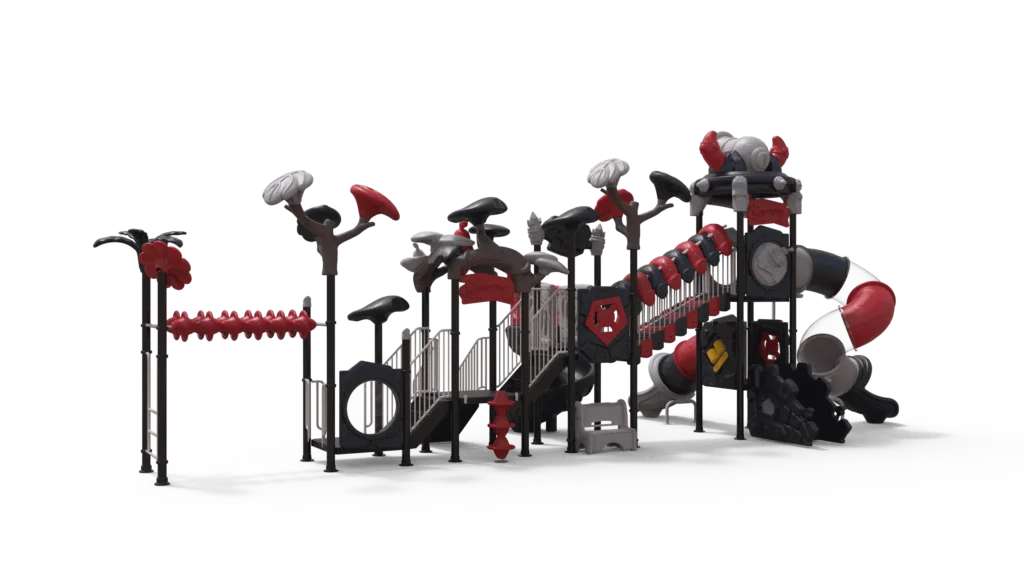
Finding the optimal play equipment solutions for your educational facility can be a complex decision-making process. Key considerations typically include compliance with safety standards, facilitation of recommended daily physical activity, and overall engagement value for students. Rest assured, with proper guidance, these objectives are fully achievable. Below is an overview of essential playground equipment types suitable for school environments:
- Swing Sets
- Seesaws
- Slides
- Climbers
Play Structures
However, safety remains paramount. The following critical factors must be addressed during the planning phase:
- Age Appropriateness
- Playground Surfacing
- Accessibility for Individuals with Disabilities
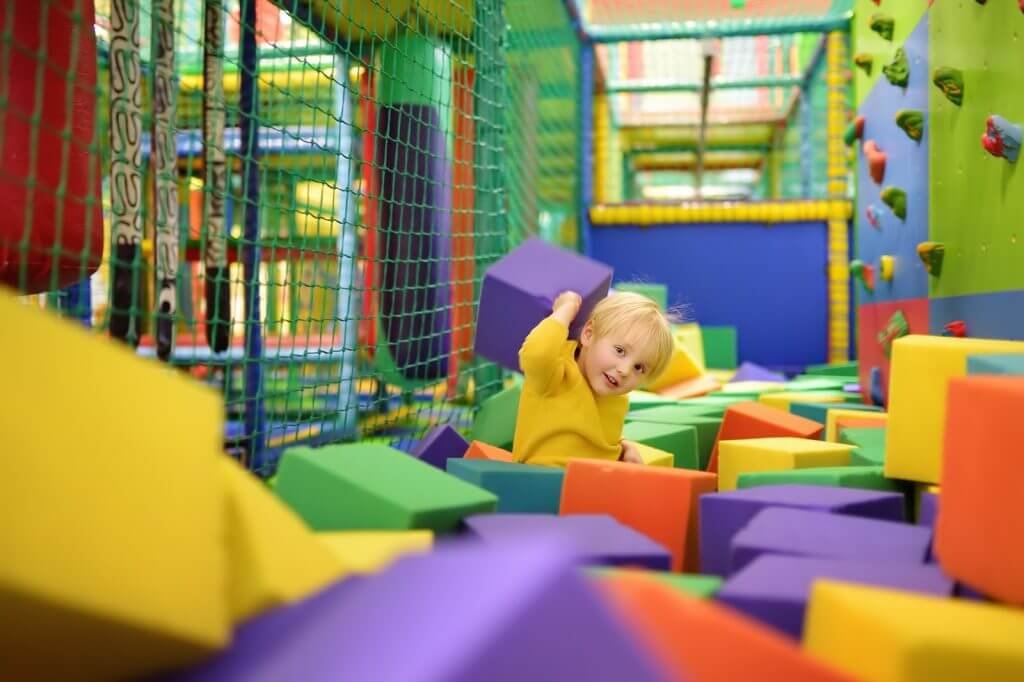
Age-Appropriate Playground Equipment
Different developmental stages present distinct needs, and selecting equipment suited to the intended user group is a fundamental safety and design requirement.
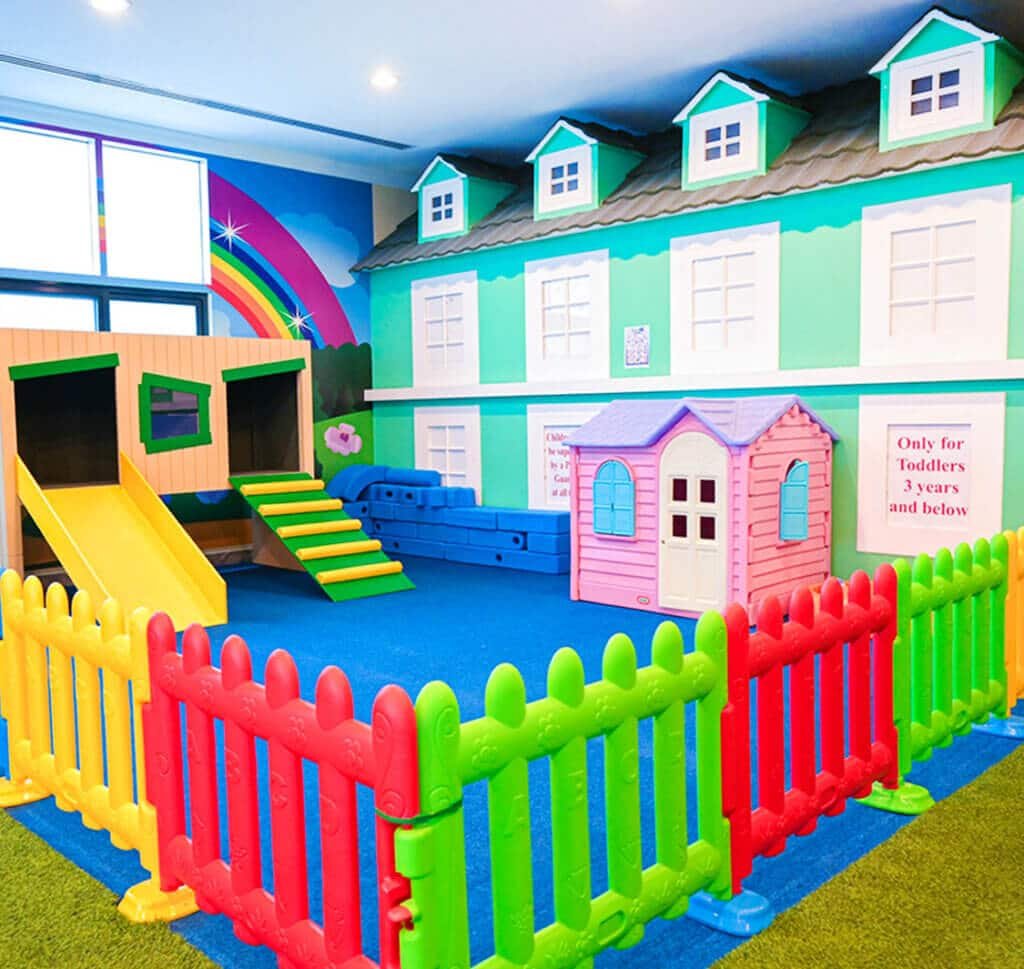
Toddlers (6–23 months): For this age group, safety is the primary concern. Equipment designed for toddlers is typically low to the ground with a focus on stability and security. Examples include high-back bucket seats for swings that provide full torso support and compact, ground-level activity panels. At this developmental stage, equipment should prioritize sensory stimulation and foundational motor planning, introducing tactile experiences and cause-effect relationships without presenting trip hazards or complex climbing challenges.
Preschoolers (2–5 years): At this stage, imaginative and social play becomes increasingly prominent. Equipment should offer opportunities for climbing, exploration, and the development of fine motor skills. Low-elevation play structures, small crawl tunnels, and sand play areas are particularly beneficial for fostering creativity and foundational movement. Design considerations for this age group should include smaller step heights, enclosed crawl spaces, and interactive panels that support parallel play, where children engage in activities adjacent to peers before developing the cognitive skills required for fully cooperative play.
School-aged children (5–12 years): Elementary years are crucial for physical development and social skill-building. Equipment should promote social engagement, encourage complex movement, and incorporate sensory-rich experiences. Multi-level play structures, overhead climbers such as monkey bars, and sliding poles provide the physical challenges and cooperative play opportunities that this age group requires. This demographic specifically benefits from higher physical challenges that build upper body strength, grip endurance, and agility through activities requiring sustained exertion and sequenced motor planning.
How to Choose the Right Playground Surfacing?
Concerned about fall-related injuries? According to the U.S. Consumer Product Safety Commission (CPSC), falls to the surface are the leading cause of playground injuries, making impact attenuation a critical safety feature. Protective surfacing is mandated and must be selected based on the critical fall height of the installed equipment. However, selecting the optimal surface extends beyond mere compliance; it requires analysis of Critical Fall Height (CFH) ratings, climate durability, long-term maintenance costs, and accessibility compliance. Consider these options:
Playground Wood Chips: Often the lowest-cost approved surfacing material. While popular due to initial affordability, wood chips require regular maintenance to maintain proper depth—typically 9–12 inches—for adequate shock absorption. Seasonal considerations are significant: wood chips can freeze in winter temperatures, substantially reducing impact attenuation properties, and they present navigational difficulties for wheelchair users. Additionally, this organic material decomposes over time and can be displaced easily, necessitating frequent inspections and replenishment.
Recycled Rubber Mulch: Manufactured from recycled materials, this surface is non-toxic, offers superior shock absorption, and requires less maintenance than wood products. Unlike organic alternatives, rubber mulch does not absorb water, resists freezing, and maintains consistent impact attenuation across seasonal temperature variations. It must be certified to comply with accessibility standards (ASTM F1951) for wheelchair use. Additional advantages include resistance to insect infestation, non-decomposition, and extended lifespan compared to organic loose-fill materials.
Engineered Wood Fiber: Specifically designed as a playground safety surface, engineered wood fiber is distinct from landscaping mulch. This manufactured product provides reliable impact attenuation when maintained at proper depths. However, accessibility considerations are important, as engineered wood fiber typically requires containment strategies and may not provide the firm, stable surface required for unassisted wheelchair mobility without additional intervention such as mobility mats.
Playground Safety Mat Tiles: For maintenance efficiency and consistent performance, unitary safety tiles offer a reliable solution. Available in various thicknesses corresponding to different fall height ratings, these tiles provide consistent shock absorption across the entire play area and are not subject to displacement. These tiles are essential in high-traffic zones such as slide exits and swing trajectories, where loose-fill surfacing is frequently displaced by user activity. A significant maintenance advantage is the ability to replace individual damaged tiles rather than resurfacing the entire installation.
Poured-in-Place (PIP) Playground Flooring: Considered the most durable, ADA-accessible, and low-maintenance unitary surface option. Poured-in-place rubber can be customized with designs, including school logos and wayfinding elements, and provides a seamless, impact-attenuating surface that fully accommodates wheelchair mobility. While the initial capital investment is higher than loose-fill alternatives, the lifetime operational costs are typically lower due to minimal maintenance requirements and extended service life.
Artificial Turf: Research indicates that greening schoolyards positively impacts children’s physical activity and socio-emotional health. When installed with appropriate shock pads meeting ASTM F1292 standards, artificial turf provides a clean, durable surface that contributes to overall student wellness. Modern synthetic turf systems integrate an engineered underlying shock layer to meet critical fall height safety standards, combining natural aesthetic appeal with engineered safety performance.
Ensuring Accessibility with Handicap Accessible Equipmen
As the sentiment from popular culture reminds us, “Ohana means family. Family means nobody gets left behind or forgotten.” This principle aligns with federal mandates, including the Americans with Disabilities Act (ADA) of 1990, which prohibits discrimination and ensures access to public accommodations, including play areas.
Today, inclusive playground equipment is widely available due to ADA standards. Examples of accessible design elements include:
- Transfer stations and platforms for children who use wheelchairs
- Ramps integrated into multi-level play systems providing circulation throughout the structure
- Ground-level play components such as activity panels and sensory tables
Poured-in-place unitary surfacing, which provides a firm, stable, and slip-resistant surface for mobility devices
Designers must also comply with ASTM F1487 for public use playground equipment and reference the ADA Accessibility Guidelines for Play Areas to ensure comprehensive inclusivity.

Why You Need a Swing Set on Your Playground?
Swing sets are often among the most memorable elements of a school playground, but their importance extends significantly beyond nostalgic value.
From a developmental perspective, swinging provides essential vestibular stimulation. The back-and-forth motion activates the vestibular system located in the inner ear, which governs balance, spatial awareness, and coordination. This sensory input is fundamental to neurological development and helps children regulate their awareness of body position in space.
Swing sets accommodate a wide range of ages and abilities, making them a versatile choice. With various seat options—including belt seats, toddler bucket seats, and inclusive seats with harnesses—schools can ensure that children of all abilities can participate in this engaging activity. Safety considerations include using flexible seats constructed from rubber, canvas, or nylon, and ensuring all hardware such as “S” hooks are fully closed to prevent entanglement hazards.
Beyond individual benefits, swinging adjacent to peers promotes social synchronization, an unconscious coordination of movement that fosters non-verbal bonding and shared experience among children.
Benefits of Seesaws in School Playgrounds
Seesaws are inherently social equipment, requiring active cooperation between users to function properly. This operational requirement makes them excellent tools for developing peer relationships, turn-taking skills, and teamwork abilities.
Beyond social development, seesaws enhance core strength, proprioceptive awareness, and dynamic balance as children coordinate their movements to maintain smooth, controlled oscillation. Modern spring-centered seesaw designs offer reduced impact forces and increased safety compared to traditional fulcrum-based designs, while preserving the cooperative play benefits.
The interdependent nature of seesaw use also builds trust between participants, as children must rely on their partner’s actions for both safety and enjoyment, creating natural opportunities for communication and negotiation.
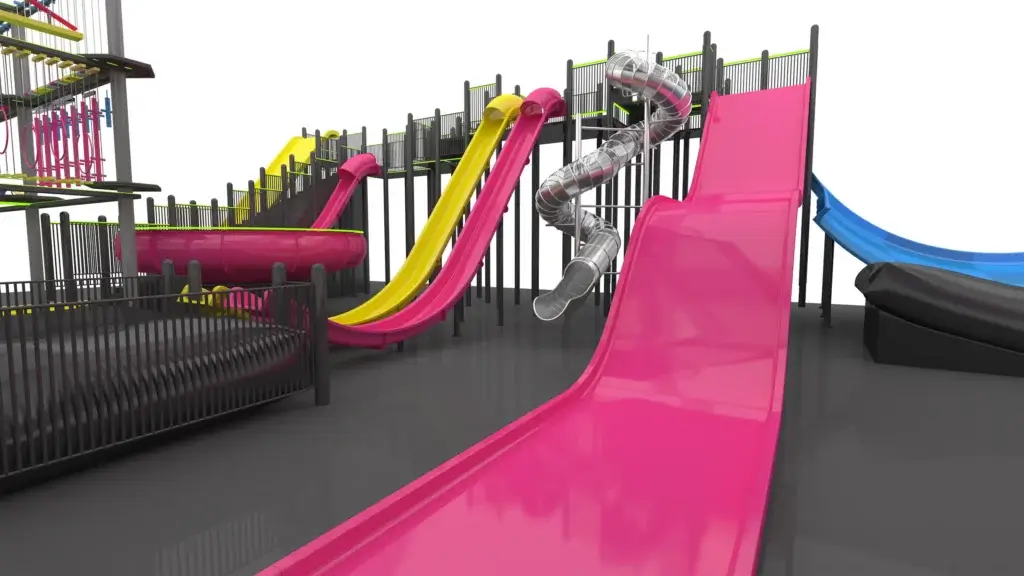
Why Slides Are Essential for School Playgrounds?
The sensory experience of sliding—acceleration, airflow, rapid descent—provides valuable vestibular and proprioceptive input that children naturally seek as part of healthy development.
The sequential nature of slide use teaches important developmental skills. Ascending the access ladder builds lower body strength, coordination, and sequential motor planning. The transition from standing to seated position at the slide entry requires body awareness and balance control. The sliding descent itself requires core stability to maintain appropriate posture and positioning.
Slides also introduce children to fundamental physics concepts through direct experience: gravity as the force enabling descent, friction as the factor controlling speed, and velocity as the sensation of rapid movement. The wait required for turn-taking fosters patience and social awareness. Safety standards require that slides be positioned with appropriate use zones and that platforms exceeding 30 inches in height incorporate guardrails meeting dimensional requirements to prevent falls.
Importance of Climbers in School Playgrounds
Climbing equipment addresses children’s natural developmental drive to seek challenge and test emerging physical capabilities. These structures build upper body and grip strength as children support their body weight during ascent and traverse.
Cognitively, climbers promote executive function development through problem-solving and risk assessment. Children must evaluate their route options, assess their physical capabilities against the challenge presented, and adjust their movements based on real-time feedback. This process develops planning skills, self-awareness, and adaptive thinking.
To ensure safety, climbing equipment must comply with height restrictions appropriate to user age—maximum six feet for school-age children and four feet for preschoolers—and incorporate compliant protective surfacing throughout the designated use zone.
Why Play Structures are the Centerpiece of Outdoor School Playgrounds?
Composite play structures function as the central hub of the playground ecosystem, integrating multiple play events into cohesive, themed environments. These structures support symbolic play, where the physical form becomes a castle, vessel, or imaginative setting for complex social narratives.
Play structures maximize play value within a given footprint by consolidating multiple activity types—climbing, sliding, crawling, balancing, and interactive play—into a single footprint. This consolidation enables flow play, where children transition seamlessly between different movement types without interrupting their engagement.
For school environments with high student populations during recess periods, well-designed structures accommodate multiple simultaneous users while facilitating complex social interactions including organized games, cooperative scenarios, and peer negotiation. These social experiences teach essential skills including rule-setting, conflict resolution, and group coordination.
All structural elements must meet performance requirements outlined in ASTM F1487, including dimensional tolerances for openings to prevent head entrapment (between 3.5 and 9 inches), guardrail specifications appropriate to platform height, and load-bearing capacity ratings.
Conclusion
Selecting the optimal playground equipment for your school involves more than ensuring immediate fun. The objective is to create an environment where children are safe, physically active, socially engaged, and cognitively stimulated through developmentally appropriate challenge.
By prioritizing age appropriateness, accessibility, and a diverse range of play options, schools can foster a positive and inclusive atmosphere. Swings, seesaws, slides, climbers, and composite play structures each contribute distinct benefits that enhance physical development, social interaction, and imaginative expression.
Safety must remain the foremost concern, and proper playground surfacing selection is critical. Appropriate surfacing significantly mitigates injury risk, providing administrators with confidence while children play. Furthermore, adherence to relevant standards including CPSC guidelines, ASTM specifications, and ADA requirements ensures legal compliance and industry best practices in playground design.
School playground equipment transcends mere recreation; it functions as an educational and community asset where children develop essential life skills, cultivate physical health, and create lasting memories.